
Blog
Companion Piece to The Art of Being a Ding Dong - Snippets from Artistic Leaders
Over the spring/summer months in 2024, I began reaching out to artistic leaders and asking them the very vulnerable question: “think of a moment where you didn't handle conflict/harm responsibly - what would you tell yourself now?”. I had some very wonderful conversations with humans from across the industry. I used the term “artistic leaders” loosely, so not just artistic directors, but instructors, production managers, stage managers, general managers, mentors - essentially anyone who manages a group of people.
I asked those I reached out to to not be too polished, to speak from the heart, to include those “umm’s” and draft-speak, and simply offer a minute of vulnerability. Terrifying huh? But they did it!
I began gathering these moments because a big block that appears during conflict/harm reduction is the idea of a person being a “bad person” because they caused harm. It’s caused me to go down to routes: I either give up, think I’m horrible, and cry until my eyes are raisins and my cheeks grow moss (not super helpful to the other person), or I think “there’s no way I could have done that because I’m a gOoD pErsOn and therefore am incapable of harm” (which leads to gaslighting, denial, and again, not super helpful to the other person). I chose these people to reach out to because they have done so many wonderful things in their communities, so if they are capable of mistakes or causing harm, maybe the rest of us are too. Accountability is a learned skill, not a trait we’re born with. It takes work, practice, and a tonne of humility. Many of the moments they share also reflect times when they went against their own principles and values because of stress or external influence. As we move towards a more embodied understanding of leadership, discovering tactics that keep us grounded in principles, despite all that stress, is deeply important. Embodied leadership isn’t simply about taking a course, or thinking the thoughts, it’s about a deep, mental, and physical practise that allows us to continue growing and transforming into a person who can remain principled in their actions, even when trauma and stress want to veer us away.
Thank you to the wonderful people who contributed. You are doing such a great service by showing your bruises and scrapes, and it is so valued. Thank you as well to the folks I spoke with “off the record” who didn’t yet feel ready to share their stories publicly, but took the time to reflect on building accountability skills.
This piece is a companion piece to: The Art of Being a Ding Dong
Keith Barker

Keith Barker is a Métis playwright, actor, and director from Northwestern Ontario, and the current Director of the Foerster Bernstein New Play Development Program at the Stratford Festival. He is a former artistic director at Native Earth Performing Arts, and former theatre program officer for the Canada Council for the Arts.
Yolanda Bonnell

(They/She) is a Queer, 2 Spirit Ojibwe, South Asian mixed-race multi-Dora nominated storyteller/theatre maker. She has just completed her first full length young adult novel and she proudly bases her arts practice in Anishinaabe methodologies, working towards disability justice in theatre.
Jill Carter
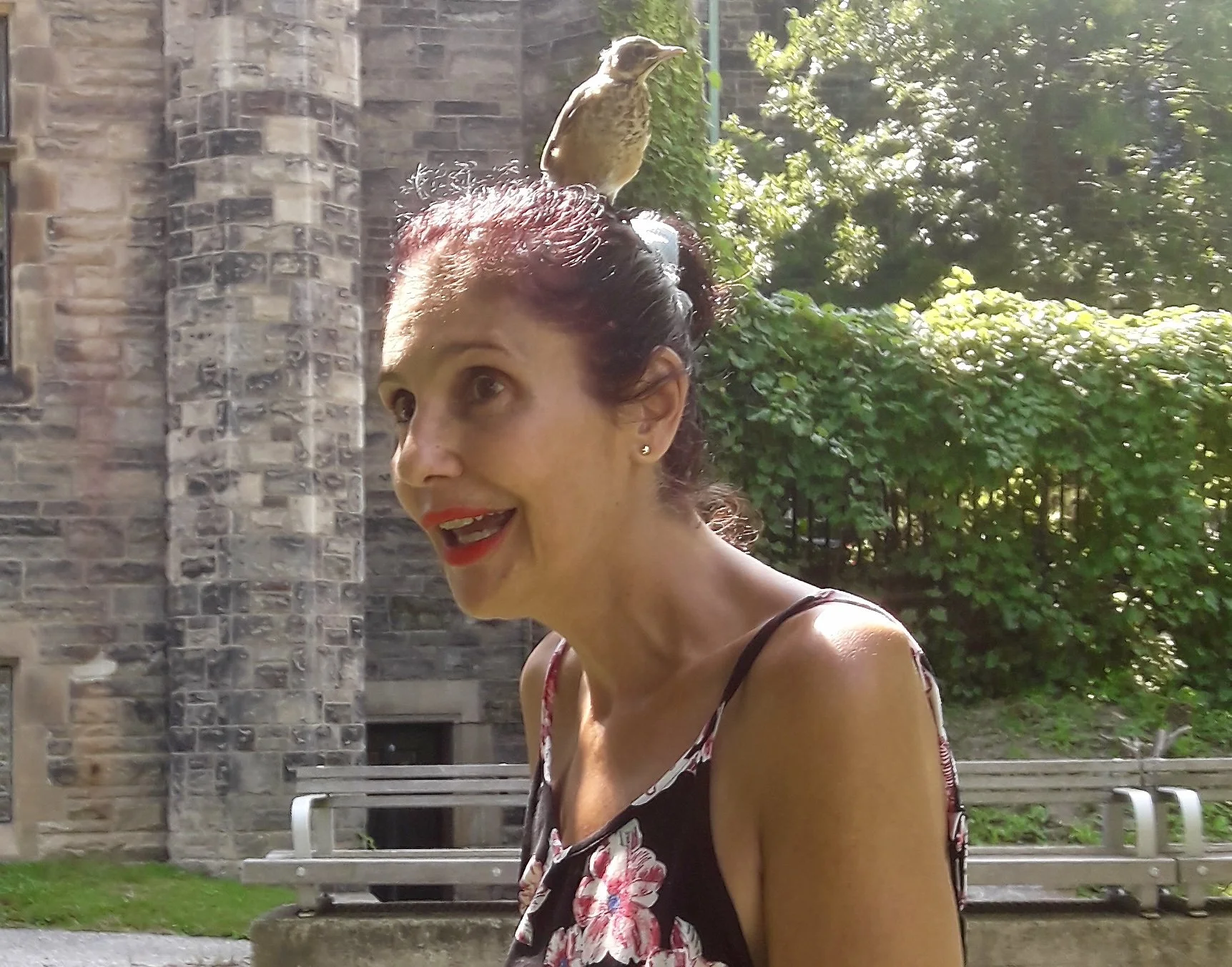
Professor Bird Brain (a.k.a.Jill Carter ) is a mixed blood (Anishinaabe-Ashkenazi) theatre maker and educator based in Tkaron:to.
Rodney Diverlus

Rodney is an art maker and creator. They are living today for sunset picnics, and grooving to the latest Amapiano track with a balanced sativa on hand, and teeth-rotting lollipop in the other.
Sarah/SGS, VP of Programming joined the Arts Commons team in 2023. Prior to her move to Calgary, she was the Artistic Producer for the National Creation Fund (NAC). In her spare moments she continues to co-steward the historic Birchdale, direct and dramaturg for the theatre. SGS holds her Ph.D. in Cultural Studies from Queen’s University.
Aria Evans

is a queer, award winning interdisciplinary artist and intimacy professional who’s practice spans dance, theatre and film. Advocating for inclusion and the representation of diversity, Aria uses their artistic practice to question the ways we can coexist.
Sarah Garton Stanley
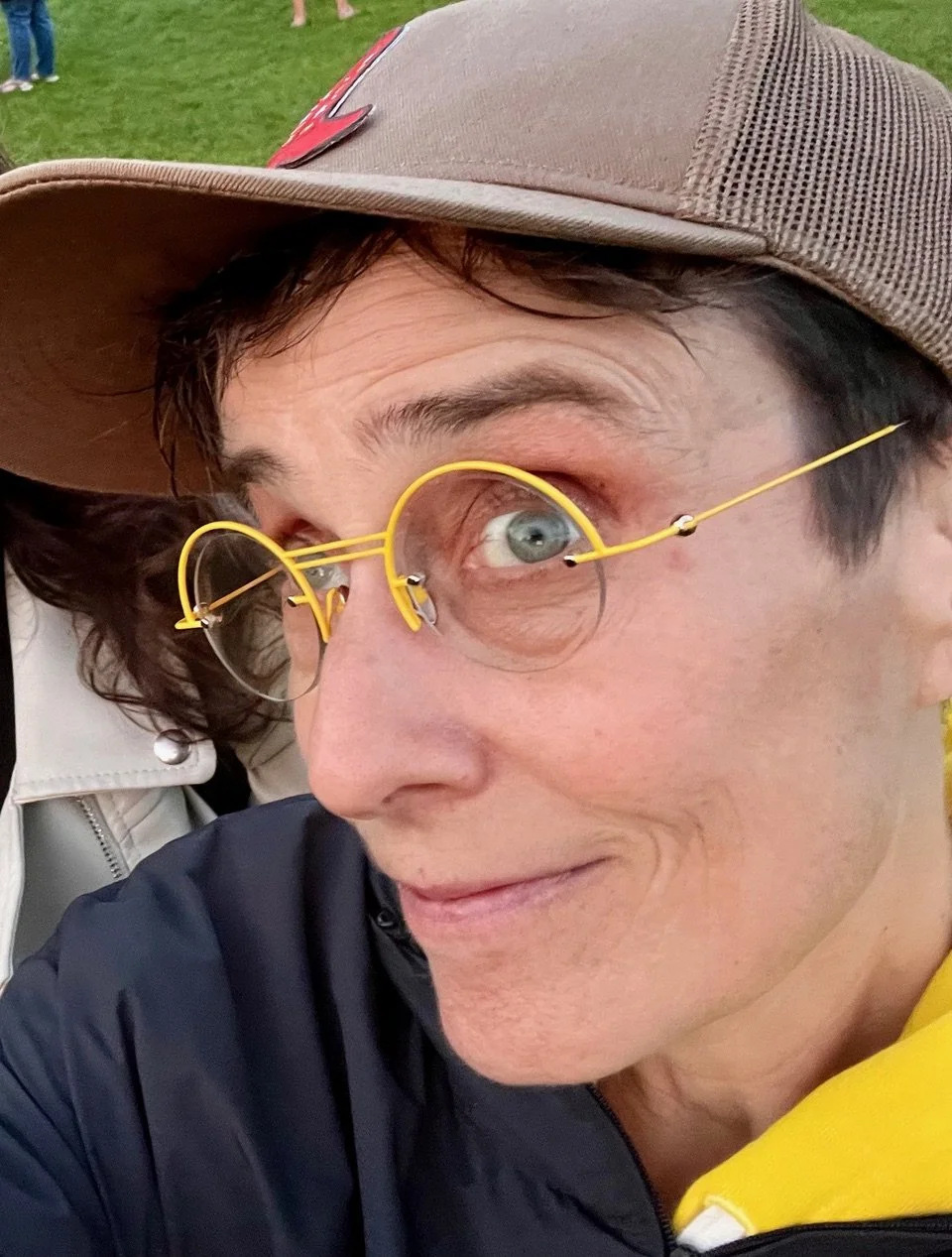
Sarah Garton Stanley (SGS) is a cultural strategist, creative leader, and national voice in the evolving story of Canada. She is also a theatre rat which has come in useful in a myriad of ways. She works across disciplines to spark meaningful change, champion new voices, and imagine bold futures. From theatre to think tanks, her work asks: What do we value, and how do we live it out together?
Martin Julien

Martin is an artist and instructor in Toronto. He loves working with younger people, older people, and everybody else.
Crystal Lee

Crystal Lee (she/her) is a Chinese-Canadian theatre practitioner originally from northern New Brunswick. She’s passionate about empowering new ways to collaborate in art making through technical leadership. Crystal currently works at Why Not Theatre as their Director of Production and Technical, leading many of their large-scale, international projects.
Richard Lee

Richard Lee is an Award-winning actor, fight director, sound designer and theatre educator, and theatre producer. Always grateful for challenges, Richard embraced his love of all things based in movement, sound and being bossy, which have led him on many interesting journeys.
Sean Lee

Sean is the Director of Programming at Tangled Arts + Disability, and someone who enjoys being overdressed at events.
desirée leverenz

desirée is an artist: she is a thinker and a doer. her brain dreams of ways to create art that shows how we can live together in a way that is filled with more depth, more fullness, and more spirit. she makes plays in her backyard, in theatres across Tkaronto, and at the university of toronto where she is a professor.
Sage Lovell
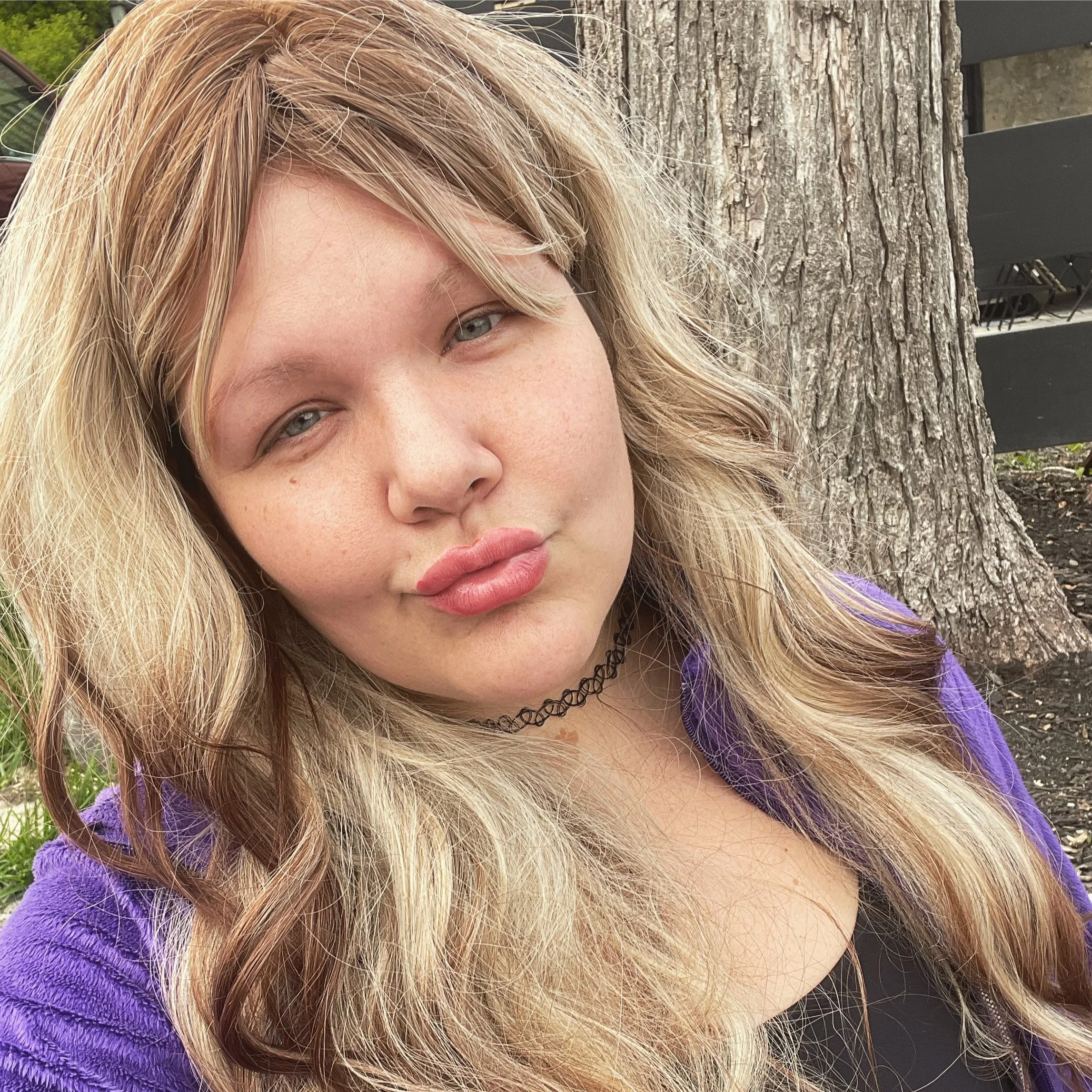
Sage Lovell is a Deaf multidisciplinary artist who likes to work their magic, using different art mediums to shift perspectives and spaces.
Sage’s Response:
Breathe. Take a pause. Feelings are valid. Feelings are also temporary. Acknowledge your feelings and unpack why you feel this way. Take your time. Ask for a break. Breathe. Breathe in. Breathe out. Ask for clarity. Avoid jumping to conclusions and gather facts. Remember, feelings are valid but they are not always logical. Breathe.
It's okay to be messy. It's okay to be vulnerable. It's okay to ask for boundaries. It's okay to feel. Breathe
Jiv Parasam

Jivesh (Jiv) Parasram is a multidisciplinary theatre artist and cultural worker currently based on the unceded territories of the xʷməθkwəy̓əm (Musqueam), Skwxwú7mesh (Squamish), and Səl̓ílwətaɬ (Tsleil-Waututh) nations -- also known as Vancouver, BC. He is the founding Artistic Producer of the Internationally acclaimed socio-political collective, Pandemic Theatre - and the current Artistic Director of Rumble Theatre.
Mike Payette

Born in Tiotià:ke (Montréal), Quebec, Mike has worked as a director, actor and educator for many years, and in theatres from coast to coast. As an actor, he has performed with some of the country’s finest companies like The Citadel, Vertigo Theatre, Manitoba Theatre for Young People, Banff Centre, Artistic Fraud of Newfoundland, Repercussion Theatre, Segal Centre, Centaur Theatre, The Grand, Factory Theatre, Neptune Theatre, and the National Arts Centre, among others.
Luke Reece
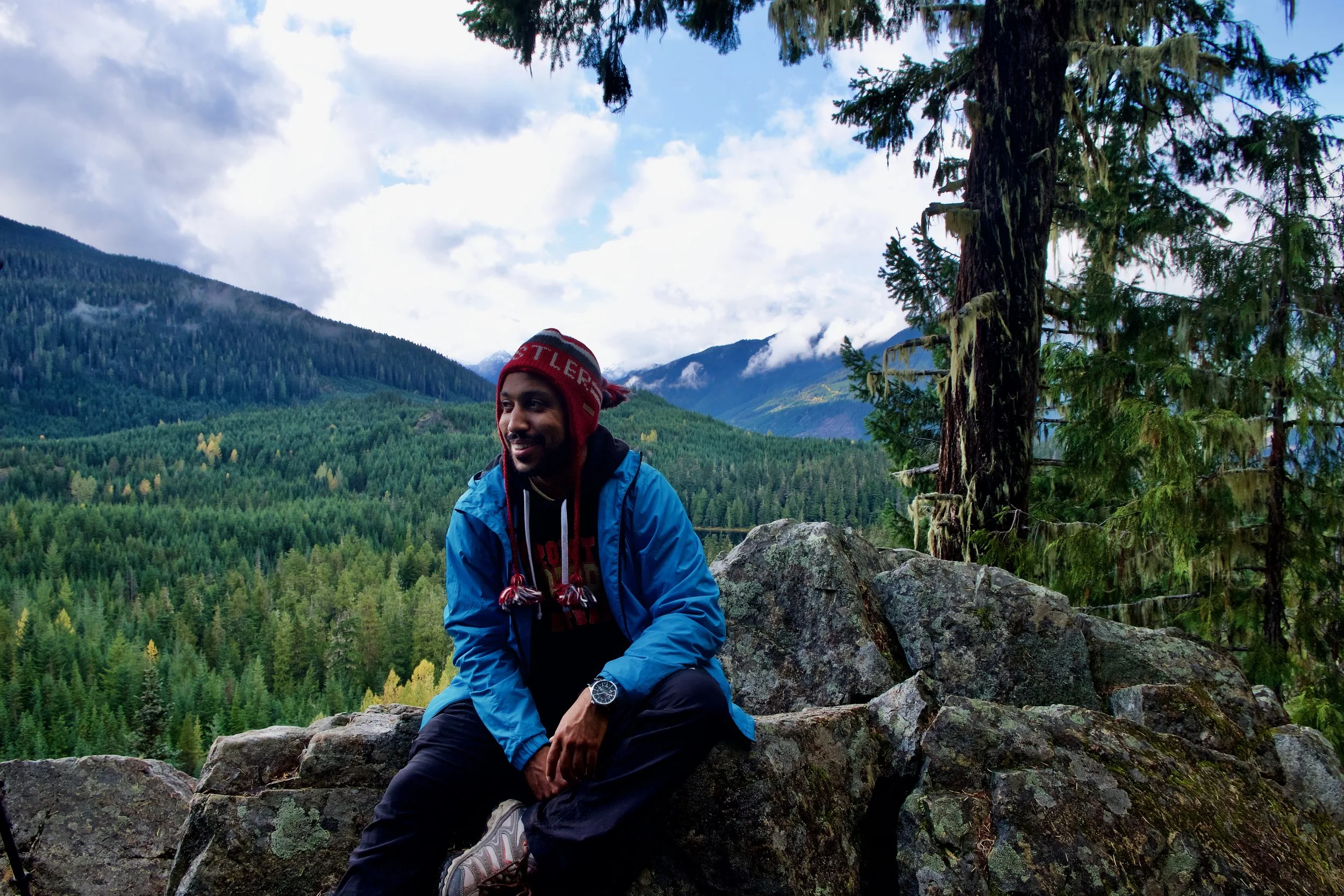
Luke Reece is an internationally renowned spoken word poet, a playwright, producer, director and educator. He is the Associate Artistic Director of Soulpepper Theatre, and a lover of both prehistoric and modern-day Raptors.
Jenna Rodgers
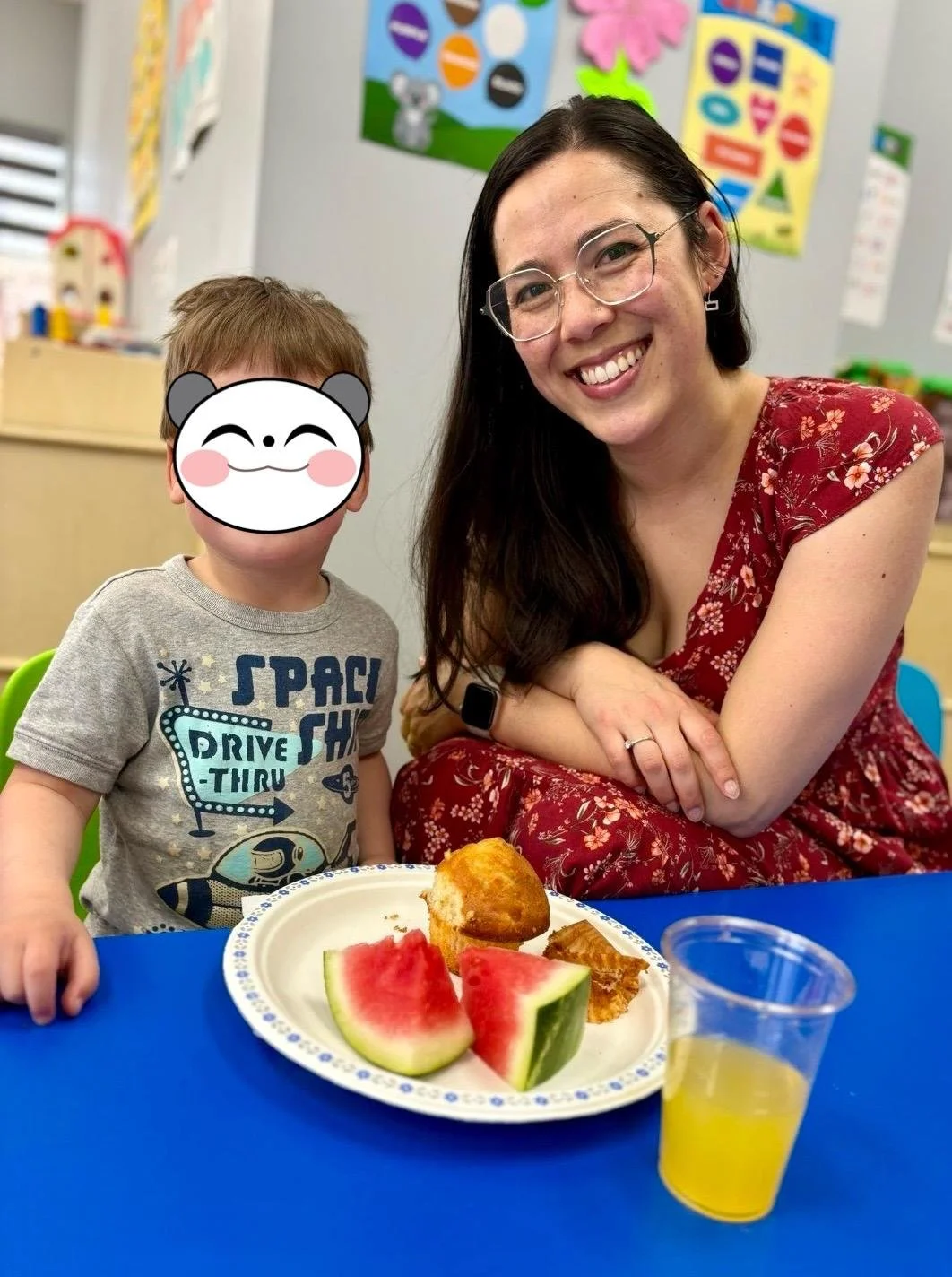
Jenna is an award winning director and dramaturg who currently spends her days worrying about Calgary’s inconsistent ability to demonstrate collective responsibility in times of crisis while trying to raise two small creative humans.
Marcel Stewart

Marcel Stewart is a father, artist, facilitator, and dope wordsmith who loves vacuuming the house while listening to the Waiting to Exhale soundtrack. He is artistic director of b current Performing Arts and one of the co-curators of FOLDA.
David Yee

david yee is a playwright and artistic director. he lives in toronto but, all things considered, would rather be in sausalito.
This campanion piece to The Art of Being a Ding Dong was compiled by Eva Barrie


The Art of Being a Ding Dong: Building the skill of accountability, with lessons from someone who sucks at it
In simplest terms…I’ve made a lot of mistakes. Today, I’ve decided to make a little float, and parade all those mistakes in front of you. Why? Because accountability is a learned skill, and the best way to learn is to fall flat on your face. I offer my bruises up because I see a lot of my peers and our arts leaders fumbling as well. As anti-violence advocate and founding member of Accountable Communities Consortium, Shannon Perez-Darby puts it “accountability is not a personality trait or identity. It’s a skill necessary for each of us to build and cultivate in order to have loving equitable relationships, communities and movements”.
This piece was written by Eva Barrie with support from Nikki Shaffeeullah and Signy Lynch.
Hi my name is Eva and I’m a Ding Dong.
Some may say a fool, a nincompoop, a human experiment gone wrong where all the brain bits turned into dryer lint.
In simplest terms…I’ve made a lot of mistakes. Today, I’ve decided to make a little float, and parade all those mistakes in front of you. Why? Because accountability is a learned skill, and the best way to learn is to fall flat on your face. I offer my bruises up because I see a lot of my peers and our arts leaders fumbling as well. As anti-violence advocate and founding member of Accountable Communities Consortium, Shannon Perez-Darby puts it “accountability is not a personality trait or identity. It’s a skill necessary for each of us to build and cultivate in order to have loving equitable relationships, communities and movements”.
Right now, I’m witnessing a crisis of accountability in our theatre community. Which makes sense: it’s not a sexy skill to have. It admits mistakes, failure, lack of knowledge, and scariest of all: being human. What’s worse, the structures in which we work haaaaate accountability. The non-profit system, with its deep roots in the plantation system (read up on it here ¹), relies on power imbalance, manufactured scarcity, and opportunism. Much of the time, any “accountability system” set up by a theatre is based on protecting the interests of the major stakeholders - the highest positions, and the wealthiest donors. But here’s the thing…it doesn’t need to be that way.
Before I talk about what could be, I’m going to talk about what is. There are other creative infrastructures and ways of working available to us, but first, we need to acknowledge the problem. A lack of accountability causes harm and impedes not only sectoral change but change on a broader, societal basis. I believe art-makers are disruptors of society, and meant to, as Toni Cade Bambara so beautifully put, “make the revolution irresistible”. In order to move towards this revolution, we need to be super honest with ourselves as we recognise that we’re missing a key skill. And to be mega clear: I’m not talking about treating each other “politely” or being “friendly”: I am talking about humane working conditions. We are working in an industry where those humane working conditions are often dismissed. I don’t want that…do you?
So let’s get to it!
What I am offering today is a collage of my clusterfucks, a smorgasbord of my schlemielism, an assortment of asshat-ery: I’m telling you about my mistakes. But more specifically, I will tell you how after I made a mistake - a very human thing, especially if you work/live in diverse communities with various needs and perspectives - my mishandling of that mistake escalated to harm because that’s the avoidable part. I will also bring in some examples from my own life where I was harmed by a lack of accountability, because - oh baby - our industry is ripe with them. In these examples, I’ll focus on where the person fumbling the accountability was in a position of relative power (the manager, project lead, AD, supervisor, instructor, mentor, etc), because that unequal relationship is packed with potential for Ding-Dongery.
With that, I say these thoughts are thoughts I’m currently working through, with my now-brain. To quote the preamble to presentations at afikra - a very wonderful organisation celebrating Arab culture, storytelling and curiosity - “I am not an expert, but I promise that I tried to learn as much as I could to satisfy my curiosity about this topic.” Because my now-brain is just mine, I’ll also offer some other materials that have helped me think critically about this topic: some podcasts, poetry, books, interviews, and people. I also took the time to ask some artistic leaders about their moments of Ding-Dongity, and their responses are in this companion piece.
So, let’s look at all the moments that make me drop my face in my palms out of embarrassment² and what those moments helped me learn.
1 The Plantation’s Fall and the Nonprofit Sector’s Rise: Addressing the Influence of the Antebellum Plantation on Today’s Nonprofit Sector by Shonda Nicole Gladden and Jamie Levine Daniel
2 FYI, I’ve been loosey goosey with pronouns and identifiers because it’s never about the individual. It is about the culture we work in that enables and justifies behaviour that hurts people. Secondly, at times my writing style may make it seem like I’m flippant about the harm I’ve caused. I’m not. I have a lot of gratitude for what these people taught me.
FACEPALM ONE: How dare you be so cruel and ask me to stand by my values?!
“Defensiveness creates unnecessary barriers. Sometimes people leave movements or communities, or stop attending events when they’re met with defensiveness, so please be receptive to feedback and give thanks for the gift that it is.”
Being asked to be accountable can be painful, as making mistakes can feel like a personal failure. A lot of folks express personal fears and challenges around being “called out” or “called in”. It can stir up a lot of emotions, and those feelings can be painful. But it’s important to distinguish between the pain of shame and the pain of harm caused by others.
In my Ding-Dongest of times, I was under the impression I was “above” certain mistakes. I had reached Gold Status in the Enlightenment category. I truly wish I could tell you this was when I was fresh out of the womb, but no. It was after years of justice work. Despite the organizing tenet that people are works-in-progress and ever-learning, I hadn’t fully internalised those fundamentals. So, when an artist approached me to share that my language and action around a certain topic was oppressing a group of people, my first thought was THAT’S IMPOSSIBLE! Which led to a series of arguments about how that was truly madly deeply IMPOSSIBLE, and included five-star “proof” akin to “but some of my best friends are from said community.” I was so busy caring about my feelings and the person I wanted to be (or be seen as), that all I could do was think about how HORRIBLE and MEAN the person who was asking me to maintain my publicly stated values was. Oh ding-dong Eva. Mayor of Ding-Dong Land.
I wonder if a big part of this is rooted in Canadian culture, where there’s a long-standing belief that shows itself in many circles, in many ways: we have Good People and Bad People. Good People don’t hurt others. Good People have “done the work”. Good People never make mistakes or cause harm because Good People would never flirt with being a ….Bad People.
But the thing is, you aren’t a bad person if you make a mistake. You’re worse than a bad person… you’re human. And that sucks, doesn’t it?
Our world has been shaped by a lot of pain: colonialism, white supremacy, white supremacy’s BFF capitalism³, and it’s near impossible to assume that these ideologies would not shape your behaviours, relationships, thought-processes, and therefore how you handle conflict. And, unfortunately, no one is above that because we all grew up in this dumpster-fire world. We all carry a lot of pain, and I’m a believer that we need to approach our work - and ourselves - in a trauma-informed way. Staci Haines, author of The Politics of Trauma writes: “While we have all inherited the social conditions in which we were born, while we have embodied them, and been shaped by them, we have many choices — and accountability — about what we do with them once we have more choice and agency as adults” (Haines 2019, 87).
“When we avoid conflict or move through it carelessly, we end up acting out and reinforcing micro versions of oppressive structural patterns unconsciously, even if we are from an identity harmed by those systems. This can end relationships, sidetrack organizations, and undermine social movements.”
I think one aspect that made (and continues to make) confronting my own actions so challenging is a culture of perfectionism. Back around the #MeToo time, I remember seeing a tweet from a pal that said something along the lines of “you know who doesn’t create abusive work environments? Women and people of colour”. If I remember correctly, this person was calling for more diverse leadership in the theatre community. Though the tweet was very well-intentioned, as someone who is both a woman and a brown one at that, it made me tighten up. The “perfect minority” myth robs the global majority and other historically marginalized groups of their humanity. I’d been brought up to believe that in order to be taken as seriously as my white male counterparts, I needed to be undeniably excellent at what I did. But that often leads to “excellence” being defined through a white lens. That white lens looooves perfectionism. It’s suuuuper into the unsustainable “star hero” leader⁴ concept; and lastly, it perpetuates white supremacy by robbing BIPOC leaders (especially Black women⁵) the ability to make mistakes and be met with compassion and the right to grow and learn.
If I could go back and speak to the Mayor of Ding Donglia (though I’m not sure she could have heard me from up on her high horse), I’d encourage looking at events as individual events shaped by society, and not markers of being a Bad Person. If we remove our own ego/reputation/resume from the equation, then we can address the moment, and put the focus where it really belongs: taking action so it doesn’t happen again, addressing unconscious bias, and finding remedy for the situation that needs repair.
If I may reference a mega-academic source for a moment: in Pixar’s Inside Out 2 when the lead girl is having an anxiety attack, the character of anxiety (yes, emotions are characters) takes over the control board in the little girl’s head (just watch the movie). Anxiety is so powerful, that it becomes this storm, and none of the other emotions or thoughts are able to get in there and balance the girl out. I really relate to that animated depiction of a human girl.
I feel like, in moments where someone comes to me and shows me I’ve swayed from my values, the little shame character in my head takes over, and tells me everything I’ve ever done is garbage, I’m garbage, and I should go and live in a trash bag. And instead of recognising that that was my own action that prompted that feeling, my shame character instead takes it out on the person messenger - they’re garbage! Everything they’ve done is garbage! I hope plastic bags flatter your silhouette - you garbage!
But lashing out at other people is kind of the opposite of accountability. So let’s hop into that shame bucket for a moment.
3 When I talk about these two ideologies/systems today, I’m not only referring to the overt white supremacy (ya know, the white hood kind), or overt capitalism (ya know, the billionaires behind the white hood kind), and I’m also not referring to them in our psychology. We live in a world that doesn’t just feature capitalism and white supremacy, it shapes the world, us, our ideals, values, and relationships.
4 The idea that a company’s integrity and identity is based on their leadership, rather than their work and mission (Kaust and Goodwin, 291). It leads to impossible succession planning, and also, it’s inherently flawed: individuals conform to their environment (Callander & Whitaker), which means unless there is deep structural change and a removal of dominant systems (ie: non-profit system), then there won’t be a lasting or meaningful change.
5 The State of Black Women Leadership Is In Danger by Cyndi Suarez
FACEPALM TWO: I disagree with you, NOW BURN IN HELL!
I was once supervising someone who I ended up not seeing eye to eye with, in a lot of ways. Where they saw comedy, I saw tragedy. Where they saw black, I saw white. Where they heard nails on a chalk-board, I heard Josh Groban’s 2007 Noël Album (I weep at the key change in Little Drummer Boy). So, when conflict arose, we had very very different viewpoints.
When this person came to me with their concern, my first impulse was to dismiss and brush them off. They were wrong! They were wrong about other things (the Josh Gorban thing?!).
“My sense is that if I spend more time talking to you than I spend complaining about you, then something wonderful often happens and the enlightenment is mutual ”
Other people viewed the situation the way I did! Plus, this person, according to previous employers, wasn’t really Mr. Congeniality, so that meant my views of them must be right (that’s what we call confirmation bias, but obviously I didn’t want to learn about confirmation bias - that wouldn't help me confirm I WAS RIGHT). I spent more time looking for reasons to NOT listen to this person, than I did investigating their actual concern.
When I took a break from my nonsense and took a step back, I remembered that as a person working for a not-for-profit company, it was literally my job to listen to and serve my community. Like actually. It’s breaking Canadian labour laws if I don’t. Leadership isn’t about writing grants or programming art; it’s a job of service, and, if we, as a community, begin to recognise that, it can lead to sectoral change. So I put my ego (my beautiful perfect ego!) aside, and when this person and I got to talking, and I got to listening (like actually listening. Not the kind of listening where you wait to say your point and win your argument⁶), I saw where they were coming from. I understood their anxiety and hurt much more.
“So, you know, when you have a conversation, you never know what’s going to come out of your mouth or out of somebody else’s mouth.
”
Organizations need disruptors, and they need to welcome disrupters wholeheartedly. Institutional conformity leads to staff members not seeing problems where they are, even if they are blaring from an outside perspective⁷. The issue is, because our workplaces and understanding of leadership is based in patriarchal values, “institutional dissent” is seen as a negative quality, when, in fact, it’s vital to progress⁸. Even (and often) the most progressive orgs⁹ can fall trap to this, and need to do the work to ensure their values are in line with handling conflict in moments of stress.
Ultimately, this person’s coming to me was an act of generosity. They cared about the work and wanted to enhance my leadership. We shared the goal of treating artists well, and thankfully (once I actually listened), I understood that. It took me an embarrassingly long time, but I recognised that you do not need to agree with someone to be compassionate.
6 Great read: ”Dismantling Privilege with Mindful Listening” in Beth Berila’s Integrating Mindfulness into Anti-Oppression Pedagogy: Social Justice in Higher Education
7 McMullen: “What Makes an Entrepreneurship Study Entrepreneurial? Toward a Unified Theory of Entrepreneurial Agency”. If you’re interested in institutional conformity, I have a lot of sources that are a touch less dense than this one (see works consulted)
8 Engaged Dissent: Entrepreneurship and Critique in the Institutional Practice of Three Contemporary Artists by Adrienne Callander
9 Staci K. Haines: The Politics of Trauma
FACEPALM THREE: Do I look like Curious George? Keep your Nancy Drew questions to yourself!
“Before we make any judgements, we must ask questions. This is the deepest meaning of the idea, often repeated but little understood, that the study of art shows us how to live ”
I once had a manager who didn’t ask questions. If I offered something she didn’t understand, she would never dig, but move on, as if it was not an important element of the conversation if she didn’t know it. When someone in the company expressed concern, her go-to was “that’s not a problem here”.
Looking back, I think it was because of insecurity not narcissism, but that didn’t change the fact that conflicts continued to escalate because there was a deep lack of curiosity in the other person’s perspective and knowledge. Jordan Klepper, best known for being an undercover leftist interviewing people at Trump rallies, hosted a TED talk about how to disagree with people (and thus, save democracy), and offers that the phrase “‘I don’t know’ invites softness”.
In their Turning Towards Each Other Workbook, Jovida Ross & Weyam Ghadbian invite us to treat every complaint as though a percentage of it is true, and it’s our job to find out how high that percentage is. I also like to look at this with a dramaturg’s eye: in a play, nothing ever happens “by chance”. A poor dramaturg is quick to dismiss an element of the story if it doesn’t fit their understanding of the play so far. Similarly, poor accountability happens when we assume a concern is impossible/untrue/outrageous/in bad faith. So, instead of dismissing any complaint, turn up your curiosity and figure out how much truth there is to it.
“Shut up and listen. Shut up and listen. Shut up and listen…and once you’ve heard, ask poignant questions about what you don’t understand.”
If someone comes to you and surprises you with a concern or hurt, even if you can’t imagine any truth in their offer (which…come on, let’s be real, that’s pretty douchey), make the assumption that it is at least 25% true and find out where that 25% is hiding.
Especially if you are working interculturally, there is absolutely no way of knowing everything about someone’s experience - that’s beautifully impossible, and why art can be so profound! I was working on a show about the experiences of folks in the South Asian diaspora (which is a huge and diverse group of people, much to the confusion of many North Americans). Things began to get crunchy in both a creation and producing way when some peoples’ views and needs were met with more care than others, in ways that replicated the systems of supremacy in the region. I asked to have a conversation about it, but management said they didn’t see the problem, because for them, it seemed like a fuss about “slightly different brown skin tones”. I didn’t expect this person to know the ins and outs of colonialism, the violence of partition, forced displacement, the caste system, India’s current right wing government, Hindutva, colourism in India and its ripples in the diaspora and and and….but, looking back, a more responsible - and certainly more brave - response may have been “I don’t know enough about that, can you tell me more?”.
Curiosity often leads to beautiful art. As arts leaders, why not embrace that in our organization as well?
FACEPALM FOUR: I WILL ONLY LISTEN WHEN YOU’RE ABSOLUTELY PERFECT
I spent a lot of my youth learning to get people to listen to me. I would avoid loaded words like “racism” when actions were clearly racist, and instead try to find cute lil substitutes instead. I’ve attended a lot of conferences and workshops on “speaking up” and “not being a bystander”. To this day, I still send any email that might be received in a negative way to at least a few colleagues and mentors, and I’ve looked over many emails from friends doing the same. I have followed the proper workplace safe-space reporting channels to a tee, and followed all the company’s stated rules.
And you know what? If the interest in building accountability skills isn’t there, I don’t think any of that matters. No matter how the person harmed addresses you, if you don’t want to listen, you’ll find a way to shut them down.
The go-to tactic to get out of accountability is to blame the victim. Whether it’s nitpicking their words, finding something they didn’t do perfectly, or feeling the way they responded to the harm and violence you are responsible for wasn’t chill/kind/professional/polite enough, whatever your tactic is, it distracts from the real problem: the behaviour and action you and your organization have committed. Civility politics will always derail the bigger picture and gaslighting will always be easier than taking responsibility.
There’s a trend at the moment to claim a victim is overstating harm. I’m really not into that. Firstly, it dismisses that percentage that may be true that we explored in Facepalm II. Secondly, and for me, more importantly, what if we dropped the bar for compassion? If someone comes to you and says “you sprained my wrist” and your response is “psssht, come back when the whole arm is broken”, what does that say about you, and us, as a whole? In an art form where we strive for vulnerability, and the words “empathy” and “compassion” appear smattered across websites and grant applications, do we actually celebrate those traits, or are they just marketing tools?
FACE PALM FIVE: BUT NELLY FURTADO’S SONG ‘POWERLESS’¹⁰ WAS WRITTEN ALL ABOUT ME!
Leading is sometimes a very thankless job. People don’t see all the battles you fight daily. You are working in systems that aren’t conducive to artistic success and risk, and it can feel like you are constantly hitting against a wall.
There are a lot of intersections of identities that can affect power dynamics in relationships (race, class, gender, ability, etc), but one place where a leader certainly has power is over the person they hired. Because…they hired them.
If I may get nerdy with you (who am I kidding, you’re reading a Generator blog. You’re all a bunch of nerds), the way Marx defines capitalism is the inherently exploitative relationship between employer and employee. As a worker, you do not need to feel exploited to be exploited, you systemically are¹¹. The employer has more power than you, and makes decisions that affect you, for you.
And when we think of the freelance/gig work system, if you can choose whether or not to work with someone, you have power over them. If you sit on juries, conduct auditions/castings, and have the ability to make someone who expressed concern to you feel small and unwelcome when you run into them in an industry setting…hullo power.
In their essay The Death of White Supremacy Culture in the US Creative Sector and Implications for Arts Management, authors Floyd and Cuyler discuss how an understanding of critical race theory can help people in arts management positions better create healthy working environments. One thing that struck me was their articulation of how people who have formal or informal power insist on a “right to comfort” which means protection from “open conflict”¹². This right to comfort allows those in power to maintain power. Over the years, I’ve heard an increase of “self-care speak” being co-opted by those in power, but never granted to those with less power¹³. This connects to Floyd and Cuyler’s thoughts on the colonial-capitalist worship of individualism, or what they call the “I’m the only one” mentality: the person in power is the only one with the knowledge, expertise, and experience to lead the team, and denies the essential principle that human beings are interdependent¹⁴ (connected to the star-hero complex of Facepalm One). White supremacy culture then turns this against the person with less power in a new, perverse way: if someone with less power acts in a way that protects their individual dignity (ie: whistleblowing or simply voicing concerns), they are seen as not “a team player”¹⁵. Think about the summer of 2023, when Marit Stiles removed Sarah Jama from the NDP caucus after she advocated for Palestinian human rights. In an email to NDP supporters, Stiles said it had nothing to do with Jama’s advocacy, but about “principles of trust and working together as a team”¹⁶. Now, that’s white-speak for “I felt uncozy when you reminded me of your humanity” if I ever heard it.
So, when someone with less power comes to you with a conflict, work to even the field, or better, empower them. People can’t listen or communicate when their nervous system is in threat mode (the flight/fight/appease/dissociate mode)¹⁷. So, ask them how they want to have a conversation and respect their rules. Sometimes texts/emails feel safer, but we lose important information, and there isn’t an opportunity to actually have a dialogue (especially non-verbal dialogue). When I’ve asked someone to meet with me in sensitive situations, I will encourage that person to bring a pal, and meet them in a place that will make them feel safe to express themselves. Some people feel uncomfortable about this because of “confidentiality”; however, when working under Canada’s Charity Act, I argue that transparency and accountability are far more important than protecting the confidentiality of those in power (I also think NDA’s in the non-profit sector should be banned, but who am I?). After the meeting, it’s also helpful to say you’ll be checking in in a week or so, and then do so. Why? Let people decompress. Take away the pressure that this was the only chance to talk. Nurture a relationship. Care about your community on a deeper level, not just on a mandated HR level.
Accountability is hard. It requires us to be very honest with ourselves. What are YOUR intentions going in? Are you just there to tick off a box, avoid a lawsuit, or (upsettingly often) punish the person for their criticism and foster a fear of reprisal in your organization? Are you acknowledging the power imbalance and your responsibilities as a manager/leader/facilitator/instructor/elder? In leadership, that kind of radical reflection and honesty is not a trait that is celebrated, as it threatens profits and power. But maybe it’s time we re-prioritized what we believe is effective leadership. What if we welcomed tenderness, compassion, and reflection?
10 This song is a banger and it should be played more often, more loud.
11 Richard Wolff: Understanding Capitalism, pg 148
12 The Death of white Supremacy Culture in the US Creative Sector and Implications for Arts Management: A Critical Race Theory View” by Quanice Floyd and Antonio C. Cuyler
13 In my life, I have asked for a mental health leave three times (I would have benefitted from more, but I was trained in the era where if you weren’t deeply mentally distraught, you weren’t working hard enough). The only time it was ever afforded to me was when I, myself, was in a leadership position. Every other time, I have been told to “buck up” followed by a meaningless “but if you need to chat, girl I’m totally here for you”, or been removed from the project.
14 This is also discussed in Sins Invalid “Skin, Tooth, Bone”...and a really fantastic primer about disability justice.
15 Floyd & Cuyler - great read!
16 Email “A Message to Davenport”, Oct 25th, 2023
17 Staci K. Haines: The Politics of Trauma
FACEPALM SIX : Loyalty Part I: I took your cat to the vet, you must bow down to me forever!
Just because you got someone a job, programmed their show, bought them a house, or attended their goldfish’s graduation,that does NOT mean that you can dismiss their concerns.
The paternalistic behaviour of “I made you” needs to go, but it can rear its ugly head in big and little ways. If an artist you supported comes to you and expresses a fear or hurt, do not diminish their experience, talent and hard work. They do not owe you loyalty in the face of harm. And when there is a difference in power, there is no such thing as two-way loyalty. They can lose way more than you.
“‘Sir, please don’t say that’ Why? They said ‘We think it’s very inappropriate to say so’ Why? I’m president. I want to protect the women of this country. They said ‘sir, I just think it’s inappropriate for you to say’. I pay these guys a lot of money, can you believe it?”
Economist Richard Wolff talks a lot about the psychological toll capitalism has on us¹⁸. It engrains itself in relationships, making people believe that all relationships are transactional. It stops being about humane, compassionate, joyful interaction, and more about opportunism and aligning with the people who can bring a person the most economic/professional gain.
It’s hard to stand up to power, and I’ve talked to a lot of people who feel they just can’t do it, or support someone who is doing it. And if someone commissioned your work, championed you along the way, or frequently hires you ensuring steady income…I get it. But I wonder what could happen if we rewired our brains to believe that holding someone accountable is not attacking them. What if we, as leaders, celebrated people who help us serve the community?
18 Richard Wolff: Understanding Capitalism, pg 159
Loyalty Part II: Ronaldo took my cat to the vet! Bow down to Ronaldo forever!
“Even after all this time
The sun never says to the earth,
“You owe Me.”
Look what happens
with a love like that
It lights the Whole Sky”
Let’s say someone approaches you and says, “hey, Ronaldo over there punched me” and your answer is “what?! Ronaldo is a hoot at all my parties so slap some frozen peas on that black eye and get back to work”...are you acknowledging that Ronaldo is a human? Is it compassionate to view Ronaldo as a one dimensional perfect robot? Or is it in Ronaldo's best interest for you to support them in their journey of accountability, while simultaneously acknowledging the hurt person seeking help from you?
I was once in a conflict with a colleague over an initiative we were launching. I wanted to GET IT DONE and they needed more time to work it through. I called up my mentor, asking how I should deal with this VERY difficult person who is VERY wrong about everything. I expected my mentor to tell me I was so right, so pretty, and so cool. Now, she has been mentoring me for many years, and there’s a reason for that. When I finished telling the story, she thought for a moment and asked “well, sure, okay, you sound very passionate about this but…do you think you might be steamrolling your colleague? And isn’t that the bigger issue here?”.
We need people who will pull us down to earth and encourage us to contemplate our actions with humility, like my mentor did. Surround yourself with those people. Work with those people. And hopefully…become those people.
Loyalty Part III: But it wasn’t me! I’m just hanging out here with Ronaldo!
I think, at times, we are more loyal to our proximity to power than we are to our values. If harm occurs during a working process, it is not an interpersonal spat - it is a workplace issue. Just because you aren’t directly involved, doesn’t mean this issue does not deserve your attention. By turning away you are complicit in the harm, which will - without attention - inevitably grow into an engrained workplace culture.
Moreover, if we don’t address harm in the workplace, or if we pin it all to one “problem individual” we aren’t looking at the whole structure that allows that behaviour to continue¹⁹. I relistened to a chat between Jill Keiley and Weyni Mengesha the other day, where Jill asked Weyni how she felt about needing to make amends for the actions of Soulpepper’s previous administration. Weyni’s very thoughtful response includes how she is now benefiting from an institution that enacted harm, and that she is “interested in doing the work, and the only way you can do that work is to acknowledge what’s happened” and goes on to add “I take just as much responsibility because we need to. We all need to be active”. I’ve known a lot of leaders with less mature and reflective responses, but I’m very grateful for the grace Weyni has to recognise and address the responsibility that comes with being a community leader.
When it comes to addressing organisational harm, you can put your head in the sand all you want, but eventually your silence is hurting everyone (including you). Yes, it sucks and it’s hard and dangerous to stand up for others, but I also urge you to reflect on accountability to yourself. Are you staying true to the person you want to be? What’s getting in the way? Who can you reach out to for support on re-aligning your moral compass?
19 Reverend angel Kyodo williams chats about this in this ctznwell podcast very thoughtfully.
An Important Sidebar: Understand Gaslighting.
Gaslighting has been a term that has been in heavy rotation the last few years. Some may see the term and believe it’s over-used, but I think it’s indicative of how pervasive the problem is.
A lot of the above examples move towards gaslighting, and it’s important to understand the specifics, especially of “workplace gaslighting”, or “whistleblower gaslighting”. Gaslighting is psychological manipulation, and it is against Canada’s Occupational Health and Safety Act and employment laws. Despite it being against the law, it is extremely prevalent in the Canadian theatre industry. In order to foster an environment of accountability in your organization, make sure that you are well aware of the signs of gaslighting, and watch for signs of this within yourself and others.
Workplace gaslighting can look like: “trivialization by a supervisor [by] changing topics to place blame on [the victim], minimizing concerns, making promises that don’t match their actions, twisting or misrepresenting things [the victim] said and making degrading comments about you and pretending [the victim has] nothing to be offended about” (Forbes). Gaslighters can also abuse power by claiming they are the victim in order to emotionally blackmail their subordinate (think about the “right to comfort” premise), disregard or ignore facts you put in front of them, or convince someone that they are alone, and no one sides with them.
I once was harmed by the supervisors of a project, and after some time, we entered the mediation phase. The process was sold to me under a transformative justice lens, and meant to be respectful, caring, and with the goal to listen to each other. When I got there, it felt like a thesis project on why I was unworthy of compassion. I was spoken over, lied to repeatedly, scoffed at, had my racialized experience belittled, my character questioned, my intelligence minimized, made to believe my supervisor was victimized, and told I had imagined behaviours I had experienced despite the fact there was clear proof. I reached a point where I actually couldn’t speak or articulate my thoughts anymore (and look at the word count on this article, if anything I’m verbose). Looking back (and with help from therapy), I understand now I entered the trauma response of “appease” in attempts to stop the ever-expanding harm²⁰. The way this manifested was that I withdrew my original complaints of sexism and racism. This sucked, for a lot of reasons. Firstly, it lets the company believe that if they use cruelty, they can silence and control community advocates, and continue inside the abusive systems that give them power. Secondly, I was so excited when I woke up that morning. I am hopeful to the point of naivety, and I really thought repair and rebuilding the relationship would start. But it wasn’t the time.
For me, it took me a while to figure out what was happening. It affected every single relationship I had, or was to have, for a long time, and affected the way I approached my work and studies. I closed off. I stayed away from theatre work, out of fear of it happening again. Physically, I became unhealthier. My self-worth took such a blow, I was convinced that not only was I not strong enough for theatre work, I was not strong enough for life. It was especially tough because it was from people I trusted and cared about. But these are the effects of gaslighting; it truly shatters individuals.
Capitalism trains us to accept the suffering of others. It’s part of the game²¹. We do “the best for the project”, or make sacrifices for the “art”. But we actually need people to make art. We need collaborators. No art can be made in a vacuum, and no artistry needs to rely on abuse.
*A note to those who have been gaslit:
I’m really sorry. I wish I had a fix for you, but I’m not there either. Do seek professional help (that was very helpful to me), and find someone to work through the trauma not only mentally, but physically as well (our bodies store trauma). One offer that was made to me was to stop trying to receive solace from the abuser(s). They are on their accountability journey and it’s best not to wait for them. Surround yourself with people who want the world to be more courageous and humane. Be inspired by them, and know there are so many of them.
20 Staci K. Haines: Politics of Trauma
21 Richard Wolff: Understanding Capitalism, pg 160
FACEPALM SEVEN: Sit…. …sit…..Stay. Good Leader - Hey! Get back here!
Shame often leads to a desire for self-preservation. We want to stop this feeling as quickly as possible, and save ourselves. So the answer? React as quickly as possible. Don’t waste time considering other possibilities or gathering information, but press the “EJECT” button as quickly as possible. I’ve seen this destroy teams, art, and people.
“I’m so used to being very responsive, take-action-now kind of person. And always told myself this was a good thing, and that I confront issues as they happen, but a bit of age and wisdom have shown me just how counterproductive it can be when it comes to interpersonal and inter/intra community conflict. So many times adding more fire to the fire, only makes it burn longer.”
A culture of false urgency is alive and well in many organisations. The Montreal-based Centre for Community Organizations created the White Supremacy in Organizations resource, which articulates how false urgency is a key element of what the authors define as ‘white supremacy culture,’ and lists ways cultures of urgency undermine anti-racist values. Notably, it takes away inclusive, thoughtful conversations, and doesn’t allow us to consider long term consequences of our actions. We attempt “quick fixes” without actually looking at the root of the issue.
Furthermore, a culture of false urgency lessens our ability to handle real urgency - mental health emergencies, death/illness/injury, as well addressing harm. Often our workplaces put capitalist pursuits (the production) above all other labour, responsibilities, and life circumstances. They remove us from life…and how are we supposed to make plays about living if we consistently diminish its importance?
So, next time someone expresses you caused them harm, it’s good to take the time to breathe and process - but be sure to communicate that; don’t leave them hanging. And don’t add false-urgency-things like “I’ve got a show to open” or “this grant deadline is coming up” or “I am making a pinata and I really need it to look like a life-like version of Jeff Goldblum”. Shows can “go on” in multiple ways, grants are there to support - not supersede - people, and maybe the pinata thing is actually urgent so you keep glueing on those paper strips, girl.
And speaking of opening shows, grants, pinatas, and other juggling…
FACEPALM EIGHT: OUR STATUS QUO IS “LOL everything sucks anyway”
“It is what it is” is the most unimaginative sentence, and it’s infuriating coming from creatives.
Theatre in Canada is very conservative, and why? It was designed that way. The non-profit industrial complex and charity as we understand it was created by puritans (Calvinists), who were mega horny for capitalism, but still thought selfishness would send them to hell, so they invented charity to feel chill about their capitalism²². Because of this, a lot of non-profits function under capitalist norms, and rely on the existence of capitalism to thrive.
“We need each other. We need each other’s differences. We need the many different things that each of us has to offer. This is about relentless humility: we do not know how to make the changes that we need to make, and we will only discover the paths together.”
But guess what? We can do better! I promise! There are alternative models (worker coops, fiscal sponsorship, participatory budgeting/democracy practises) that root themselves in anti-capitalism, and therefore are anti-racist (because here’s a tough nugget of truth: if your anti-racism isn’t also anti-capitalist, it’s not anti-racism, it’s an instagram post). Inviting new ideas from outsiders allows for “ontological facileness”²³; which is nerd-speak for the ability to imagine a different way of existing. This is crucial in building up capacities for accountability. The less open we are to new ideas, the less likely we will be to take responsibility for harming someone, because we can’t possibly imagine a world where that harm didn’t need to occur.
Recognise that your status quo may be cozy - or at least unsurprising - but an outsider may see how you can pursue your mission with more care and success. Remember: caterpillars turn into literal goop before they become butterflies. It’s not comfy. It’s gross and weird. But embrace the goop.
22 “The way we think about charity is dead wrong”, TED Talk by Dan Pallota
23 “What Makes an Entrepreneurship Study Entrepreneurial? Toward A Unified Theory of Entrepreneurial Agency” by McMullen, Brownell, & Adams.
FACEPALM NINE: Set our organization up for conflict? Naaaah…. We have excel sheets to colour code.
I was once producing a project that was a doozy. Artistically it was challenging (in a fun way), and logistically it was a nightmare (in a nightmare way). Once opening came, my co-producer and I were EXHAUSTED. We decided I could take a weekend off, and upon my return he would take time off. While I was gone, DRAMA unfolded (and not fun drama, nightmare drama). When I returned and the drama was doing a drama-dance in front of me, my response was “how could you let this happen?!” rather than the much better response of “how can I support you” or, even better, “how can we set ourselves up better to avoid these situations, and also respond thoughtfully when they do happen?”. We were both too exhausted to effectively deal with a conflict, so it escalated and caused harm.
That incident led us to revisit our values, our protocols, and the company organisation. Our organisation was unhealthy, which led to us making unhealthy decisions. It required consultation and a freeze in day-to-day operations, but that was OKAY because ultimately, it made the work more sustainable, and allowed us to begin the journey addressing conflict with compassion and clarity.
One piece of advice from a mentor was to normalise conflict, so we dedicated time in every staff meeting to discuss resolved and unresolved issues. Initially, it felt self-congratulatory (“so-and-so were in a conflict, but look how perfectly we handled it!”), but with time, I noticed that team members were less conflict averse, and even felt empowered to bring seemingly resolved but still crunchy moments to these meetings. It also was an opportunity for us to practise receiving feedback (ugh so hard) and learn the skills to listen, process, and work through moments of challenge. In these sessions, and then as a company, we were practising the ongoing and ever-evolving journey of accountability (guess what: no one is ever done learning to build this skill). What it taught us was that accountability is not only about reacting in the moment, but how you can prepare, plan, and work together daily.
Rather than assuming conflict won’t ever come up - bet that it will, and that’s not a bad thing! Invest in training and time to build that skill.
FACEPALM 4 MILLION²⁴: BUT MY BUDGET IS A GET OUT OF JAIL FREE CARD
It’s so easy! You just shrug and say “oh man, if only we had more money! Shucks!” and the conversation is done and everyone hugs. If only…
Budgets are much more than numbers. They are made by people, and they reflect our values. They tell our stories, create hierarchies, reflect long term goals, and spotlight our biases or inherited historical inequities²⁵
Many years ago, I had a pal that was on tour in Europe, and as her and the creative team jumped from country to country, she found out that the actor she was working alongside had a per diem. It had been negotiated into his contract, because he’d worked with the company before, and it was standard based on his home province. It was just the two of them in the show. She then approached management and asked for a per diem as well. The company said it was too late, and they didn’t have the budget for it. She then shared that this made her uncomfortable because it meant that a brown woman and a white guy were doing the same job, but he was being better compensated for it. The conversation ended, but a few days later she was called back to a meeting. She had high hopes that they reallocated money towards a per diem for her. That wasn’t the case. In the meeting, she was asked to apologise to the management because she had “made it about race” and therefore accused them of being racist (just quick reminder of facepalm one: accountability is not an attack!).
This isn’t the only story I’ve heard like this. A lot of folks put a lot of weight on intention, which I understand. But if we only care about the intention of an action, we’re ignoring the harm the action caused. With budgets, maybe you didn’t intend to tell a certain story with your budget, but the story was told, nonetheless.And rather than telling someone they are wrong about the numbers they can see on the page, take responsibility for the very real consequences of your decisions.
One of the people who really engrained this in me was Marjorie Chan. I met with Marjorie when she was still the AD at Cahoots and supported their initiative to create the Deaf Artists and Theatre’s Toolkit (DATT). I expressed that I was concerned that the company I was working for couldn’t afford a Deaf Community Consultant. She said to adjust my language and say “the company I am working for is not investing in inviting the Deaf community into our work.” Marjorie really nailed it: that was not a story I wanted to tell, but it doesn’t change that that was the simple fact of the matter.
When I changed that language, no, the numbers in the budget didn’t suddenly quadruple, but I found ways to be more resourceful, advocate for what the company needed, and make long term goals. We did end up hiring a Deaf Community Consultant, and not only did we find ways to make a fee that worked for both of us, we created a longer relationship that led to more impactful and better resourced initiatives. Looking back, the impact of the relationship with the Deaf Community Consultant (Elizabeth Morris - super cool. Hire her!) on the company (and me) was so valuable, to think that I had originally shrugged it off as a line item in one fiscal year is so banana-pants.
Capitalism teaches us to treat humans with the same preciousness as stuff. Equating people to things is exactly what got us all into this crumbling world. Reframe the story. Embed humanity into your budgets.
24 Ugh, long essay huh?
25 For instance: work that has been performed by queer people and women - ie costume design/building - has been traditionally paid less than other departments. This is slowly shifting, however, these departments are often the last to unionise, leading to less support, more hours, and unethical output expectations.
FACEPALM THE LAST: SORRY NOT SORRY
My last facepalm is one I’ve learned because of my many missteps in accountability: learning to apologise and actually mean it.
“We are all waking up. It is going to get messy. The good news is there are brooms and there are rags
”
I once really screwed up with a close friend of mine. I had no idea I was doing anything wrong (in fact, I thought I was hELpInG). When I learned I caused them pain, I wanted to make it right, so I pulled out Rania El Mugammar’s²⁶ (an amazing poet and anti-oppression facilitator) Anatomy of an Apology, which offers a guideline for apologising. After I did that, my friend and I could develop plans where I actually was hELpINg, and we were closer than ever. Now, in case you hear the clip clop of my high horse in your ears, remember…getting to that point took probably 36 years (34 if I use my anti-aging cream). I don’t know if I ever made a real, earnest, selfless, apology before then. But now, it’s in my blood and hopefully I can do it again, when I’m horrible the next time.
What I love about Rania’s guide is that it forces our ego aside. During our apologies, there may be the desire to give our Resume of Good Deeds, explain away the harm we caused, or not take accountability (ie: apologising for someone’s feelings, rather than your own actions). But Rania presents a roadmap for apologies that should be a tattoo on everyone’s arm.
26 I’ve taken a few workshops with Rania, and she’s incredible. If you are looking for a facilitator to support the evolution of your organization (or if you’re an individual looking for affordable and brilliant workshops), visit her website.
PALMS OUT…LAST OFFERS
If we learned to communicate better and celebrate tenderness despite the hardships and challenges that exist within a recovering industry, we might be able to find better solutions to problems hurting our world. If we can practise accountability with our friends, our colleagues, our organisations, maybe then we will be better equipped to practise it on a larger scale. If we let ourselves be full, messy, ding-dongs and then figure out ways to be in conflict compassionately, what would that do to us?
For me, the crisis of accountability is not limited to the theatre sector, but it defines how we exist in the world. If we spend so much of our lives in workspaces that do not practise accountability - 40 hours per week (or 48 in theatre, for some archaic reason), how can we ever build those skills? How can we ever value accountability, if we never experience the care, compassion, and generosity it generates?
I was at a protest for an Arms Embargo at the end of last October. It was at a Kamala Harris rally, and a young man came over and asked what we were up to (he saw a group of people in keffiyehs and got curious). I told him we were trying to pressure the Biden-Harris administration to stick to their word and uphold international law. He kept asking me who I would vote for, but I kept deflecting, as Biden could, that very moment, withhold weapons and stop the killing, which would actually support his cause (a vast majority of not only democrats, but Americans were in support of a halt to supplying weaons). We both agreed that would be the most humane and true to the Democratic party’s values. We talked about the historic precedent for Biden implementing an arms embargo immediately, but then this fellow and I chatted about his recent 30th birthday, his town in Virginia, how it resembled my hometown in Alberta, a specific episode of Parks & Recreation, and parted. Shortly after, I noticed him go to another group of protesters, whom I know to be Palestinian-Americans. I couldn’t hear what they were saying, but noticed their exchange turned tense, and he left. The Kamala rally started, we started protesting, and then, this young man started egging on other rally goers to shout over us, intimidate, and physically attack us. We were maybe 20-30 people at that point. This was a huge rally (estimated 75 000 people). I saw what he was doing, and went over. I didn’t have a chance to say much but he saw on my face how betrayed I felt by him. He yelled “but they called me racist!”, got a sheepish look, and then disappeared into the crowds. A group of Kamala supporters began violently attacking the protesters. I positioned myself between them and some small kids and other vulnerable protesters. Soon after, a group of anti-zionist rabbis I grew acquainted with through other protests formed a barrier between the Kamala supporters and the protesters. Eventually the police arrived, and arrested someone (I can’t remember which “side” that person was on, I vaguely remember them being a Kamala supporter, but I don’t know if my memory is clear in the violence of it all). I do remember the only people who warned the police that they were filming and watching for police brutality were the Arms Embargo protesters.
“What are the small and significant places where you can be practising accountability not as a way to respond to crisis, but a as way to build intimacy, to change and grow in your everyday life? ”
We don’t know how to be accountable to ourselves, each other, our governments, and our values. Maybe it’s the incessant survival mode. We’re so busy trying to come up for air, we don’t bother to question if the air we’re breathing is safe. We’ve become accustomed to an individualized framework where we make enemies and push each other away. In order to justify that, we become the thing we thought we were fighting against.
Theatre is a really special place. In ancient Greece, it was mandatory for citizens to attend - it was part of their civic engagement. It was a place, and continues to be a place, where we can create the worlds we want to live in. But before you create a world, you need to be curious. We can’t make new worlds if all we do is uphold this broken one. So get your hands dirty. Practise radical empathy. Listen. Apologise when necessary, and learn learn learn.
I wonder, if we had the courage to do that, what it would do to our art. If we let it be as nuanced as ourselves, with the bravery it takes to sit with shame and mistakes. What if we took lessons from community organizers, and people working outside of our oppressive systems to really lean into the conversations of the world? What if our characters weren’t perfect, but messy and struggling with the big problems we’re struggling with? What if we collaborated deeply, and chose compassion over ego, and humanity over institutions? What if the art lets us think forward, by actually listening to the present? Wouldn’t that be beautiful?
And I bet it would be fun too.
(end)
Works Cited and Consulted
Note from Eva: I’m currently pursuing an self-created masters that investigates reimagined creative infrastructures and dramaturgy. I’ve been pretty immersed in this stuff over the last year, and am happy to share what I’ve learned. I’m a big believer in the African proverb “if you want to go fast, go alone; if you want to go far, go together” and the closely connected philosophy of Ubuntu (loosely translated: I am because we are). I’ve added some works I’ve directly cited, as well as other ones that have influenced/inspired my thinking. If this list feels overwhelming to you and you’re not sure where to start, reach out to me! I’m happy to recommend some sources based on what you’re grappling with.
Also, since alternative creative infrastructures is my thesis, I’ve written a tonne of papers, so I may be able to send you some that help (I’ve been told my writing is “decidedly un-academic”, so I promise they aren’t too boring).
Anatomy of Apology from Rania El Mugammar. http://www.raniawrites.com/
Rania is an artist, anti-oppression consultant, and liberation educator. Her transformative justice workshop invites you to think of punishment, and the way it has and does exist in your life. I’ve taken a few of her workshops, either with companies I’ve been part of, or signed up as an individual. I’ve learned so much from her.
Accountable Communities Consortium https://accountablecommunities.com/
Supports individuals and organisations through education and collaboration. Founding Member: Shannon Perez-Darby
afikra https://www.afikra.com/
afikra is an incredible organisation that celebrates Arab curiosity, culture, and storytelling. They have live events in many cities around the globe, with topics ranging from “The History of Eyeliner” to “The Importance of Za’atar” (I went to that one, and it satisfied my nerdiness and tastebuds).
A Comedians Take on How to Save Democracy, Jordan Klepper Ted Talk
Deaf Artists & Theatre Toolkit
Be sure to read the “Cultural Context” section before diving into the practical offerings!
“Everyday Resources for a Punishment-Free World” https://abolitionist.tools/
Resources include: Self-Accountability and Movement Building (referenced here), Fumbling Towards Repair, and many other helpful slide decks/topics.
first person by Ed Roberson
A poem
“Governance Structures for Theatres, by Theatres” Yvette Nolan
“One-size-fits-all does not fit anyone, and has created a culture that allows dysfunction to hide behind a structure that gives the appearance of legitimacy, the illusion of oversight.”
Nicole Daniel, Instagram @NicoleOlive
Nicole is a comedian with a character called “Nonprofit Boss”. Satire has the beauty of shining light on flaws. She’s also just stupid funny.
Rabbi Sharon Brous on Lovett or Leave It
Interview Only: Young Men Find Community in The Dark Corners of The Internet... They Should Go to the Synagogue
Full Podcast Episode: Tower to the People | Crooked Media
In her interview with Jon Lovett on the podcast Lovett or Leave It, Rabbi Sharon Brous talks about an incident where, as she was calling for an end to the illegal settlements in the West Bank, she was confronted by an aggressive leader of the settler movement. She sat down for lunch with him, agreed on absolutely nothing, and left extremely troubled. Years later, she learned he had a change of heart based on their interaction. Jon asks her if the experience was worth it even without the happy ending. Rabbi Brous says that even if he didn’t change his mind, she - for her own sake - needed to see his humanity. Seeing someone for their humanity isn’t a panacea, but it is a vital step in creating policies that make lasting social impact and change.
I like to remind myself of that story when I get on my petty train. I can’t control what people think or do, but I can control my own capacity for compassion and humanity when doing so.
The State of Black Women Leadership Is In Danger by Cyndi Suarez, November, 2023, NPQ.
White Supremacy Culture in Organizations from the Centre for Community Organizations (COCO) COCO offers workshops, online resources, and consultations for community organizations hoping to create more equitable work environments.
White Supremacy Culture
This resource is often cited in multi-racial spaces and created by white racial justice advocate Dr. Tema Okun.
Skin, Tooth, and Bone: The Basis of Movement is Our People from Sins Invalid.
This is a great disability justice primer, and there is a huge overlap between philosophies discussed, and the solidarity economy.
Conflict is Not Abuse: Overstating Harm, Community Responsibility, and the Duty of Repair
By Sarah Schulman
So I hesitated about including this book as a suggested read, because I know there is a lot of controversy around it and the author. I chose to include it because I believe there is value in it, because I believe all books have value. However, I do not agree with everything offered (which is totally okay, especially when it comes to socio-economic topics), but engaging with it critically is still worthwhile. If you want to avoid it, I’m happy to recommend other sources.
Understanding Capitalism by Richard Wolff
So I don’t think a lot of people recognise how they are psychologically conditioned by capitalism, because they don’t know that capitalism isn’t the only economic system. I think this book is super simple to read, and helps remove the idea that “well I’m not making money, so I’m not perpetuating capitalism harm” that exists in the non-profit/theatre world.
The Serviceberry: Abundance and Reciprocity in the Natural World by Robin Wall Kimmerer
Knowing what capitalism actually is helps us identify worlds outside of it, and how we can build deeper relationships with each other. I read this in just a few days, and loved every page. Pair this book with Richard Wolff’s book.
Capitalism in the 21st Century - Book and Movie
I’ve only watched the movie, because it’s hard to turn pages with buttery popcorn fingers.
Inside Out 2 - Pixar
Make it a movie night!
When Your Month is Lonely… by Christine Kwon
Another poem
Democracy as Creative Practise edited by Tom Borrup & Andrew Zitcer
Great read. Very practical and based on accounts from working artists.
Creative Infrastructures: Artists, Money and Entrepreneurial Action by Linda Essig
This is a fantastic read that unpacks a lot of issues in our theatre world. Linda is a dramaturg, so the way she applies institutional dramaturgy to companies and their mandates, while placing the theatre ecology in a wider lens is really helpful.
Practising Cooperation: Mutual Aid Beyond Capitalism by Andrew Zitcer
I think this is a great book, though I’d pair it with other writers from organizing communities, so as not to get stuck in the theatre-world too much.
The Art of Relevance by Nina Simon
Quick and useful read for theatre leaders. Nina has a lot of ted talks as well.
The Politics of Trauma by Staci K Haines
This is a book I’ve referenced a lot, as I’ve noticed its use in organizing communities and in theatre. Engaging in trauma-informed leadership, which also means unpacking your own trauma so you’re not throwing it at other people.
Identifying Gaslighting: Signs, Examples, and Seeking Help
There are so many instances of gaslighting in the theatre world, and many employers/supervisors believe this is simply a way of communicating and proving their point. Learn what it is, so you don’t not continue this abusive tactic.
What is Gaslighting from Forbes Magazine
Neither of the above sources will fully teach you (highly recommend The Politics of Trauma for a deeper understanding of trauma-informed engagements), but are useful to begin your journey.
Integrating Mindfulness into Anti-Oppression Pedagogy: Social Justice in Higher Education by Beth Berila
Even though this is about higher education circles, I think it is so useful for leaders in creative industries. It taps into dismantling white supremacist defaults and making spaces actually liberated, rather than just plastering a “it’s all cool here!” sign on the door.
Radical Dharma: Talking Race, Love, and Liberation by Rev. angel Kyodo williams, Lama Rod Owens and Jasmine SyedullahThis book took a while to grow on me, but it definitely did. The authors discuss their journeys with embodied activism, and how to ensure our values and principles can exist within our actions, even in times of stress. I read this with Politics of Trauma, and there was something great about the two approaches side by side.
Pleasure Activism: The Politics of Feeling Good by adrienne maree brown
So you may notice I allude to a lot of resources outside of theatre. The reason is that theatre is quite conservative, and dominated by neoliberal thinking. I’ve learned more about community building and conflict engagement in organizing circles than in theatre. I think looking to those spaces is a very useful way to grow.
What Happened, Miss Simone?
I found this documentary heart-breaking. It offers a look into what happens when we don’t confront our trauma - and I don’t simply mean as individuals, but as a society. Trauma, in a contemporary sense, is not an individual failing, but a product of the systems we live in. Nina Simone was an incredible artist and activist, and seeing her struggle without support is so devastating.
American Revolutionary: Grace Lee Boggs
This documentary is helpful because it takes a look at humility and principled action. It also confronts many of the misunderstood conversations around identity politics that exist today.
“If Black Women Were Free”: An Oral History of the Combahee River Collective from Marian Jones
The Combahee Collective coined the term “identity politics” which has been perverted by the left and right. A closer look at the collective’s actual language shows its not simply about representation, but collective justice. They also discuss engaging with conflict between themselves and those around them.
Prentis Hemphill Prentis talks about embodiment in a lot of ways: books, classes, and I especially love their podcast.
The Oxford Handbook of Arts and Cultural Management
Okay, so this is a stupidly expensive book, so request it through the library (even a chapter or two). I think the :Shared Leadership and the Evolution of Festivals: What Can Be Learned?” and the “The Death of white Supremacy Culture in the US Creative Sector and Implications for Arts Management: A Critical Race Theory View” are really useful for the topic of accountability.
Some academic papers I found useful:
Amy Whitaker’s "The Rise of Hybrid Practice: Creative Institutional Design as Arts Entrepreneurship."
Paloma Ragoo’s "A Social Construction of Accountability." In Reframing Nonprofit Management: Democracy, Inclusion, and Social Change,
Richard W. Scott’s . “The Adolescence of Institutional Theory.” In Theories of Organization
McMullen, J. S., K. M. Brownell, and J. Adams. “What Makes an Entrepreneurship Study Entrepreneurial? Toward a Unified Theory of Entrepreneurial Agency.” Entrepreneurship Theory and Practice

THE BLACK PLEDGE MAY CAUSE A WILLINGNESS TO BE INCONVENIENCED
We have come a long way but not far enough. Inequity, exclusion, and racial disparities at the intersections of the white gaze and white imagination remain systemic as we continue to free ourselves. Theatre and performance art are not exempt from anti-Black racism.
This is one of two reflection posts made by Karen Lee on behalf of The Black Pledge about the organisation and the current state of anti-Blackness in the Toronto theatre scene.
Ota Benga’s story has been circulating on Meta. The Mbuti man, less than five feet tall with sharpened teeth, kidnapped and purchased from Congo, for a pound of salt and a bolt of cloth by Dr. Samuel Phillips Verner. Benga ended up in the theatre of the white imagination, 1904 St. Louis World Fair…the Bronx Zoo Monkey House where he was caged with chimpanzees, an Asian orangutan and a parrot…except Sundays. The Coloured Baptist Ministers Conference of New York City threatened legal action. Combined with Benga’s own resistance and public objection, the show was shut down. After a life in the Howard Colored Orphan Asylum in Brooklyn, Virginia Theological Seminary and College in Lynchburg, tobacco factory and day labour, and a name change to Otto Bingo, a depressed Benga uncapped his teeth, prepared a ceremonial forest fire and shot himself through the heart on March 20, 1916.
We have come a long way but not far enough. Inequity, exclusion, and racial disparities at the intersections of the white gaze and white imagination remain systemic as we continue to free ourselves. Theatre and performance art are not exempt from anti-Black racism.
Sedina Fiati, queer, femme performer, producer, creator, director and activist for stage and screen, co-chaired the ACTRA Diversity Committee and created the Sandi Ross Awards. With over 10 years of social justice and anti-racism activism in live theatre, film and television, she thought of creating a pledge with teeth. A Black Pledge that was not performative, as were many of the virtue signalling statements sounding in 2020, after the horrific killing of George Floyd.
With Joella Crichton, one of the first Collective members, Sedina came up with a skeleton. Following a presentation at PACT, Chiamaka Glory, Samantha Walkes, Dr. Rita Deverell, Jajube Mandiela, Alicia Richardson, Diane Roberts and Janelle Cooper, also came on board and fleshed out The Black Pledge. Black Pledge Canada - Theatre Dance Opera 2021.pdf, is an intervention to improve the experiences of Black people in live performance.
The First Five Signers are, 2b theatre company, Neworld Theatre, Nightwood Theatre, Shakespeare in the Ruff and The Stratford Festival.
Andrea Donaldson, Artistic Director [Co-Executive], Nightwood Theatre, shares some reasons for signing The Black Pledge:
I think it was important to us...that this initiative, that felt so right and so important for our larger community...I think we felt like by us jumping on you know…in its infancy, that we would help endorse it, and make it irresistible to other companies.
ABOUT THIS REMEDY:

(Racism is not a disease.)
This isn’t to heal white people.
They need to do that themselves.
(Sedina Fiati)

MAY CAUSE A CENTRALISED DATABASE FOR BLACK PERFORMERS
& STAGECRAFT TECHNICIANS:
Of the Sea, the first all-Black opera ensemble in Canada, is a mesmerizing underwater epic; brain child of Kanika Ambrose, librettist, playwright, screenwriter, and Ian Cusson, Métis and French Canadian composer. During the pre-show talkback, Ambrose and Phil Akin, Director, lamented the paucity of Black performers in classical music. So too, stage managers, designers and technicians. The Black Pledge Collective is creating a central database to facilitate colour-conscious hiring and casting.
MAY CAUSE EQUITABLE HIRING & CASTING
The entertainment industry is full of Non-Black stylists lacking adequate training or experience with Black hair or makeup, fixing to damage, ruin or jack up said hair and contour our noses. Whereas, non-Black actors are seen Sauntering in and plopping themselves into chairs with wet hair. Some of them hadn’t even shaved yet, sporting a full beard, uncoloured roots and in need of a haircut (Vinessa Antoine). ACTRA's fight for hair and makeup equity, seeks to address long-standing discrimination. So, too, The Black Pledge, through equitable hiring practices.
Chelsea Haberlin, Artistic Director, Neworld Theatre, continually asks, How are we meeting the needs of Black artists in the room? With a mix of common sense, noticing the discord of white mics on dark skin, and collaboration with the Black Pledge, one of Neworld’s Ongoing Commitments in Hiring and Casting includes:
Appropriate Hair, Makeup, Costume, and Lighting Provisions – When casts include Black artists, every department working on that production will be educated in Black hair, makeup, costume and lighting. The hosiery, mic cords, wigs will be selected to match and flatter Black bodies. Knowledge of Black hair needs will go beyond styling to consider proper care and maintenance. https://neworldtheatre.com/the-black-pledge-2/
Neworld Theatre also commits to asking who’s in the room? Making sure it’s not all white folks. They are making a conscious effort to pursue Black artists and designers, per The Black Pledge, Specific Annual Commitments Year 1 – 21/22 Season.
So far, the search for Black designers was unsuccessful.
There are almost no designers working in theatre in Vancouver. There’s one costume designer that we talked to. Our options are to find Black artists who are still in school, or bring them over from film. They don’t seem to see a role for themselves in theatre design. Or we could bring in designers from out of town. We want to serve the local community so our approach now is to nurture designers here for the next year and a half. (Haberlin)
Equitable hiring and casting questions are being worked out at Stratford Festival with Black Pledge liaison Alicia Richardson, Daviorr Snipes, Director of Diversity, Equity and Inclusion at Stratford Festival, and EB. Smith, Stratford actor and pre-rehearsal orientation coordinator who served as a member of ARC (Stratford’s Anti-Racism Committee).
How do we get more butts in seats? How do we diversify the technicians, stage managers, coaches, writers, producers, fight coordinators, intimacy coordinators. How does your outreach extend beyond your regular? (Alicia Richardson, Black Pledge Collective member, actor, playwright, screenwriter and vocal coach.)
MAY CAUSE REDRESS FOR POLICY & PAST HARMS:
The Black Pledge may change current carceral accountability protocols which lead with shame, people leaving an organization or getting fired, with transformative systems which nurture community accountability and disclosure of harm to peers. The problem wasn’t the one human, the problem was the company culture that condoned that behaviour. Your organization had a blind spot. (Richardson)
Neworld Theatre, one of the First Five Signers, is committed to repair.
Statement of Acknowledgement
We acknowledge that…we have not done enough to engage with our Black colleagues. We have hired Black actors but have not regularly worked with Black artists as artistic leads. We commit to building more working relationships with Black artists and centering their work in many of the ways suggested in the Black Pledge. Neworld Theatre Statement_The Black Pledge.
MAY CAUSE CREATING SAFE(R) SPACES FOR THRIVING BLACK ART:
Jeremy O. Harris, playwright, novelist, creator of the 2019 Broadway “Slave Play,” wished to free Black audiences from the white gaze with a Black Out Night; the first. That same white gaze that dressed Ota Benga in native attire including the winter…pygmy huts adjacent to Apache chief, Geronimo, and their teepees.
Once, at the American Museum of Natural History, Benga pretended to misunderstand instructions to seat the wife of a wealthy donor. Benga threw a chair, just missing her well-coiffed head.
Of the Sea, aimed to honour Black stories, artists, and audiences on Black Celebration Night. This performance is meant for majority Black audiences but is open to all. During the pre-show talkback with Kanika Ambrose, Philip Akin and Artistic Director at Obsidian Theatre, Mumbi Tindyebwa Otu, three highly visible women who appeared to be white/light-skinned, talked loudly over the televised talkback; pulling focus from Black and Indigenous legacy.
From the wild salad that is Canadiana, a tale. (Rose-Ingrid Benjamin, Community Connections Lead, English Theatre, National Arts Centre). On February 17, 2023, NAC hosted a Black Out Night for a showing of “Is God Is.“ The first Black Out Night in NAC’s 54-year history was almost derailed by the white gaze, the white imagination…whiteness talked loudly over a 'rooting for everybody Black celebration….National Arts Centre Rescinds...'Black Only' Performance.
Seems NAC wasn’t ready for the backlash.
Sometimes well-meaning white decision-makers do not anticipate the challenges and are not ready. We need them to have our backs, says Fiati.
Caucasity caused a change from Black only to:
not exclusive but dedicated to the Black community, the Black experience, written by Black people, featuring Black folx, curated by Black people. A theatre company paid us money to do just this.
…no one came to us first. It was just a language thing that we fixed quickly. It’s never about excluding anybody. If you want to come, just come. There were 9 shows. One of them was a Black Out Night. 745 seats were sold, 150 seats for people under the age of 20. One of the sponsorships was for 100 kids to come out. For the first time in that theatre, it was not just white. (Benjamin)
The Babs Asper Theatre seats 900. Black folx showed up, showed out, sold out NAC’s Black Out Night! See the glistening Black people here; a Canadiana wild salad time capsule. https://www.facebook.com/media/set/?vanity=CanadasNAC.CNAduCanada&set=a.10163120487339517
I really realized that night that what we had done was to bring community together. (Benjamin)
Stories of the lion are rivalling those of the hunter in safe(r) spaces. Alicia Richardson is invested deeply in creating legacy.
Five generations back of my family being taken to the US, no clue of where we were taken from. The only legacy I have is in relation to my colonizer. I think that art is legacy. Legacy is so vital. Crucial. I’m still trying to find mine. Create mine. Providing equity is helping us to create legacy.
MAY CAUSE BUILDING & REPAIRING COMMUNITY RELATIONSHIPS:
Trial 1 Signers Have Reported:
Changes to outreach to increase the number of Black audience members.
Negotiating the prohibitive cost of admission with i.e., coupon codes.
Negotiating Black Out Nights to celebrate Black artists.
Participation in pre-season training and workshops.
Reflecting on the relationship between Neworld Theatre and The Black Pledge Collective, Alen Dominguez, Managing Director, states,
We’re one of the first five [signers]. The first and only one on the West Coast. Chelsea Haberlin continues, I do have questions about the next three years. How specific we were and how some of them [commitments] felt possible and other doors opened up. Does it make sense to be so specific knowing you may not achieve them in the specificity?
Apart from finding a designer and a board member, everything else has felt surprisingly easy.
Naz Afsahi, Managing Director, Nightwood Theatre believes,
The Black Pledge highlights intentional relationship building and that is something that we want to continue.
Patricia Allison, Shakespeare in the Ruff Collective Member, Communications and ArtistProducerResource.com Producer, recalls the genesis and intentions of Ruff meets The Black Pledge.
Joella [Crichton, Actor, Black Pledge Collective] was an actor in our production of “A Midsummer Night’s Dream.” She is an artist that we just adore and want to support a Black community initiative that is sector changing. Even though we are small fish...we’re here to try to have an impact. So we can’t hire six directors a year - we kind of do what we can in terms of making small shifts toward change.
As we look at season planning, having the Black Pledge is such a nice metric or a system for accountability that sort of helps us tune to our values.
It’s 100% scaleable.
MAY CAUSE:
Not all white people
Whataboutisms - What about white people, Asians, Indigenous People?
Accusations of reverse racism.
Signers to be challenged by their all white communities.
A willingness to be inconvenienced.
May trigger, why should I invest my time in getting white people to treat us properly?
Change in heart and mind.
Change in how a theatre company does things.
Change in your belief system.
THAT is the work!
Are you willing to be inconvenienced?
(Fiati)
INTERACTIONS WITH THIS REMEDY:
Do not use the Black Pledge with white tears.
Racism isn’t the shark, it’s the water.
(Richardson quoting Fiati at a Black Pledge meeting.)
REPORTING SIDE EFFECTS:
We will audit. We act as consultants…
for a fee. We might could woke your
Instagram posts for payment…upfront.
(Fiati, Richardson)
There’s nothing wrong with people not signing the Pledge. Come up with your own and post it publicly. You just gotta be ready. It can’t be weak. People are not going to agree. People are going to be angry. And you gotta be ready. It’s people, not their core group, it’s people on the extreme end of things, you’re not going to change them much and it’s not going to be the place the energy should go.
(Fiati)
HOW TO STORE IT:
keep directly in the path of gaslighting
in your discomfort
in your intentions
in your philanthropic causes
in your craw
share this remedy with others
until the philosophy which hold one race superior and another inferior is finally and permanently discredited and abandoned….(Bob Marley)
MORE INFORMATION:
I’m not interested in reflecting white people to themselves. That’s not my ministry.
I’m interested in my stories, because they’ve been taken away, and haven’t been given the light.
(Fiati.)
The Black Pledge Collective
It’s greater than what I thought it would be.
(Fiati).
outreach@theblackpledge.ca
@blackpledgecanada


How much of this post was written by Bianca or AI ?
This blog post is all about how art and AI can work together to aid creative processes. We'll talk about ChatGPT - what it is and how it can be used for artistic purposes. We'll also discuss some of the benefits of collaborating with ChatGPT, like getting inspiration and exploring new artistic styles. Of course, we'll also touch on the ethical considerations that come with using AI in art. Plus, some examples of how the author uses AI to support their own artistic work. And at the end, there are some resources to check out if you want to learn more.
This blog post is all about how art and AI can work together to aid creative processes. We'll talk about ChatGPT - what it is and how it can be used for artistic purposes. We'll also discuss some of the benefits of collaborating with ChatGPT, like getting inspiration and exploring new artistic styles. Of course, we'll also touch on the ethical considerations that come with using AI in art. Plus, some examples of how the author uses AI to support their own artistic work. And at the end, there are some resources to check out if you want to learn more.
The Benefits of Artistic Collaboration with ChatGPT
Artificial intelligence (AI) has been making waves in the art world, opening up new possibilities for artists to create and collaborate. One such tool is ChatGPT, a language model developed by OpenAI that is capable of generating human-like responses to prompts. By collaborating with ChatGPT, artists can tap into its vast knowledge and creativity, using it as a source of inspiration or even as a co-creator.
Image generated by Midjourney prompt: sketch of a computer and its workflow vs. a human brain and its workflow
ChatGPT can be used in a variety of artistic contexts, from generating poetry to creating music. It can help artists overcome creative blocks by providing a virtually limitless source of inspiration and ideas. Moreover, it can help artists explore new artistic styles or techniques by generating works in different styles. ChatGPT can even assist artists in generating content quickly and efficiently, freeing up time and mental space for the artist to focus on other aspects of their work.
The potential applications of ChatGPT in art are vast and varied, limited only by the creativity and imagination of the artists who use it. However, there are also ethical considerations that must be taken into account. One of the primary ethical concerns surrounding the use of ChatGPT in art is the issue of authorship and ownership. When AI is involved in the creative process, it can be difficult to determine who is responsible for the resulting work. Is the artist the sole author of the work, or does the AI have some ownership as well? Moreover, if the work is sold or used for commercial purposes, who is entitled to the profits generated by that work?
In conclusion, the use of ChatGPT in artistic collaboration has the potential to push the boundaries of creativity and democratize art. By tapping into the vast knowledge and creativity of AI, artists can expand their artistic horizons, generate new and innovative works, and potentially reach new audiences. However, it is important to consider the ethical implications of using ChatGPT in art. By establishing clear guidelines and protocols, we can ensure that the use of AI in art is ethical, responsible, and sustainable.
How AI is helping me with my artist producer work?
As someone who lives in the aftermath of multiple brain injuries, and with chronic post-concussion syndrome I had to reflect a lot on my relationship to work over the past few years. Through trial and error, I am developing/ organizing tools that support a healthier work routine, such as note taking that aids my short-term memory, etc. So far, this have been ways I used AI to support me:
Summarize, and find the action items on meeting notes
I was recently stressed about remembering details to an important Generator meeting. I asked for the team if we could record the meeting and turn on captions so that there would be a transcript and using that ChatGPT provided me with an accurate summary and action items based on our conversation (which I double checked for accuracy based on reading the transcript)
Translate
Often I am in the middle of a sentence e troco de idioma. Resolvido, aperto traduzir e minhas anotações de reuniões podem ser facilmente compartilhadas com colegas. (Problem solved, I press translate and my meeting notes can be easily shared with colleagues)
Grants
I personally am not interested in having the AI write a grant for me (though I think this can be an artistic project/research on funding bodies on its own, and surrender your creative decision making to AI for a project).
I have felt very insecure in writing grants in the past, partially due to systemic barriers of not having a Canadian Permanent Residency to have my personal account at different granting bodies for many years or for being a ESL speaker. It is helpful to have AI support my grantwritting by suggesting grammar improvements, changing the tone of a confident cis-men lol, reducing the character count, or finding the core of an idea that I frantically typed onto a page.
Check lists
Prompt: self-producing for theater check-list centered on care and wellness:
Prioritize self-care and wellness throughout the production process, including scheduling breaks, setting healthy boundaries, and practicing mindfulness.
Create a safe and inclusive working environment that values the mental health and well-being of all participants.
Establish clear communication protocols to ensure that everyone feels heard and supported.
Incorporate wellness activities into the rehearsal process, such as meditation, or collective check-ins.
Provide resources and support for mental health and wellness, such as access to counseling services or support groups.
Foster a culture of transparency and honesty, where participants feel comfortable sharing their struggles and seeking help when needed.
Encourage self-reflection and personal growth throughout the production process.
Celebrate successes and achievements along the way, and prioritize gratitude and appreciation for the contributions of all participants.
Remember, this is just a starting point, and the specific steps may vary depending on the production and the resources available. The most important thing is to prioritize care and wellness for all participants throughout the production process. Good luck with your self-producing efforts!
It’s important to fact check the research, or check-list information you gather from the AI. For instance, the example above looked up, and referenced onArtistProducerResource.com then you can decide how to continue from there.
Brainstorming questions
I often fall into abstract thinking, so feeding a thought into the AI and asking it to generate a brainstorming question aided a bunch of questions to reflect, and journal about.

Image generated by Midjourney prompt: sketch of a computer and its workflow
How much of this post was written by Bianca or AI ?
In case you are curious, I brain dumped ideas, wrote a few AI prompts, and did some editing… For transparency, here was the workflow and prompts for this article:
B: Give me a structure about a blog post that talks about the potentials of art in collaboration with chat gpt;
ChatGPT:
I. Introduction
II. ChatGPT and Art: A Perfect Match
III. The Benefits of Artistic Collaboration with ChatGPT
IV. Ethical Considerations
V. Conclusion
B: Expand on item I. Introduction; Expand on II. ChatGPT and Art: A Perfect Match, etc..
I then took the whole AI generated article, moved into notion (that has AI embedded into it), and asked it to take the 1090 words and fit into 300 words (those are under the The Benefits of Artistic Collaboration with ChatGPT).
After that, I dumped my confessions on how I am using AI in my day-to-day work, and how it is supporting my access needs. I only fed 2 prompts for the AI in that section. First, “translate this sentence from Brazilian Portuguese to English” and the second is written on the sample checklist section.
On authorship & transparency
AI tools may have a significant impact on many artistic fields in complex and nuanced ways yet to be determined. ChatGPT is revolutionary for writing, and similar tools like MidJourney are AI for images and design. As we explore the potential of these tools, we must consider the complexities of the tech industry and how it gets co-opted by capitalism and colonialism, impacting many lives by making people’s information a form of currency. While it's natural to feel a combination of curiosity and hesitation, I want to also recognize the creative potential and workflow impacts of these tools. I feel it is important to say that I may not be an expert on the topic, but I am very curious to learn more!!
If you have any questions, want to jam on the topic, or want to offer feedback, please reach me at bianca@generatorto.com.
This post was co-written by Bianca Guimarães, ChatGPT (without much information on its databases, learning systems, and sources). Bianca was inspired by conversations on the topic with Patricia Allison, Kristina Lemieux, Matthew Waddel, Laura Anzola, David Ledo, Bon Adriel, Gui Morilha, Qian Cheng, and Pam Tzeng. As well as countless youtube videos by a wide range of content creators, and a webinar hosted by Zeffy titled “Leveraging the Power of ChatGPT for Nonprofits.”
You may take pleasure in reviewing:
Image generated by Midjourney prompt: sketch of a computer and it’s workflow vs a human braind and it’s workflow 2


Paprika's 22/23 Hot Topics Series: "Theatre isn't made for me. And it shouldn't be.", or "Wolf Creating in Sheep's Clothing"
Cut to Feb. 22, 2023: I'm watching the Paprika Festival's latest Hot Topics session on "Responsible Storytelling". I'm speaking out loud as though I'm sitting in the live-streamed Zoom room with Santiago Guzman & Donna-Michelle St. Bernard, facilitated by Cheyanne Scott. The three brilliant artists can't hear me snapping or see me nodding, but I want them to know how much their words impact me.
This is the second blog in a series of Artist Responses to Paprika’s 22/23 Hot Topics series. In this post, actor and creator Paul Smith provides a personal response to the ‘Responsible Storytelling’ online conversation.
The more I see theatre and the more I create it, I've realized that most theatre isn't made for me. And it shouldn't be. Personally, I don’t believe that would be responsible. Theatre would suck more than it already does if it were only made for someone like me. But who am I? What is that responsibility, and who is that responsibility to? In the performing arts sector, I would say it’s to our community. But I question, when we think about community, is it the audience buying into our programming or the audience that has never felt welcomed to? However you define it, it is clear that there is some vague sense of duty we take on as storytellers, and if that is what we continue to call ourselves in grant applications and “about us” pages, then that inherent responsibility should be applied to all sides of production.
Cut to Feb. 22, 2023: I'm watching the Paprika Festival's latest Hot Topics session on "Responsible Storytelling". I'm speaking out loud as though I'm sitting in the live-streamed Zoom room with Santiago Guzman & Donna-Michelle St. Bernard, facilitated by Cheyanne Scott. The three brilliant artists can't hear me snapping or see me nodding, but I want them to know how much their words impact me. You can catch the recording of the discussion focused primarily on the creation-based practices of Guzman and St. Bernard here, but their paraphrased themes can be found along this response. On your way to the end, I’ve articulated myself through a list and some art.

“Wolf in Sheep’s Clothing”, AI-prompt-to-painting by Paul Smith inspired by Donna-Michelle St. Bernard likening a [mal/misintention] playwright who hides harm behind their story as a wolf in sheep’s clothing.
But first, a definition. At this moment, I understand community as an environment or population in which an understanding of care is intentionally shared, established, and respected. In my communities, you care for one another when no one else will. Love born out of survival. Despite its instinct to protect, love can cloud the impact of your care. In turn, when care is misplaced, healing can not happen until you understand the harm caused. If you create while denying healing, you only create space for harm. Responsibility in storytelling is then not only about accepting the big wins. It’s also accepting the losses (or learning moments), and facing the choice to own and learn from them instead of denying the reality of one's mishandling of responsibility—lest it spill over into the stories we share and how we share them.
Here are my takeaways:
“When you know all there is to know, your community will teach you all that you forgot.” The question of "responsible storytelling" is not only that of a playwright, dramaturg, performer, or director. It starts and ends with all of us, no matter your role on the performance, production, or administrative side. The message is important, but responsibility comes in how we tell it. Remembering that can allow for fruitful, authentic, and ongoing relationships that foster community as a base pillar of the art we create, but when it is jeopardized or trivialized, neither those making or consuming the art (nor the art itself) will experience their fullest potential.
“Give your community the power to try”. Your intention matters, but it also doesn’t. Your community will experience your story however they experience it, and no amount of care can stop that. However, that doesn’t mean you shouldn’t try. This notion of trying is what interests me so much, as the art of trying is expensive. Unfortunately, there’s not always enough to go around, and even when you're graced with it, how do you use it responsibly? I don’t know. I’ve stopped believing I have to be the one to figure that out.
That being said, I have some offers.
a. Talk-backs & Talk-forwards.
i. The arts’ way of describing what I grew up calling an Ask Me Anything (or AMA). Much like applause after a show, these question-and-answers before or after a show are moments that lower the wall that separates the artist(s) from the audience and equates us as people. I see them as a means of engaging in active discourse, as opposed to just stirring it up and vanishing at the end of a curtain call (if we are granted one). If you have a great facilitator who can host these kinds of discussions, talkbacks and talk-forwards can evolve from an expense to a tradition that makes space for education, meaningful connection, and care. In the last year, I’ve talked with audience members about why they’ve felt uncared for by a production, and often have to tell them “Sorry, I don’t work here”. There are many productions with many reasons why these events don’t happen, but I would have loved to see these paired with a production like Fairview (2023).
b. Check-ins, Check-outs, and the 24/48 Space
i. Sometimes, we bite our tongues for the sake of “the work”. Doing so will only continue to hurt us. So, if something affects you and you are still thinking about it 24 hours later, for whatever reason, know that you can and should address it in the next 48 hours. That space can be created as a result of checking in and out with your community at various checkpoints along the timeline of production, or the start and end of each day. If where you are doesn’t make you feel like that’s possible, maybe you have yet to find or foster community. In The First Stone (2022), similar conventions played a small and essential role in the production.
c. Community Engagement as Gesamtkunstwerk: The Contemporary “Total Work”
i. It is simply not enough for a company with the finances to do more than two shows a year to not engage their community outside of performance. If for whatever reason you choose not to hold a separate event or initiative, how can a community be integrated into the performance itself? I often think about Where the Blood Mixes (2022) or Dixon Road (2022). The former’s design integrated artwork from young students in their community, and the latter production also included reserved spaces for prayer where the show could also still be experienced.
d. Community Nights
i. An extension of the original Black Out Night concept as seen in Slave Play (2020), I see a future where Community Nights act to hold and support space for an affinity group or community that is used as a device for the themes behind the work they are being invited to witness. It’s not just for Blacks anymore (unless we say so)!
“You can’t create for your community responsibly until you stop being scared of them.” I finish the session realizing I still haven’t answered who I am, nor what my responsibility is. As a 24-year-old queer-Black emerging artist with a lot of interests and never enough time, identifying community is harder than defining it, because my community is large. I don’t think I’m equipped to responsibly care for all of them in the ways they need, and that scares me. But I intend to try and will listen as I do, because that is my responsibility as a storyteller.
Now, your turn. Who are you? Who is your community and how have you cared for them? How have you experienced responsible and irresponsible storytelling in your own community? Let me know when you know.
End of list.
Quotes from the Paprika live-event that I offer if you aren’t tired of reading:
I want to entertain but at the end of the day, I think about what is it that this story is going to do for my audience. I think a lot about theater as a way of engaging with our community, so I have a responsibility when I put a story on stage. And I think a lot about that: why am I telling this story to begin with. I think that that's my entry point.
-Santiago
Whatever you're writing, you're putting yourself into it and your perspective into it. Even when you are writing someone for a story that seems far from your lived experience, you are going to insert yourself—not necessarily have a specific avatar, but really all up and down in the cracks. So it's good to know that going in, to intentionally look for what you don't know what you can't know.
-DM


Speaking It Into Existence: Slow and Reciprocal as Radical Transformative Change
This is the second post in a series of artist responses to the Get on Board: Workshop and Speaker Series by the Creative Champions Network, an initiative of the Toronto Arts Foundation. As a co-creator of the series in 2022/23, Generator has engaged Artist Responders to attend each session, to summarize, reflect and respond to the emerging conversations and activities. In this post, Dedra McDermot (artist-researcher, emerging curator and movement dramaturg) reflects on the Planning for Organizational Health session on February 7th, 2023.
This is the second post in a series of artist responses to the Get on Board: Workshop and Speaker Series by the Creative Champions Network, an initiative of the Toronto Arts Foundation. As a co-creator of the series in 2022/23, Generator has engaged Artist Responders to attend each session, to summarize, reflect and respond to the emerging conversations and activities. In this post, Dedra McDermot (artist-researcher, emerging curator and movement dramaturg) reflects on the Planning for Organizational Health session on February 7th, 2023.
Planning for Organizational Health was facilitated by Samantha Zimmerman, Michelle Yeung, and Parul Pandya. With a warm greeting from Kelly Langgard, Director and CEO of Toronto Arts Foundation and Toronto Arts Council, this workshop discussed approaches to collective and individual future planning that work toward sustainable operations.
What are the challenges? How do we approach these challenges?
How can we plan an approach that accurately and
sustainably serves these challenges?
Samantha Zimmerman started with what is called a Rich Picture, a systems thinking activity to help attendees explore the challenges their organization is facing by offering a unique perspective on how to visually organize their challenges. This portion of the workshop discussed addressing issues to gain revenue—a conversation that did not yet address how the revenue could be used to revitalize or sustain organizational health. Unsurprisingly, money was a central challenge presented by most of the facilitators who presented. I understand that finding revenue or generative income to sustain financial health is necessary, but I question if there is a way to speak about a more holistic and comprehensive way of visualizing growth that aims to help the communities being served? What actionable plan would be in place to confront these challenges?
“ The best way to predict the future if to create it.” - Michelle Yeung
The next portion of the evening was facilitated by Michelle Yeung, focusing on how to get from the Rich Picture to the Envisioned Future. Everyone was asked to draft a newspaper headline depicting the goal their organization would reach in 10 years. What came forward is that precarity is a common concern among arts organizations, companies, and leaders. I was eager to see how this workshop could address the issue of precarity by blending the power of dreaming and the practicality of planning. But how are these activities effectively translating to practical plans?
“How do we make change move forward?” -Parul Pandya
The final independent presentation of the evening, given by Parul Pandya, offered exactly what I had been craving. This portion of the evening did not include an activity, however, the knowledge offered was insightful and generative. Parul offered the following questions: What is your motivation for change? How will that affect your role or your approach to desired outcomes? How may the individual impact the whole? The reflexive nature of this portion of the evening lingered for days following the event. For all this discussion about how to envision your organization, I wondered how someone could accurately identify if an organization is in a place to welcome and sustain reciprocal relationships with the communities they are serving, and, perhaps more importantly, the communities that are missing. To answer this question, we are reminded to look within. Parul discussed the impact of representation and communication, questioning who needs to be involved, who is currently involved, and who is not in the room. However, my takeaway at that moment differed slightly: who is present, who is deciding, and who is or is not benefiting from the decisions being made?
The remainder of the evening was a more collaborative presentation–discussing change and sustainable approaches to engaging in communication with your team. All of the presenters came together to illustrate how to build connection between the needs of the organization and the internal actors who address those needs and push that change forward. By intentionally connecting the personal motivation for change with the organization’s goals, the role of the individual will likely have greater impact overall.
In my opinion, this portion of the evening’s discussion came down to one question: How do we sustain reciprocal and adaptable community organizing that is focused on decision-making aligned with the organization’s goals? To which I offer this response: Effective communication within your organization that is informed by and accountable to the communities being served.
What you say, How you say it, and When (and How many times)
you say it.
Communication is the single most vital part of governance in any organizational structure. How do you articulate a concept or desire for change that may impact the power dynamic of your organization? How do we make change move forward? Action and accountability are crucial to building a solid base to achieve success. The formula shared below offers a practical equation for engaging in conversations about change:

Leaving this workshop, I walked away with more questions than answers. And for that, I am beyond grateful. The social reality we are in deserves change; slow, reciprocal transformative change. Slow, to prioritize the time it takes to build (or rebuild) the trust needed to have equitable and sustained relationships with artists, community members and audiences. Reciprocal, to ensure that the power dynamic within the relationships of your organization (internally and externally) is committed to engaging in open dialogue that reflects shared value, respect, and resources rather than exploitative ways of engagement. Transformative, to commit to long term change that improves the standards of care and community-engaged practices that are action-focused and accountable to the communities being served—especially if that requires change at the individual level.
The questions throughout this text are complex and weighted, and they deserve critical consideration—first as individuals and then as an organization, with effective and transparent communication with the public.

Dedra McDermott is a new-generation Black artist-researcher, emerging curator and movement dramaturg. She holds a BFA in Choreography and Performance (York University) and an MA in Drama, Theatre and Performance Studies (University of Toronto). Her artistic research explores identity, memory, and grief—utilizing autoethnographic methodology to weave movement and literary choreographies to create live, filmed, and installation works. McDermott is an MFA candidate in Criticism and Curatorial Practice at OCAD University (Supervised by Dr. Andrea Fatona).

Paprika’s 22/23 Hot Topics Series: Artist Response - Michael Caldwell
At Generator, we’ve had a long and fruitful history in partnership with Paprika, as our missions, our programming, and our ways-of-working have consistently aligned to consider what support looks like for artists and producers in the early stages of their careers.
‘Care’ is a big topic, and it seems to be on everyone’s minds and in everyone’s hearts within our diverse communities of artistic practice, especially in the context of the current state of world affairs.
This is the first blog in a series of Artist Responses to Paprika’s 22/23 Hot Topics series. In this post, Generator’s Creative Director: Programming Michael Caldwell provides a personal response to the ‘With Care’ online conversation.
At Generator, we’ve had a long and fruitful history in partnership with Paprika, as our missions, our programming, and our ways-of-working have consistently aligned to consider what support looks like for artists and producers in the early stages of their careers.
‘Care’ is a big topic, and it seems to be on everyone’s minds and in everyone’s hearts within our diverse communities of artistic practice, especially in the context of the current state of world affairs.
I was unable to attend Paprika’s Hot Topic live session on November 30th, though I was able to view (and now respond to) the recorded version on their Facebook page.
The opening title card brought forward a question, as a prompt for response in the chat room, while we awaited the start of the session… what do you need to feel safe and comfortable in the creative process? Within my own work as a creator and as a facilitator, I’ve been moving further and further away from the idea of ‘comfort’ and leaning into working within discomfort, so my curiosity was already piqued with where this discussion might go…

A screenshot from the Paprika Hot Topic opening screen
This online session featured multi-hyphenate artists, Yolanda Bonnell and Katey Wattam in conversation with Paprika’s Community Programming Producer, Cheyenne Scott. In her welcome and introduction, Cheyenne spoke about her relationship to care, as a seed for this conversation, suggesting that it is easy (and I would personally say, ‘in fashion’) to speak about why care is important, but that it is vital and necessary to talk about how we can implement care into our processes. I was excited to hear this, and so curious about the tangibles that might come forward.
To begin, Cheyenne brought forward a series of story posts from Yolanda’s Instagram page, as source material for, and as a springboard into, the conversation. For me, the two sentences that really struck me -
“You have to actually WANT to do this work.”
“Care as a base shouldn’t be a radical act.”
Wow.
Much of the initial conversation really focused on the idea of unlearning what we’ve been taught. Yolanda cited the culture of always saying ‘yes’, working overtime and not sleeping, and suffering for our art, as outdated and harmful dogmas that require conscious unlearning. And within this, there is an inherent ableism; “because the system works for some, it must work for everyone”. This false assumption does not value everyone’s lived and living experience, and leads to a version of theatre in which only certain privileged individuals are able to practice.
Next, there was a conversation about rehearsal spaces and processes and how they can be caring ones. For me, many of the offerings were (and mostly have been, in the course of my work in Tkaronto) related to time; carving out more time before, during and after rehearsals for care. Yolanda brought forward a recent creative process in which they checked in with all of the artists, before rehearsals even began, to ask questions about the ways that they like to work, and how the room could feel safer and more supported. Katey spoke about a 2-3 day ‘getting to know you’ moment at the beginning of the rehearsal process, to co-create a contract of care for the space. Shorter work days or weeks, check-ins and check-outs, adjusting work hours, and daily rituals, were all mentioned as essential considerations…
Within this notion of added time (and labor) to our rehearsals, a more nuanced and supportive conversation is required with our granting bodies, our institutional spaces, and all those with real or perceived power, to truly support our individual efforts to prioritize care in our creative practices.
A wellness table was perhaps the most tangible offering from this session, and certainly something that I intend to bring forward in my own rehearsal processes. By carving out a space where folx can ask for what they want and need, the table begins to be populated with snacks, vitamins, blankets, mats, stickers, fidget toys, lotions… anything that enhances the overall well being of the individuals in the room. And as Yolanda shared, the wellness table is different for every project, as it changes with the different people in each room.

Screen shot: Cheyenne Scott (top left), Katey Wattam (top right), Yolanda Bonnell (bottom).
Katey spoke about learnings along her path towards a masters degree in social work, with a focus on Indigenous trauma. I was particularly taken by the idea of a window of tolerance, a range of capacity for an individual’s mind, body, and nervous system. When something triggers us, and we become disregulated in a space, how do we stay rooted and become grounded, and how do we relate with others to speak about disregulation, and move towards repair? Katey referred to this empowering work as ‘a cognitive life raft’ - tapping into the sensing, feeling, and thinking self to arrive at a common vocabulary, to create and share more tools for how to remain in the circle within conflict.
“It’s wild what our bodies go through!” says Yolanda, in reference to what we ask of ourselves in performance, and I absolutely agree. We so often ask ourselves to inhabit characters and imagine situations, to tell stories that are incredibly challenging and complex. Through the rehearsal process, Katey believes that it’s important for each individual’s window of tolerance to expand; to build up personal tolerance over time and increase the capacity for holding a specific story.
I truly believe that it is impossible to create a ‘safe space’ where everyone is safe, 100% of the time. When I step outside my door each morning, I encounter different people with different perspectives and I experience discomfort. There is an inherent risk within my engagement with the world around me. This is the same in any rehearsal room, especially when we move into new spaces with new people, all with their own histories and beliefs and opinions and ways-of-working. Cheyenne summarized it best when she said, “Be willing to adjust your plans and be willing to adapt and sacrifice!” There’s a poignant truth in this, even for those of us who are working within constructs of care. The work demands listening; it requires responsiveness and it may even require saving the rehearsal of that scene for tomorrow, while the room attends to community care today.
At the end of the session, Cheyenne brought forward one final question… “What is your last bit of advice, or tips and tricks, for engaging in this work?”
Yolanda: “Honour yourself as a human being that exists in this world, over anything else. You are part of a living, breathing ecosystem, and you deserve care and rest.”
Katey: “There’s no such thing as a ‘difficult’ person, only people with difficult behaviours, and those difficult behaviours point to a need that is not being met. Next time, consider what need is not being met, as this might become an opening for repair.”
Cheyenne: “Transparency. More consciousness and awareness about what people can expect; more communication and preparation. Prepare the expectations in advance. And if you are not receiving the information, know that you can ask for what you want and ask for what you need.”
A truly thoughtful and affecting ending to a very whole session about care.

Paprika Festival is a youth-led professional performing arts organization, which runs year-round professional training and mentorship programs that culminate in a performing arts festival of new work by young artists.
Paprika’s Hot Topics series is presented with support from Why Not Theatre.


Reframing Board Structures
In the second post in a series of artist responses to the Get on Board: Workshop and Speaker Series by the Creative Champions Network, Aria Evans (interdisciplinary artist, intimacy coordinator, activist, filmmaker, and educator) reflects on the Organizational Culture and the Partnership Between Board and Leadership session on November 23, 2022.
This is the second post in a series of artist responses to the Get on Board: Workshop and Speaker Series by the Creative Champions Network, an initiative of the Toronto Arts Foundation. As a co-creator of the series in 2022/23, Generator has engaged Artist Responders to attend each session, to summarize, reflect and respond to the emerging conversations and activities. In this post, Aria Evans (interdisciplinary artist, intimacy coordinator, activist, filmmaker, and educator) reflects on the Organizational Culture and the Partnership between Board and Leadership session on November 23, 2022.
Following the October 4th Creative Champions Network workshop about Governance Reimaginings, I attended the November 23rd gathering that investigated: Organizational Culture and the Partnership between Board and Leadership facilitated by Erin Kang.
Building on the ideas from the first session, we looked at ways to approach governance differently and more imaginatively. It was expressed that so often nonprofits look for templates that are not necessarily aligned to their organizational purpose, values, or current circumstances. This workshop offered that a way forward could be to find where the organizational and artistic visions can be aligned and in balance.
In my experience, the bulk of the conversations by those that attended this workshop centred around the fact that there are no cookie-cutter approaches to nonprofit governance, no quick fixes or 1-2-3 steps to follow. It offered that individually as organizations we can start by being self-reflective then make unique assessments and finally carve an individual path forward.
The workshop started with a sentiment from Claire Hopkinson that surprised me. There are 2000 volunteer arts board members in our city (Tkaronto). That is 2000 people dedicated to advocacy in our sector who are engaged in this kind of governance! Facilitator Erin Kang went on to point out that there is a larger nonprofit sector that arts organizations get grouped into and our organizations actually need vastly different structures that directly support the ways our industry works as opposed to adopting strategies from these other sectors.
Right from the beginning of the workshop care and sustainability were themes that came forward.
I think about the ways artists have been having conversations about this internally; in creative processes and on stage. I wondered how often we consider these themes from a board perspective.
In our first breakout discussion we were asked to define governance for the nonprofits we are connected to; is it the governance rules that make the organization function? Is governance a set of values that ensure mission statements align with the actions of the organization? Is governance something else? We were also asked about how we define the responsibility of the board in relationship to the staff and who the board is accountable to.
A beautiful offer that came out of this discussion was to centre humanity vs. the rules or the technical legislature - to think about what the spirit of your nonprofit is. We were encouraged to look at: what is the legal minimum the board needs to do, and to think about intentional governance design that launches from that foundation.
The conversation flowed to the idea of innovation; innovation, as it pertains to new ways of making decisions … and thus other questions were posed: “what are your organization's issues and what is at the root of them?”. We were given an example of an organization struggling with communication that had no clarity around roles … the root of this points to the idea that the way governance has been designed isn’t working.
Are our boards just fitting into models that we think can work vs. are we finding systems that work on a project-to-project basis that aren’t always prescribed?
In contemplating the questions posed during a second breakout session, another consideration came up around what the culture of decision making looks like. Accountability plays a huge role in this and we were asked to consider if decisions are guided or directed by funders, by members of the organization, by artistic leads, by staff etc. and what the implications of these realities are and what a governance structure that supports this could be.
A metaphor about the way we think of family was used that really resonated with me. Yes, there is the dominant model of family in society but there are also queer families, people who adopt children, chosen families, non-monogamous families and so on.
How can this perspective allow us to re-imagine, re-model or turn over and start anew with our governance models?
A question I am interested in carrying forward from this workshop is: How do we work toward a cyclical ecosystem as opposed to a hierarchical one?

Aria Evans (she/he/they) is a queer, Toronto-based, West Coast-born award-winning interdisciplinary artist who’s practice spans dance, theatre and film. As a public speaker, activist and creative leader, Aria draws on their experiences of being mixed race. Aria is a certified Intimacy Coordinator and with a large-scale vision, collaboration is the departure point to the choreographic work that Aria creates under their company POLITICAL MOVEMENT. Advocating for inclusion and the representation of diversity, Aria uses their artistic practice to question the ways we can coexist together.

The Need to Reimagine Learning
In this first post in a series of artist responses to the Get on Board: Workshop and Speaker Series by the Creative Champions Network, Coman Poon (arts consultant, creation doula, interdisciplinary artist, activist, curator and producer) reflects on the Governance Reimaginings session on October 4, 2022.
This is the first post in a series of artist responses to the Get on Board: Workshop and Speaker Series by the Creative Champions Network, an initiative of the Toronto Arts Foundation. As a co-creator of the series in 2022/23, Generator has engaged Artist Responders to attend each session, to summarize, reflect and respond to the emerging conversations and activities. In this post, Coman Poon (arts consultant, creation doula, interdisciplinary artist, activist, curator and producer) reflects on the Governance Reimaginings session on October 4, 2022.
At the October 4, 2022 Creative Champions Network (CCN) workshop promisingly entitled Governance Reimaginings, Generator Board member and keynote speaker Brendan McMurtry-Howlett referenced “relational governance structures”, a concept he attributed to Indigenous decolonial theory and ways-of-knowing. Acknowledging Indigenous arts leaders Yvette Nolan and Cynthia Lickers-Sage, he cited the need for “relational” governance structures in the arts, where “the strength of the decision-making process rests on the strength of interpersonal relationships within the organization”.
What does this REALLY mean? Does relational ‘strength’ refer to both structure and quality of ONLY internal collaboration and decision-making? Short of assuming or fantasizing about some generalized indigenous cultural imaginary, couldn’t it be argued that solely self-propagating, diminishingly relevant, insular and/or nepotistic, colonially powered Arts Boards can also potentially be included in the above broad definition?
While puzzling over this feel-good word/idea of “relationality”, contrasted with how I, as a Board member of CanAsian Dance, experienced the very formally* structured Governance Reimaginings CCN workshop, I had the opportunity to converse with Michael Caldwell, Creative Director: Programming at Generator.
Following on the heels of their own internal governance ‘think tank’ journey, Generator is newly partnering with the Toronto Arts Foundation’s lauded Creative Champions Network to deliver a co-learning series that aims to reignite action to address the so-called crisis of governance in the arts. The result is the CCN’s four part Get On Board: Workshop and Speaker Series.
WHAT CRISIS? you may ask. Let’s start at the beginning.
For nearly a hundred years, board governance of the not-for-profit sector (of which 9% lies within the arts sector) has been following the corporate model of “authority”, “responsibility” and most importantly, “accountability”. The latter seems to consist of:
monitoring and mitigating risk, and
measuring results (for corporate stakeholders).
Brendan powerfully untangled that when faced with the application of this to a complex of ecosystems within the arts, there is often the weaponization of “fiduciary duty”. Itself simply referring to the onus of making decisions in the ‘best interest’ of an organization, fiduciary duty is often conflated and used interchangeably with ‘liability’, which refers to taking on responsibility for damages.
Art-making and participating in the co-witnessing and gift-exchanging of art is arguably far from generating the type of liability engineers may face when building a bridge. In fact, what artists and audiences revel in as “risk-taking” in art is arguably the essence of the “unique value proposition” of art.
What is needed in this period of initial transition from the strictures of pandemic coupled with the ongoing awareness and outrage at systemic inequities in the arts sector (and beyond) is none other than a radical act of collective unlearning and reimagining.
As Michael metaphorized, the boat (moving toward positive change) comes around in cycles and it is up to each one of us to examine our privilege/resistance and pursue our willingness to wrestle with the complexity involved in sustaining change-making.
WHAT IS CO-LEARNING (aka. collaborative learning)?
A quick online search provided me with refracting definitions such as:
Co-learning is a manner of group learning that enhances communication skills, cultural awareness, thinking skills and so much more
Co-learning aims at the collaborative construction of knowledge, in which co-learners are able to expand their social networks
Collaborative learning is rooted in Lev Vygotsky's concept of learning called “zone of proximal development”. Typically there are tasks that learners can and cannot accomplish. Between these two areas is the zone of proximal development, which is a category of things that a learner can learn with the help of guidance.
Indigenous people of the Americas utilize collaborative learning through their emphasis on role sharing and responsibility sharing within their communities.
My wish for future CCN activities and sessions?: A more flexible structure and framework for co-learning as a baseline strategy for movement building around reimagining/decolonizing ‘governance’.
Collaborative learning challenges assumptions and questions “business as usual” or “this is how it’s always been done”. Afterall, it’s not everyday where I get to engage with board members from long-standing performing arts organizations who proudly declare that their organizations are on “autopilot” and cite that succession planning is simply about “who gets to be the Chair”.
*This session was hosted in the office spaces at Adaptivist. White square tables were organized in a relatively tight grid with a podium for the speakers at one end, and bar and catering table flanking the seated participants at the other. The intros and keynote speech took up the majority of the two hours followed by a quick round of prompts and questions from rotating facilitators who hurriedly captured themes and insights from workshop participants. A small amount of time was left for networking and informal conversation at the end.

Coman Poon | 潘灏文 is a Tkaronto-based arts consultant, creation doula, interdisciplinary artist, activist, curator and producer working within the context of decolonization and intercultural exchange. He is a bilingual, English/Cantonese community-centred Torontonian of Hong Kong & Canadian upbringing. He writes about live art, dance and performance and profiles diverse artistic practices as a journalistic act of re-centring on the margins. He is the current Board President of CanAsian Dance, a 25 year-old arts organization engaging in its own governance transformation.

Reflections on the Prep, and a Hopeful Timeline
In the second post in Generator’s ‘Charting Waters - Transitions in Arts Organizations’ blog series, board member Brendan McMurtry-Howlett reflects on the launching of a leadership hiring process and discusses the timeline that was created by the committee responsible for creating a smooth transition for Generator.
This is the second post in Generator’s ‘Charting Waters - Transitions in Arts Organizations’ blog series, which highlights our ongoing process of organizational growth and leadership transition. You can find all ‘Transition’ posts here, and everything we’ve published related to hiring here. In this post, Generator shares the early work that went into organizing the leadership transition for the organization. Board member Brendan McMurtry-Howlett reflects on the launching of this process and discusses the timeline that was created by the committee responsible for creating a smooth transition for Generator.
As Annie mentioned in the first post of this series, the process of undergoing a leadership transition is a LOT of work. In this post, we’re going to set the stage for the leadership search that Generator launched in 2021, and share the timeline that was created to keep our project on track.
Through the upheaval of 2020 and into 2021, there was much planning happening at Generator. Kristina Lemieux, who had been the Lead Producer for Generator over the last 5 years, had announced her intention to move on from her role. In addition to Kristina’s departure, the remaining part-time staff had also announced their intention to move on to other career opportunities. This was going to be a full staff turnover in addition to the hiring of new leadership.
But with great foresight and sensitivity for the times we were living, Kristina, along with the rest of the staff and the board, put in place several tools, resources, and processes to ensure a smooth and healthy transition for the organization. Among those tools and resources was the establishment of the Strategic Advisors (SA), a group of professional artists connected to different communities who would help guide the transitional and transformational work of the organization through this period. We will talk more about this group on individuals in a later blog post. While the Strategic Advisors covered several areas of organizational change, they played a key role in the leadership search and transition. Another resource was engaging Angela Sun as an accessibility consultant to advise on issues of access for the organization, the hiring process, and leadership candidates. We will also be featuring a blog post on her work in the future.
With the advisory committee and accessibility consultant in place, Generator laid out the framework and timeline for the process in a shared document for all involved. A crucial aspect of the work was the execution of a robust and accessible outreach plan with participation from current staff, leadership, board and the SAs. The following are excerpts from that original timeline document. Please note that this was drafted early in the process and that the document continued to grow and change with the circumstances.
Key assumptions for the proposed timeline:
All departing staff had said that they were flexible about how they exit and wanted their exits to support knowledge transfer with a deep desire to see the next leader(s) do well and be well supported.
Outreach activities were intended to offer prospective candidates diverse perspectives on the work and impact of the organization, and therefore featured changing combinations of staff, board, and strategic advisors with emphasis on offering one-on-one conversations and information sessions that featured the experiences of equity-seeking artists connected with Generator.
The next leader(s) would likely need 6-8 weeks (at least) between job offer and start date. This is the generally accepted timeline for someone(s) with leadership experience coming into the role, assuming they would have another position they are leaving.
At the time, the Ontario Arts Council (OAC) three-year operating grant and Toronto Arts Council (TAC) annual grant were due in March 2022. We wanted to give the next leader(s) as much time as possible to consider future programming before having to write these grants. Canada Council for the Arts was a mid-cycle report.
The plan included Kristina, supporting with a month of training.

How much did this plan change over the course of the hiring process?
Stay tuned to this blog series!
Interested in the transition blog posts to come? Make sure you’re signed up for Generator’s newsletter here. You also may enjoy ‘A Values-Based Approach to Hiring,’ our December 2020 blog post based on an interview with Shakespeare in the Ruff and the Toronto Dance Community Love-in.


Sophie Dow on Values, Feasting, and other Board Business
In the fourth post in our ‘Governance Reimaginings’ series, dance/music artist and board member for Toronto Dance Love-In, Sophie Dow, offers a personal response to a session led by Yvette Nolan.
This is the fourth post in Generator’s ‘Governance Reimaginings’ blog series. You can find all posts in the series here, and everything we’ve published related to boards here. In this post, dance/music artist and board member for Toronto Dance Love-In, Sophie Dow, offers a personal response to a session led by Yvette Nolan.
Tansii - Bonjour - Good Morning!
I’m Sophie - In day-to-day life, I fulfill roles as a classically ballet/modern/jazz/contemporary/hip hop/acrobatics/etc. trained (and actively un-training) dancer, choreographer, musician, filmmaker, fire spinner, writer, busker and bodyworker.
My first coffee date with Robert’s Rules came while holding executive roles in various undergraduate student associations at York University.
I generally recall thinking of the rules, motions, seconds etc. as a stupid game and load of hubbub. It felt like we were creating problems and verbal jargon for no other sake than in case “the great and terrifying Big Brother” came checking on our records and if we didn’t have all the i’s dotted, the association would be shut down forevermore....

Sophie Dow - photo credit: Graham Isador
Fast forward to 2021: how is this relevant and how did I land in THIS Generator circle?
After leading what I believed a fairly “successful” first 11 months of the pandemic, I sank into the common existential hole, harbouring feelings of guilt and responsibility - What am I Actually doing in my creative communities? How can I be engaged as an active support to companies that have generously offered me their services? What is the changing definition of “getting involved” and if there’s a need for change, how can it be sustained?
In a surge of “pandemic-passtime-passion” and in response to these questions, I joined the Board of Directors for two companies: Toronto Dance Love-In and Indigenous Performing Arts Alliance (IPAA).
Little did I know that these groups were in the midst of asking similar questions about the relationship between their executive staff and Board of Directors, with common desires of “shifting board governance structures.”
This brought up an extreme thrill. I had just joined a setting that I thought I knew how to engage with “the rules” (even if I found them silly) and suddenly there was an overwhelming wave to throw the rules in the trash… but without clarity of how to do so. HOW EXCITING!!
CUE GENERATOR
Luckily, the Love-In, alongside Shakespeare in the Ruff, were invited into an epic circle: Generator’s Governance Reimaginings project, to zoom in on why and how we can disrupt these cycles of colonial, not-for-profit board models for ourselves, our own companies, and on a larger scale, offer examples for other arts organizations.
For a hearty description of what this Generator circle is, check out Brendan McMurtry-Howlett’s post HERE. - http://generatorto.com/blog/governance-intro
OCTOBER’S GUEST OF HONOUR
As a past employee of Native Earth Performing Arts and a Métis artist myself, I was naturally OVER THE MOON when it was confirmed Yvette Nolan would be one of our guests.
As an official introduction:
Yvette Nolan (Algonquin) is a playwright, director and dramaturg. Her vast body of work includes the plays The Unplugging, the dance-opera Bearing, and the libretto Shanawdithit. From 2003-2011, Yvette served as Artistic Director of Native Earth Performing Arts. Her book, Medicine Shows, about Indigenous performance in Canada was published by Playwrights Canada Press in 2015, and Performing Indigeneity, which she co-edited with Ric Knowles, in 2016. An Artistic Associate with Signal Theatre, she is currently pursuing her Masters in Public Policy at Johnson Shoyama Graduate School of Public Policy.
We enthusiastically welcomed Yvette into our circle on October 7th, 2021. What follows is a shared summary and reflections, as I understood them, of Yvette’s offerings to our group.
CONTEXT
A primary point of clarity tying us all together highlighted the question: WHY are we still engaging with a corporate Board of Directors (BoD) model in non-corporate, arts settings!?
In short form response: because we are saddled with legislation to incorporate in order to access funding… but from Yvette’s perspective (which many of us agreed with), the issue is that the BoD is a FICTION! This means one of two things: that the structure is adhered to in name only, or that the existing BoD’s don’t have the ability or capacity to be responsible for all that the legislation says they should be - their powers are fictional.
Yvette spoke about the past and current parts of the model that contribute to this issue, and that are definitely NOT working. These include:
-The People
BoDs consist of volunteers who don't always have a clear understanding of what is happening in the organization, or the industry, and are not necessarily patrons of the arts. They often create their own work to justify their existence, rarely have the time to accomplish work between meetings, and only truly exist when assembled. Though even when assembled, it is not clear WHAT their roles are.
-Crisis
Frequently the BoD is spurred to substantial action only when there is a crisis, and the only crisis a BoD knows how to respond to is financial. Rarely is a BoD equipped to handle prolonged crises that are connected to significant cultural or societal shifts, such as those dealing with systemic racism, sexual misconduct, or fallout from the pandemic.
(A prime example of this took place at Soulpepper between 2016 - 2018, where women who came forward with allegations of sexual abuse and harassment were reportedly dismissed by management and the BoD. The only instance when the BoD addressed the situation was when a civil lawsuit was filed against Albert Schultz AND the BoD for not responding. In this case and many others, BoDs demonstrate a sole concern for being held accountable for financial debacles without offering compassion to the company in any other crisis.)
-Missing Tools
When financial crises do arrive, there are only two options: The BoD can step in to use network/power to address this financial moment OR artistic staff can shut down the company and go to funders. This is when the BoD is supposed to be most effective, but not all crises are financial nor are they singular moments. We are in MORE than a Moment now, we are in MOVEMENT - so boards are in crisis because this extended moment is asking boards for further support, BEYOND finances.
CHANGE NOW
In a time of pandemics: COVID and racial reckonings, we are pulled directly into the present moment and movement. The whole world is being asked to make great change. Yvette made it clear that it is uncertain how long this window of opportunity will remain open. So, HOW do we change our structures so they’re more reflective of the way we’re doing our work? (and while the federal and provincial Not-for-Profit Corporations Acts still kick around.)
Some organizations simply do the minimum to comply with the legislation, and then do their own thing outside of that. However, to manage a Board of Directors - whether it follows the laws or not - is such a huge job, there is reluctance to create another thing that causes additional labour for staff.
At Common Weal in Saskatchewan, (where Yvette is the BoD Chair), the changes they’re delving into look at Responsibility and Accountability. Yvette suggests, “the person who holds the circle (ie. the board Chair) is not responsible for having all the answers, they’re responsible for holding all the knowledges in the room; turn the hierarchy on its side so it becomes a circle”
The Earth and nature’s cycles all move in circles - what are ways we can approach the governance of our own organizations with this same pattern?

Five dancers counterbalance each other in a circle - the only possible formation to hold each other up in this position - all reaching up towards the a globe - still from They Move on Tracks of Never Ending Light (2017) by Sophie Dow - photo credit: Mackenzie Clarke
COMING HOME TO VALUES
When writing a grant, companies craft their Vision, Mission and Mandate which is then assessed and argued about in peer review committees. If we can question this legitimacy through grants for the organization, why can’t we bring this scrutiny to our BoD – their role in a company and how they function?
While a company’s values should guide decision making, most BoD’s are more concerned about their bylaws which are required by Not-for-Profit Incorporation Acts. But the ONLY legal requirement of a non-profit organization’s bylaws is to define the conditions of membership for that organization. That’s it. So, rather than endless pages of bylaws, what would happen with a collective writing of the VALUES of the BoD? Once the BoD’s values are identified, do they align with those of the organization? And if so, how do the values become tools that can be called upon in crisis (financial and beyond) while remaining mindful that expectations are truly being fulfilled? I.E.: how are these values actionable?
Furthermore, could the staff of the organization be the initiators and guides of these values? Since the staff carry the practical responsibility of finding new board members and training the board, couldn’t it be possible to do this with a values-based approach? A person would be invited to join the board under the advised values and the positions would only be fulfilled should the values at the heart of both the organization and the BoD be honoured and upheld.

Sophie Dow & Vitantonio Spinelli holding each other’s hearts in performance of ‘all my relations’ - a circular ceremony at Shambhala Music Festival 2019 - photo credit: Caspian Kai
ALL MY RELATIONS
As artists running organizations, we KNOW everything is in relation and we’ve been trying to make any kind of relationship with BoDs. Unfortunately, we’ve failed under the prevalent belief that we need lawyers, stake-holders, accountants, etc in order to comprise a “good” BoD. This belief lands us with a BoD comprised of people who are not connected to the arts or professionals in the arts field, overseeing us and our arts organizations. It just doesn’t make sense to have non-professionals governing professionals in any other given field.
To put it in perspective, approximately 30 hours of one board director’s year is offered in overseeing the organization, while staff members invest 40 - 80 hours per week. HOW do we reconcile these relationships? How do we make our approaches to artistic creation, ALSO the way we are governed? Is the circle of reciprocity alive here?
Perhaps the desire and change could come by having people involved who actually have the time and experience to KNOW what the organization is doing and why.
THE FEAST
What are other creative ways to fulfill the “requirement” that a BoD meet 4 to 6 times a year?
In a traditional Indigenous council, important decisions and sharings took place in community, over a feast. It would be possible to replace the dreaded BoD meeting with something like a feast. The board & staff could come together four times a year over food and the intentional conversation would be around how the organization’s work is going. Perhaps there’s a showing, a discussion, a discourse and finally a paper signing, but the core of the gathering would be in the spirit of the relationships.
FURTHERING REIMAGININGS
What are other possible steps forward? Here are some thoughts that arose during our conversation with Yvette:
Changing bylaws is possible. The legal requirements for the content of a non-profit board’s bylaws are absolutely minimal. Even the kind of legalese language found in most bylaws could be up for change.
The way a board meeting takes place could change. Although the legalities still require “motions” and approvals, you may redefine how motions are made. The common usage of Roberts Rules in board meetings are not based on any legal requirement whatsoever - this is merely a convention first created in 1876.
Celebrating and uplifting transparency - imagine a board where anyone could call upon a board member at any time and the board member could explain exactly what the organization is doing and presenting at all times.
Understanding and being clear that there are no good models. Every step we take in this window of change - between now and the time we are free from this legislation - is as good as everything else.
DREAMING BEYOND
In this (possibly brief) window of change, we are privileged to be in the role of the dreamers. We know the window exists and we know the model needs to shift. SO, circling through values, relations and feasts, what other shifts are you open to and curious about? How can you contribute to the movement? How could you dream of your next board gathering beyond the past prescribed rules?
Governance Reimaginings asks how we can deconstruct inherited governance structures to create systems of accountability and community care that support, and are aligned with, the values of the organizations and individuals they serve. Structured as a knowledge exchange between Generator, Shakespeare in the Ruff, and the Toronto Dance Community Love-in, Governance Reimaginings took place between April-December 2021 and featured a series of instigations by invited guest speakers. We gratefully acknowledge the support of the Chalmers Family Fund, administered by the Ontario Arts Council, for this project.


Winnipeg-born Sophie Dow is a multidisciplinary creative, inspired by dance, music, collaboration and Métis-Assiniboine + settler roots. An avid adventurer, Sophie has a passion for busking, yoga and traveling on top of holding a degree in Dance Performance and Choreography. With a unique list of credits deeply impacting personal process and vocabulary, Sophie has experienced the bounties of working with some of Turtle Island’s wonderful dance innovators, including Chimera Dance Theatre, Kaeja d'Dance & O.Dela Arts.
In 2021/22, Sophie fulfills roles as: a creative director of FLIGHT: PEC’s Festival of Contemporary Dance, residency artist with NuSqool/KindePay, Dance West Network and Dance Victoria, musician with The Honeycomb Flyers and a licensed practitioner of Traditional Thai Massage.

desirée leverenz on Feeling Governance to Heal Governance
In the third post in our ‘Governance Reimaginings’ series, Shakespeare in the Ruff’s former Associate Artistic Director, desirée leverenz, offers a personal response to a session led by Zainab Amadahy.
This is the third post in Generator’s ‘Governance Reimaginings’ blog series. You can find all posts in the series here, and everything we’ve published related to boards here. In this post, Shakespeare in the Ruff’s former Associate Artistic Director, desirée leverenz, offers a personal response to a Governance Reimaginings session led by Zainab Amadahy.
My name is desirée and i am writing this blog post as part of generator’s governance re-imagining series.
You’ll find in this post that I am going to center myself a lot. This is not an attempt to distance you from my words, but rather invite you into my journey, my experience, my thoughts, my spirit. I feel like in writing so often, I search for my own opinion by the author telling me how “we feel.” We are tired of the state of affairs, we must work hard to overturn them, we feel happy, we love tik tok, we are quirky, we love femininity and uphold it in a patriarchal world (I am dragging myself here, and I hope you can chuckle with me).
One time, an academic advisor told me I should take out “I feel,” statements from my writing, because for some reason, feeling isn’t legitimized in writing…
This piece is filled with feelings.
I am working, and I believe many people are, to transform structures and institutions that are doing a disservice to us, and our neighbors. And when I say “working” i mean working in the most absolute capitalist- possible, in a way that i center the work. When the work or the art, or the people need me to rest so i can be awake for the next part, i will rest.
Zainab Amadahy showed me that centering my own healing will lead to the transformation i am working for.
The structure, function, and existence of non profit boards, and the default ways for them to function within canada, upholds patriarchy, colonization, capitalism, white supremacy, all the things we are working hard to eradicate right now. So I go to trainings, seminars, anti-oppression workshops, I learn from new teachers, I use the word “decolonize” a lot. But…
I feel like I’m not transforming. I feel like I am learning details, but nothing is changing. I feel stuck. I feel like I can’t imagine a future.
I don’t really know what other structures look like. This happens to me when I talk about an anti-hero’s journey or non-linear storytelling. There’s no other structure for it. What can other structures even look like? If I was a cool highschool teacher I would hold a piece of paper with a triangle on it and then crumple it and say that’s the structure I want.

How can I say I want others to have power and say that I want to abolish power all in one breath? The questions of transformation and reimagining feel filled with polarity in a way that I actually can’t feel the transformation, and instead just details of the polarity. I get frustrated when people ask me if not this then what. I get even more frustrated when people ask me what decolonization looks like. It feels connected for me.
How do we grow into different ways of thinking and believing together as a society when we can’t think and dream the potential that we hold within ourselves first?
Part of the reason I am intentionally centering myself in this writing, is because Zainab shared exactly that. She began the conversation with telling us that she was not there to critique current models of governance, but rather offer her theory of change: “When individuals change, their organization changes. How do we want to be? Who do we want to be? How do our organizations reflect who we are back to us?”
Well, I can tell you this much, dear reader: I do not like most of the organizations (if any), around me, and what does that tell me about myself?
It would be a dishonour to Zainab if I offered to share her theory and teachings in a regurgitative way. To me, that feels like the opposite of her teachings. So instead I offer you my experience of the conversation, and with it my curiosities and wonders and dreams that were facilitated by these teachings.
I wonder where the cells of my body end?
I wonder where the tips of my fingers, and the electricity in this keyboard intersect, and what the difference in those atoms look like?
I wonder if the atoms love each other?
I wonder what their relations are?
I wonder if they are like air and earth, or instead like different states of water?
I wonder how that feeling you get when your lover sings along to music softly is felt by a plant?
I wonder what could happen if we were to center anything else other than ourselves?
I wonder if humans intentionally stepped outside of this human-oid/meat sack centered orbit, and put anything else inside of it?
I wonder how that would feel?
Zainab says that: “cultural wisdom has been villainized because of separation, competition and inequality.”
I wonder what happens if I center my ancestors in my ways of learning (my ways of knowing)? I wonder about the healing and work I would have to do in order to even access those teachings? I wonder what happens if I not only think about, but embody the idea that all of existence is in relation to each other – including my ancestors, and the future relations I will have?
I wonder what happens when I stop villainizing spirituality? I wonder how this will change my conversations with my friends, my colleagues, my boards?
I wonder how that would feel?
Zainab spoke about feelings and transformation.
I felt defensive and frustrated about some of Zainab’s sentiments. I felt fiery, and sparked. So much that I stopped listening.

In case you can’t tell, I am a big feeler with feelings that creep feelingly around my feels.
I asked later:
ISN’T SAYING THERE’S NO SPACE FOR FEELINGS IN THE REVOLUTION JUST RE-ENACTING PATRIARCHAL IDEALS?!?!
Zainab shared that there’s space for it, but that the work can’t happen from there, and instead offered that it needs to happen from a place of love.
She also suggested that maybe that was a wound I needed to heal.
She was right. I could easily go into a spiral rant about how offended i was, and frustrated, but in an attempt to center my own healing i will tell you that Zainab was right. I have often felt like I offer feelings and emotion, and I make it acceptable and necessary to bring those things into professional settings; so, when Zainab said feelings weren’t necessary, (and my feelings are so intertwined to my self worth) I felt like I wasn’t necessary to those spaces.
I wonder what happens when instead of linking our self worth to what we bring to the room, we connect our self worth to the quality of connections that we hold with the universe?
I wonder what happens when we operate from places of love and generosity and spirit?
I wonder what happens when we carry all of life in all of its relations, with us?
Zainab says that even the things we don’t like are our relatives.
They are an expression of us. So, I wonder what happens when we love ourselves so that we can heal ourselves.
I wonder if healing ourselves, could heal our relations which could heal the way our relations are organized.
We cannot heal structures with more structures. We must find ways to exchange with anything and everything. We must stop delineating experiences. From human to human, from energy to energy.
And perhaps then our organizations will serve us, because they will be us.
I wonder.

Governance Reimaginings asks how we can deconstruct inherited governance structures to create systems of accountability and community care that support, and are aligned with, the values of the organizations and individuals they serve. Structured as a knowledge exchange between Generator, Shakespeare in the Ruff, and the Toronto Dance Community Love-in, Governance Reimaginings took place between April-December 2021 and featured a series of instigations by invited guest speakers. We gratefully acknowledge the support of the Chalmers Family Fund, administered by the Ontario Arts Council, for this project.

desirée leverenz is a theatre director, creator, mover and shaker, who will never wash treaty 6 soil from beneath her feet. she exists here to bring questions, and reveal stories and conversations, for artists and audiences alike, so that we can all dream of a better future together. desirée is attracted to epic stories: epic in content, in aesthetic, and in spirit. she’s received institutional education from university of alberta (BA), and york university (MFA), and has directed in large institutions, and quiet back alleys. desirée has a particular affinity for working on art that is devised in nature and loves to play with traditional text in a way to transform ideas and institutions that are no longer serving us.

It's Time to Talk Transition
An introduction to Generator’s ‘Charting Waters - Transitions in Arts Organizations’ blog series, which highlights our ongoing process of organizational growth and leadership transition—featuring a podcast interview with Work.Shouldn’t.Suck.
This is the first post in Generator’s ‘Charting Waters - Transitions in Arts Organizations’ blog series, which highlights our ongoing process of organizational growth and leadership transition. You can find all ‘Transition’ posts here, and everything we’ve published related to hiring here. In this post, Generator’s Communications and Operations Producer Annie Clarke introduces the series.
At an organization of Generator’s size (which is probably even smaller than you think), a leadership transition is a major undertaking. Even though we knew this going in, I still think the amount of attention, care, and sheer organizational capacity it absorbed knocked us off our feet a little.
When you’re trying to do things in a different way, you can pretty much count on them taking longer than you think they will. This has been true for us many, many times over in the past year.
A Zoom photo from our Strategic Advisors welcome event in April 2021, with Generator staff, board, and the incoming Strategic Advisors.
The journey that started with Kristina communicating her intention to step down as Lead Producer in Spring 2020 has had many steps along the way—from the work with our Strategic Advisors, to putting out a leadership call we were incredibly proud of, to hiring the brilliant Michael Caldwell in Summer 2021, to onboarding Michael over the course of the Fall, to the moment we’re in now, as Michael prepares to build a new staff team that will help steward Generator in its newest iteration.
This was a journey full of lessons and learnings; things worth celebrating, and things we would do differently next time. We want to share them with you. This blog is going to be home to writing about this leadership transition over the next few months.

There’s more coming soon, but to get things started we want to highlight a podcast episode that talks through much of the thinking and approach that went into our leadership call. In the episode, ‘Inclusive Hiring Practices,’ Tim Cynova of Work. Shouldn’t. Suck. interviews board chair ted witzel, Sedina Fiati, and Kristina Lemieux. (Until recently, Tim and his co-host Lauren Ruffin were two of the brains behind Fractured Atlas in the US, an organization no amount of fangirling will do justice.) The podcast was recorded in September, right before we made the public announcement about Michael, so you won’t hear his name mentioned, but you will hear a really wonderful reflection about this process and the many people who helped shape it, including consultants Zainab Amadahy and Angela Sun.
“A few months ago, my colleague Kate Stadel and I were chatting about alternative hiring practices. I forwarded her information about Greyston Bakery’s Open Hiring Institute. And in return, she emailed me a link to a job posting that blew me away. The posting was like none I’d ever seen before. It included a multitude of options for people to learn more about the position and the organization, including an audio version of the application packet and various treatments of the text for different learning modalities and screen readers. It included office hours for interested candidates to speak with members of the hiring committee, a timeline that detailed each stage of the search, and even a section at the close that credited those on the team who created the post. I found that post to be truly inspiring and such a breath of fresh air.””
You can see our posting here:
More excerpts from the podcast:

“The job posting grew out of the overall culture of Generator, which is a space where we’re really questioning and trying to re-imagine the live performance sector….Looking at trying to attract people from equity seeking groups, it’s really important that when we put stuff out there that we’re trying to model the kind of culture that we’re trying to create. So I would love it if this just came out of nowhere, but clearly it did not—it really does reflect how we work and the ways that we’re trying to think.”
“The next circle of our teaching is by trying to develop wise practices that are public domain are able to be borrowed, emulated, plagiarized outright by the community to know that this posting has been forwarded and forwarded by those who received those four words is exactly what we want. We want anything we do, if it is useful or relevant or applicable to another corner of the sector, steal it, please.”

“We are actively not working on other things because the amount of time that it has taken the staff and I to do this process is the equivalent of running a giant public program. And everyone’s inspired, we’re working with some other companies to do it, and I’m like, “Do you have time to run another program right now? And if you don’t, then I don’t know that I want to encourage you to do this process because it’s that labor intensive.” Especially the call creation portion of it—as Ted alluded [to, it’s] an incredible amount of work.”
Interested in the transition blog posts to come? Make sure you’re signed up for Generator’s newsletter here. You also may enjoy ‘A Values-Based Approach to Hiring,’ our December 2020 blog post based on an interview with Shakespeare in the Ruff and the Toronto Dance Community Love-in.
Find all details about the podcast, including bios for all speakers on the Work. Shouldn’t. Suck. website (and while you’re there, I recommend signing up for their newsletter)! The Inclusive Hiring Practices episode, and all of the Work. Shouldn’t. Suck. catalogue, are available wherever you listen to podcasts.


Nidhi Khanna on Reframing Governance
In the second post in our ‘Governance Reimaginings’ series, Generator Strategic Advisors Co-Chair Nidhi Khanna responds to a session on Reframing Governance led by Jane Marsland.
This is the second post in Generator’s ‘Governance Reimaginings’ blog series. You can find all posts in the series here, and everything we’ve published related to boards here. In this post, Generator Strategic Advisors Co-Chair Nidhi Khanna responds to a Governance Reimaginings session led by Jane Marsland.

Nidhi Khanna
Over my 20-year non-profit arts career, I have interacted with various organizational boards in different capacities, ranging from frontline employee that only hears sparingly about the nebulous “Board”, to senior leader presenting and pitching at board meetings and committees, to Board Member myself. I’ve worked with large institutional boards, smaller community non-profit boards, governance boards, working boards, and all the committees that go along with Board governance.
Most boards I’ve worked with have had similar characteristics: members are predominantly white men—more recently, increasing numbers of white women—with varying levels of experience working in the arts or non-profit world.
When there is a diversity of representation in the Board composition, members from equity-seeking groups rarely have any real power, are frequently relegated to committees that have limited reach within the overall organization, and are often a lone voice expected to represent a whole spectrum of opinions in the governance of the organization.
It’s encouraging to see changes in these demographics in the arts space, however we have a long way to go before the dynamics of board composition filter into meaningful impact on the work accomplished by an arts organization. We see organizations tout their EDI initiatives and attempts at achieving representation in their workforce, but when marginalized and racialized people are still accountable on paper to a predominantly white board, we must accept that this is tokenism and colonialism in action. Generator’s outgoing Lead Producer, Kristina Lemieux, breaks down the history of the prevailing governance model in Canada in this blog post, and surprise, dear Reader, “the nonprofit/charity model is inherently patriarchal and capitalist and therefore colonial and racist.”
In the midst of many challenges in the arts sector, our entrepreneurial, grassroots model for engagement, creation and audience building is often at the mercy of an archaic model of non-profit governance.
Arts boards are often composed of volunteers who have little or no experience with the creative process. Rather, they are chosen for their potential fundraising network or expertise, creating a power dynamic that is fundamentally rooted in capitalism and white privilege, leading to board dysfunction, particularly amongst boards that are embracing “diversity” without truly giving up power.
So what to do about this archaic model that at best has active, engaged members who understand their responsibilities to the organization and the overall arts ecosystem, and at its worst, is padding in someone’s corporate bio or LinkedIn profile?
Traditional roles and responsibilities of non-profit boards are summarized elsewhere (you can refer to this webinar or to the Board of Directors page on ArtistProducerResource.com here), so let’s move to the more potent question for today: “what exactly is the responsibility of a non-profit arts board in this current time?” As part of Generator’s Governance Reimaginings project, Jane Marsland led a session addressing this very question, focusing on the need to shift board dynamics beyond approval of audited statements and strategic planning sessions, to broader discourse around transformation of the current arts ecology away from classism, patriarchy and subservience to….well, something else.

ARTS Action Research’s arts-centric concept for a healthy arts organization, via Jane Marsland. The Centre holds the principles, values, mission, purpose and particular aesthetic of the arts organization which is articulated in a document that is most fully understood by everyone in the first circle around the Centre, the Core.
Jane Marsland on Reframing Governance
With over 40 years in arts leadership, and many a board experience over the years, Jane has been instrumental in pushing to redefine non-profit board governance in the arts. In her session, Jane highlighted several areas of current governance fragility to be considered as we better understand how to create a dynamic and sustainable arts sector.
Here are three questions any arts board should be asking itself as we move through the next iteration of the arts sector in Canada:
1. Do we truly understand the artistic process?
The effective functioning of an arts board is tied to the creative process. Board members must have a true understanding of the artistic process of an organization in order to bring those values into this process at the governance level. Many of us have been there, that first meeting when you welcome in new board members, round robin introductions ensue, and sure enough a newer board member openly jokes about how this is the first time they are interacting with the organization, they know nothing about the arts, and thank so much for having them. It seems absurd, but it happens more often than you might think. A board that doesn’t understand the artistic process of the organization cannot understand how creative ideas are incubated and explored, how conflict is uncovered and resolved, how fiduciary decisions take place, and ultimately, how the organization functions—yet these are all foundational frameworks of effective governance, even for a board that is not involved in day-to-day operations.
2. Who is on our Board and why?
If you have sat on a board you may be familiar with the often heralded “board recruitment” conversation. Board renewal is an integral part of governance, but all too often arts organizations will use the opportunity to bring on board members who are believed to hold value without any real connection to the mission, vision or values of the organization. I once interviewed for a board where staff had asked me to put my name forward because of my understanding of the organization, my previous volunteer activities with the company and my overall expertise in the arts. I had a great conversation with the Board Chair for over an hour only to be told that at this particular moment, they needed someone with more fundraising experience. The traditional understanding of Board composition prevailed, with the Board looking for someone who had fundraising listed on their resume. This rigidity in their approach meant they missed out on someone with a network of emerging potential donors to contribute to donor renewal, new relationships with sponsor organizations, strong business acumen and sector expertise. Next time you engage in board renewal, ask yourself, does the “job description” work for the communities you want to engage, or is it based on a colonial notion of what it means for someone to add value to a board?
3. What is the lifecycle of our organization?
Understanding the lifecycle of arts organizations is central to understanding how they function. Boards are generally galvanized around the hope of growth, increased funding, dynamic programming, and the proliferation of hiring. Exciting times. But what about the opposite end of the life cycle, the part that no one wants to speak of or engage in strategically? When is it time for an arts organization to have its last curtain call? What is the Board’s responsibility in that discussion and strategy? I have seen first-hand as boards struggle with the difficult choice of saying “no” or redirecting staff when they know at their core that operations aren’t working, the financials are a mess, staff are unhappy and the narrative they are receiving isn’t the complete picture of what is going on. Toxic soup for sure! These conversations usually play out with one or two board members raising concerns that are explained away with vague answers or discussed “in camera” or, when they really hit the nail on the head, are met with silence or redirected (often these board members suddenly leave the board at the next AGM). This odd dynamic can fuel an environment that is psychologically unsafe for board members to speak up and truly adhere to their fiduciary responsibility. What is left is a rosy picture of success—until the organization is in crisis, put on notice by funders, and forced to consider winding down operations. But what if there was another way, one where arts boards openly discuss the lifecycle of the organization? A healthy arts organization fuels creativity by ensuring arts leaders and board members are only in their positions for a set period of time (a topic for another day). What if the same intentionality was applied at the organizational level? Like the last season of your favourite TV show, the last season of a performing arts organization could be one of celebration, excitement, and renewal as it morphs into a new form.

Strategy Knotworking from Liberating Structures, via Jane Marsland: six Strategy Knotworking questions are arrayed graphically with LS [Liberating Structures] methods useful for answering each question in parentheses. A visual approach reinforces the sequence of answers that reveal a story unfolding. Read more here or visit LiberatingStructures.com.
With all this food for thought, I encourage you to engage your board in central questions around governance. Maybe these ideas resonated with you or maybe they sparked another train of thought. Maybe you think I’m off-base. Great. My call to action is for Board Members to make this a standing agenda item at your board meetings, a discussion for your next board retreat and an action for your next board renewal process.
Let’s start talking, because the next generation of the arts in Canada needs to rethink structures and systems at every level, including governance, reimagined.
Governance Reimaginings asks how we can deconstruct inherited governance structures to create systems of accountability and community care that support, and are aligned with, the values of the organizations and individuals they serve. Structured as a knowledge exchange between Generator, Shakespeare in the Ruff, and the Toronto Dance Community Love-in, Governance Reimaginings took place between April-December 2021 and featured a series of instigations by invited guest speakers. We gratefully acknowledge the support of the Chalmers Family Fund, administered by the Ontario Arts Council, for this project.

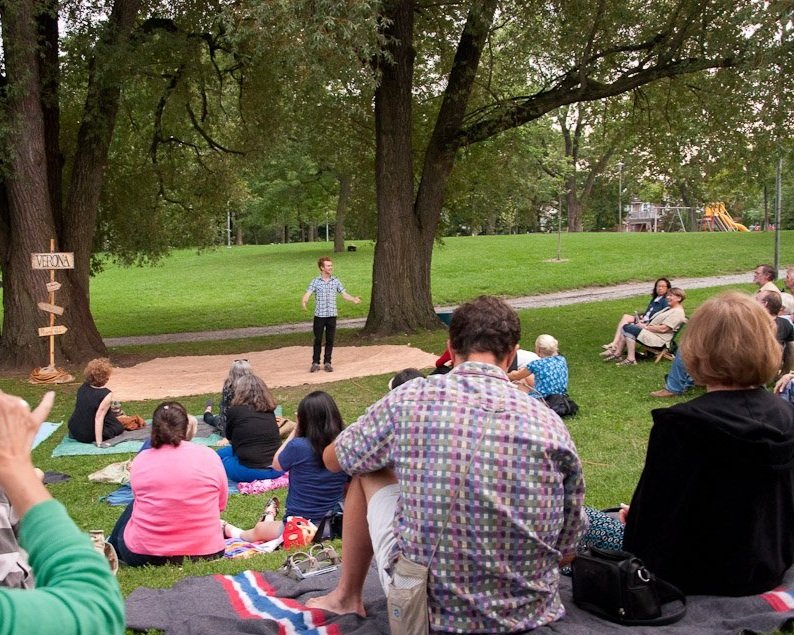
Governance Reimaginings (or, There’s Got To Be A Better Way)
Brendan McMurtry-Howlett on the challenges of navigating a board of directors as a young artistic director, and the project Generator has undertaken with Shakespeare in the Ruff and Toronto Dance Community Love-in to look at alternative governance models.
This is the first post in Generator’s ‘Governance Reimaginings’ blog series. You can find all posts in the series here, and everything we’ve published related to boards here. In this post, Generator Strategic Advisors Co-Chair and Board Member Brendan McMurtry-Howlett introduces the project.

Kaitlyn Riordan, Brendan McMurty-Howlett, and AJ Richardson (left to right) in Withrow Park, Shakespeare in the Ruff’s home base, in 2012 (perhaps contemplating the nature of governance, who’s to say?) — photo by Daniel Daley
So, my friends, we’ve had a couple blog posts about boards and governance already, primarily highlighting the shortcomings and challenges of the legislated model (i.e. systemic patriarchy and white supremacy). You can do a quick little recap here and here. You can also basically ask anyone who has ever sat on a board or worked with a board and they’ll likely give you a litany of issues…as well as a handful of positives.
Despite the widely acknowledged flaws of the non-profit board governance system that a company becomes beholden to as soon as it incorporates, “to incorporate or not to incorporate” is a question Generator hears routinely.
This, of course, is never as simple a conversation as the independent companies asking hope it will be (although we did write an ArtistProducerResource.com page about it to cover the basics). There’s pressure on indie companies who are looking to grow to pursue incorporation, either for regular non-profit status, or the coveted, yet misunderstood “charitable status” (Cue the pots of gold dancing in artists’ eyes.)
We’ve been having this discussion on repeat for years, emphasizing the systemic white supremacy and patriarchy that plagues the non-profit board of directors model—but we haven’t really had a clear alternative to point to. So, we thought we’d try to do something about it. We teamed up with Shakespeare in the Ruff and the Toronto Dance Community Love-in, two companies we’ve worked with closely over the past few years through our Company Collaborator program, to propose a project exploring alternative governance models—and lo and behold, the funding came through!
But first, how did I get here?
I’ve been peripherally connected to Generator (and even the former version: STAF) for a number of years. I helped found Shakespeare in the Ruff and served as the Artistic Director for the first five years, before passing the torch to Kaitlyn Riordan and Eva Barrie, who have now completed their tenures as well. More recently, I joined Generator’s board, curious to experience the board structure from the other side. See, as a young artist producer launching Shakespeare in the Ruff, I myself was lured by the promise of incorporation and charitable status. Well, to be perfectly honest, we were forced to incorporate in order to obtain a permit to perform in a city park. But, it seemed like a reasonable step to take since we wanted to grow the company and increase our access to resources.
I flew headlong into incorporation, and the accompanying “corporate” requirements and mandated board of directors, without much thought to what it actually meant.
I soon found myself trying to quickly learn the language of a corporation: Robert’s Rules, by-laws, minute-taking and motions. I filled our board with non-artists, as per the advice of the day: lawyers, accountants, corporate marketing experts, and the like.
I soon found I was living a double life: an artist in the rehearsal hall, actively embracing uncertainty with a robust creative process and vocabulary to navigate it; and a corporate executive in the board meetings, faking my way through meetings, discussing corporate decision-making procedures —steering clear of uncertainty at all costs lest the board of non-artists get scared and panic in a way that might undermine the organization. I found I was frequently undermining my own expert knowledge of the arts industry to defer to a corporate lawyer who waved around their “fiduciary duty” like a beating-stick.
I couldn’t provide leadership within the vocabulary and processes of a corporation, and the corporate directors couldn’t provide leadership for an arts industry they knew nothing about.
At the lowest point, our board imploded over disagreements of corporate procedure, and the company very nearly folded. No joke: Shakespeare in the Ruff, now celebrating its tenth anniversary and welcoming a third generation of leadership, almost went belly-up in year three.
I don’t believe there was malicious intent from any party. We were all simply pushed into a system of operating that did not arise from the values or ways-of-knowing of the artistic company itself. None of us had clarity on the actual functions of governance, beyond fulfilling the legal structure insisted upon by the Incorporation Act.
There were also many great experiences with Ruff’s board, where I was genuinely supported by a community of artists and non-artists alike to achieve more than I ever could have on my own. These polar oppositional experiences piqued my curiosity, and ever since leaving Shakespeare in the Ruff, I have sought to learn more about the spirit of governance and the legal structures we have in place. (I even went and did a Master’s degree looking at some of this stuff, but that’s a different story.) When the opportunity arose to join this project (and help write the grant), I jumped at it.

Brendan with Wayne Burns (right) in a production photo from Romeo and Juliet in 2016 — photo by Cylla von Tiedemann
Brendan welcoming Ruff audiences before a performance of Two Gents in 2012
So what is the project?
From the outset, the core of this project has been the desire to tackle the seemingly overwhelming topic of ‘governance’ within the context of a community of artist producers thinking about similar questions, but each through the lens of slightly different operating structures.
The Toronto Dance Community Love-in is an incorporated non-profit, and has operated with a collective leadership model since their inception. Shakespeare in the Ruff is a theatre company that has been operating under a co-leadership model, but is now undergoing a leadership transition towards a collective model, as well as a moment of transition with their board. Ruff is an incorporated charity which means they’ve got an extra layer of regulations and reporting requirements on their “corporate” structure.
We wanted to achieve a few things through this project. First, we wanted to learn. What are the other possibilities for governance models and structures? What are the exact legal requirements, and are there any loopholes in fulfilling them? What does “governance” actually mean separate from the non-profit board-of-directors model? Second, we wanted an opportunity within each of our three organizations, to try things out, do things differently, and experiment with governance and organizational structures based on our learning. Third, we wanted to share our learnings with the broader community…hence this blog post. And there will be more blog posts coming.
Throughout the past six months, we’ve structured our project as a series of (mostly Zoom) learning sessions, inviting in various knowledgeable folks who each bring a different perspective to the concept of governance and non-profit structures. These have been incredibly enlightening and exhilarating sessions, filling my head and heart with so many ideas, and allowing for an intimate discussion about the issues. We’ve been meeting with folks such as Jane Marsland, Yvette Nolan, Zainab Amadahy, Elder Whabagoon, Cynthia Lickers-Sage, and others.
What has struck me so far in these sessions is that governance is no one thing for any one person. It is about a practice of decision making that is undertaken in community. There is no magic wand, or perfect structure that will solve all the problems. Anything we create must be engaged with, nourished, and sustained by those impacted by and connected to the organization.
We’ve also had sessions where we’ve all shared our current thinking and questions, as well as how each of our uniquely structured organizations are wrestling with the shared issues. These sessions have been just as enlightening as those with invited guests, as I’ve been exposed to the innovative thinking and practical adjustments that my fellow participants have been doing within their own organizational contexts.
Over the next couple of months, we will be publishing a series of blog posts written by various people participating in this project. Some of them will be engaging with the learnings offered to us by our guest speakers. Some of them will be personal reflections on an evolving understanding of governance. We hope they will all be wildly entertaining. Or, at the very least, we hope to contribute to a growing community of folks in the arts (as well as other sectors) who are taking a good hard look at governance and the ways we make decisions together. We are all starting to recognize that in order to address systemic racism and patriarchy, we need to address our systems, and be bold in dreaming up something different.
These times of upheaval are an opportunity, if we can find the energy. As Yvette Nolan said to us, "I don't know how long this window is going to be open for." This is urgent work, and the more we share our growing knowledge on the subject of organizational transformation, the better our chance of enacting change that will reverberate through our sector…and honestly, hopefully the world too.
Governance Reimaginings asks how we can deconstruct inherited governance structures to create systems of accountability and community care that support, and are aligned with, the values of the organizations and individuals they serve. Structured as a knowledge exchange between Generator, Shakespeare in the Ruff, and the Toronto Dance Community Love-in, Governance Reimaginings took place between April-December 2021 and featured a series of instigations by invited guest speakers. We gratefully acknowledge the support of the Chalmers Family Fund, administered by the Ontario Arts Council, for this project.

Reflections on Peer Mentorship
Generator’s partnership with SummerWorks looks a little different each year, and this past summer it took the form of peer mentorship. Read reflections from SummerWorks Assistant Artistic Producers Fatima Adam and Haley Vincent and peer mentors Kitoko Mai and xLq (Maddie Bautista and Jordan Campbell) here.
Generator’s annual partnership with SummerWorks Performance Festival looks a little different each year—from the “Imagining the Future” Pecha Kucha in 2016, to “Creating Sign Language Magic” in 2019, and all of the conversations and collaborations in between. This past summer, our partnership took the form of peer mentorship: we had the absolute pleasure of connecting SummerWorks Assistant Artistic Producers Fatima Adam and Haley Vincent with peer mentors Kitoko Mai and xLq (Maddie Bautista and Jordan Campbell), all three of whom are alumni of Generator’s Artist Producer Training program.
We’re so grateful to these five wonderful individuals for experimenting with this format with us (and on Zoom, no less)! We’re delighted to share some of their learnings and reflections with you here.

xLq (Jordan Campbell + Maddie Bautista)
HALEY: What role has peer mentorship/mentorship played in building your career?
xLq: A sense
Of wonder
And belief
In ourselves
To validate
Our wildest
Fantasies.
A way forward in the darkest hours
A tiny crack of light to crawl into
Being held accountable by other artmakers
For the kind of art and the choices we made
Learning about the kind of artists we wanted to be
And who we didn’t want to be.
GENERATOR: What’s something from the mentorship sessions that resonated with you?
HALEY: There are so many wise words that have stuck with me from my time with Maddie and Jordan. An idea that really resonated, that they both embrace so well, was committing to fun. Even during the mundane or frustrating or difficult parts of creating and producing, making a conscious effort to have fun is a priority! There have been times when the stress or pressure has made me forget that making art and working with creatives is the best!
FATIMA: The most important piece of advice Kit gave to me is, make your voice heard even if you think no one is listening. So often we choose not to speak up because we think our words will be ignored but, if we say nothing, we are guaranteed to be ignored. Reaching out to people with inquiries, comments or even criticisms, is not something I did regularly before our mentorship. However, since speaking with Kit about this, I have contacted multiple organizations to ask questions, critique their productions/policies, or just let them know I enjoyed a show of theirs. Doing so has not only connected me with theatres and artists across Toronto, it has also started necessary dialogue about issues pertaining to our community.
xLq: How are you becoming the mentor you wish you had when you started out?
KIT: By showing up as my authentic self—meaning I brought my disabilities in the room with me and asked for accommodations—by being flexible and asking the mentee what they need and want, by being honest about how I have to navigate the industry with my identities, my low capacity, and the oppression clique (white supremacy, patriarchy, etc).
FATIMA: An aspect of this mentorship I deeply appreciated is the care and flexibility Kit and I provided to each other. It was lovely being part of an artistic collaboration where your personhood is placed before your workload because unfortunately, that’s not always a guarantee.
GENERATOR: What’s something about this mentorship relationship that really worked that you want to remember and repeat?
KIT: The fact that Fatima and I are only a few stages apart when it comes to our careers. I feel like the advice I offered was stuff that I learned recently, tried recently, and shared with her. It's advice that she can use immediately. It's not dated because it reflects the industry that we are both navigating right now. I think peer to peer mentorship is incredibly valuable.
HALEY: I really enjoyed getting to know Jordan and Maddie through having casual non-outcome-driven chats about life and art. These conversations led to learning and activities in a very organic way. Based on our talks, xLq led a few career planning exercises, that we all did together, that made me rethink how I approach my work!
xLq: An exercise
Or two
Couldn’t hurt
(no need to hit the gym)
We know more
Than we think
We can share
Ourselves
And be honest
(candour is key)
Making lists of 50 puts things into perspective
1, 2, 3, 4, 5, 6, 7, 8, 9, 10, 11, 12, 13, 14, 15, 16, 17, 18, 19, 20, 21, 22, 23, 24, 25, 26, 27, 28, 29, 30, 31, 32, 33, 34, 35, 36, 37, 38, 39, 40, 41, 42, 43, 44, 45, 46, 47, 48, 49, 50

Haley Vincent

Fatima Adam
KIT: I often felt like I was giving you information that I learned yesterday, was using today, that you might use tomorrow. What was it like for you to engage in mentorship with someone who is literally only a few steps ahead of you versus more established within the industry?
FATIMA: I found it incredibly helpful to engage in mentorship with Kit because the part of my journey I am currently in, is where Kit was not too long ago. The advice and suggestions they gave felt more applicable because they can speak directly to their experience being in my position and the circumstances they faced are similar, if not the exact same. Often when speaking to those who are further along than myself, so much time has passed since they were where I am that the environment, conditions and challenges that I am experiencing, either did not exist or were completely different for them. Therefore, the advice they’re able to give feels incomplete but, with Kit that’s not the case. We are experiencing the same or similar barriers, opportunities, joys, difficulties, etc. Being able to confide in, seek guidance from, and create community with someone who’s only a few steps ahead of myself, has been incredibly helpful both personally and professionally.
SUMMERWORKS: What are some ways that creative curiosity can be made more a part of our processes as producers?
KIT: If the pandemic has taught us anything, it's that we can be creative about finding ways to meet the needs of our communities as they change. We shouldn't need a pandemic to force us to find more ways to pay artists, develop more ways to share art or make art, or even curate communities within digital space. Challenges (especially those related to disability accommodation) should be embraced as they are opportunities to explore and be innovative. I think the Toronto and Hamilton theatre communities have been more creative (in terms of how we curate community, make and share art, find ways to pay artists) during this pandemic because everyone was affected. There wasn't a choice. When this is all over, I want that creativity to continue, I want challenges that stem from community needs to be embraced as exciting opportunities to grow and provide care. Theatre (performance as a whole) is an art form that is living and meant to grow (i mean like every performance builds on the last, can change, can develop in ways that more static forms of art don't. Yes this is debatable.) When we stop being curious, we stop growing.
HALEY: I want to investigate and dive deeper into projects that are aligned with the values I hold. Using producing as its own form of storytelling, a place to ruminate on important questions and a way of exploring human connection.
xLq: We must
let go
Of all we thought
We knew
A playful practise
Is a prerequisite
For this pathetic pathological party
Do you still remember how to play????????
It might take practise
Practise isn’t perfect
A process isn’t a production line
When do producers really get to play?
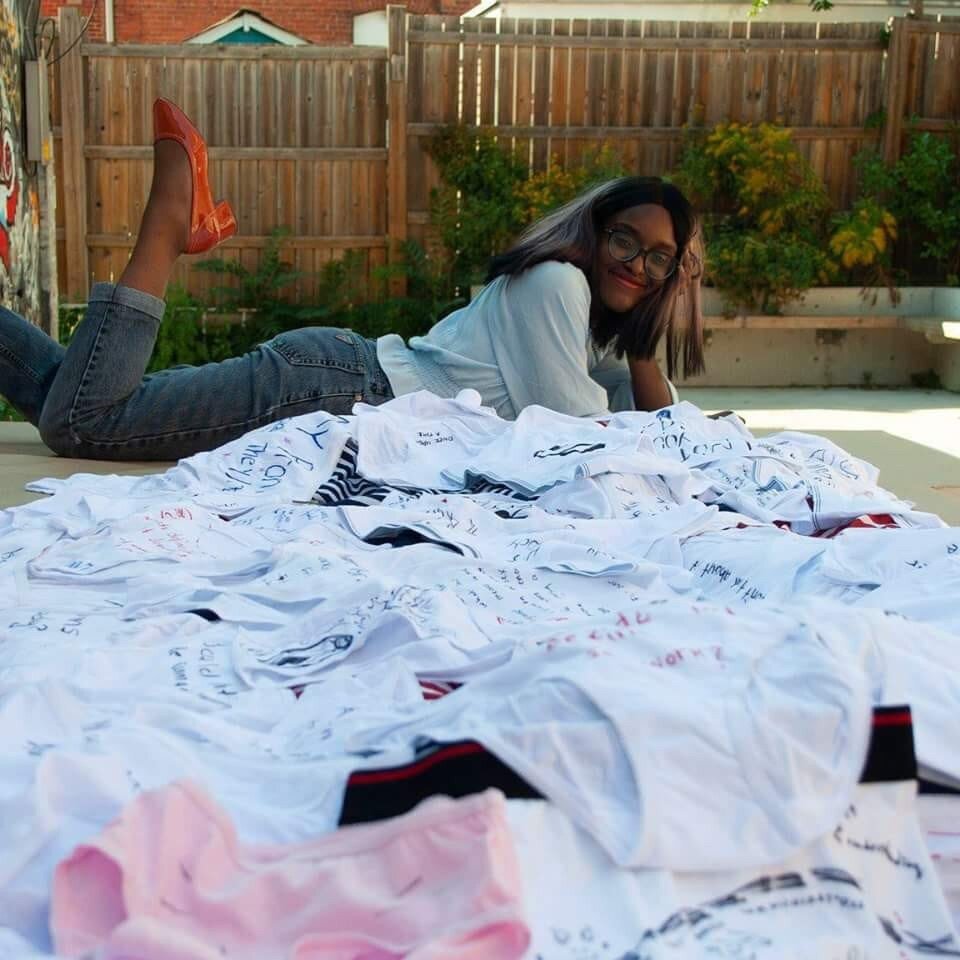
Kitoko Mai
1 month ago
We wrote a poem
(it was an application)
It felt true to us
It was still under 1000 words
FATIMA: If you could give one piece of advice to yourself from 3 years ago, what would it be?
KIT: Only one???? Okay. To Baby Kit: You are a bad bitch (even if you don't see it ) and everything that doesn't make sense about producing will make more sense after you try it, fail, learn, and then try again!
HALEY: To Haley from 3 years ago, although it may seem like nothing will ever work out, it sooo will! It'll work out exactly how it's supposed to. Your path won't look like everyone else's and that's okay.
Keep exploring what you love, caring about community and those around you, building your skills, and being you! Love, present Haley.
About the Artists
Fatima Adam (she/her)
is a Toronto based writer, performer, facilitator, and producer. Passionate about creative collaboration, she has worked with BlackCAP, The AMY Project, SummerWorks Performance Festival, and more. Currently, she is an Associate Producer with the Culchahworks Arts Collective. Fatima hopes to continue working within media production and the performing arts, bringing underrepresented talent to the forefront, and widening accessibility for artists in the GTA to pursue theatre.
Haley Vincent (she/her)
is an emerging artist originally hailing from Treaty 1 Territory, Winnipeg, Manitoba. She is a graduate of the University of Winnipeg, holding a BA Honours degree in Theatre and Film. Haley is a creator, performer, administrator and producer with a passion for multi-disciplinary performance, nuanced storytelling and community building. Her work has taken her across Turtle Island and to the UK. Haley is always searching for new creative outlets and opportunities for diverse and meaningful learning.
Kitoko Mai
is a disabled, non-binary, multidisciplinary performance, media, and community artist. Their artistic practice is best described as a chaotic collage. It is a collection of film & video art, photography, performance, collage, installation, sound, poetry and chaotic Alt Black femme weirdness. Kitoko is the recipient of the 2021 Promising Pen Prize from Cahoots Theatre and the 2020 Gilded hammers Emerging Artist Award. They are a member of the community arts collective, Care Collective, are currently taking part in a residency at Buddies in Bad Times Theatre, and completing a year-long script development program with Nightwood Theatre through their Write From the Hip program. You can also see their cheeky and informative YouTube series called “The BIPOC Survival Guide”, designed to support post-secondary students and produced by the CBC. Their work is rooted in social justice, anti-oppression, and the pursuit of messiness. Their personal philosophy is to produce work that aims to destabilize hierarchies of power, embraces fluidity of content, form, and process; as well as prioritizes accessibility.
Bio written by Kitoko and made infinitely better by Claire Calnan
xLq
is a POP ART performance duo comprised of Jordan Campbell and Maddie Bautista. Dedicated to radical performance forms, xLq combines ritual, fashion, dance, music, and queer pop aesthetics to create complicit audience experiences.
Their original performance creation 4inXchange received Nightswimming’s 5x25 Commission and won the NOW Magazine Audience Choice Award at the 2018 SummerWorks Festival, then proceeded to tour to the rEvolver Festival 2019 (Vancouver, BC), FEM FEST 2019 (Winnipeg, MB), the Grand Theatre (Fergus, ON), Registry Theatre (Kitchener, ON), and Waterford Old Town Hall (Waterford, ON).
They are currently in residence with Nightswimming Theatre, where they are developing All for One for All, which premiered at CAMINOS 2019, and was created while in residence with lemonTree creations.
Not-for-profit Law and Governance in the Creative Industries
We’re in a time of unprecedented momentum for reimagining systems of board governance in the performing arts sector. Generator teamed up with ALAS (Artists’ Legal Advice Services) on May 11, 2021, for a webinar and Q+A to help non-profit workers understand legal requirements, and explore what’s possible—watch it here.
We’re in a time of unprecedented momentum for reimagining systems of board governance in the performing arts sector.
Generator teamed up with ALAS (Artists’ Legal Advice Services) on May 11, 2021, for a webinar and Q+A to help non-profit workers understand legal requirements, and explore what’s possible.
The webinar begins with a presentation from Terrance Carter, Managing Partner of the law firm Carters, laying out the legal responsibilities of board members, and legal requirements for non-profit organizations and charities. The second presentation is from arts consultant Jane Marsland, exploring how small to mid-size non-profits can safely navigate legal structures, explaining paradigm changes in the sector towards new conceptual understandings of organizations, and offering ways to align governance with company values. Topics range from recruitment, to strategic board management, to successful planning.
Thanks to our wonderful panelists and moderator Cat Lovrics, as well as to the participants who joined us live for the webinar and contributed questions to our discussion.
Watch the Webinar
Watch a recording of the webinar on our YouTube channel here.
Part One: Understanding Legal Requirements
0:01-9:40 Introductions from Generator’s Lead Producer Kristina Lemieux and moderator Cat Lovrics
9:40-31:00 Presentation from Terry Carter about the legal landscape for charities & non-profits
31:00-40:00 Question and answer period with Terrance Carter
Part Two: Exploring What’s Possible
40:00-1:11:40 Presentation from Jane Marsland about emerging thinking in non-profit governance
Part Three: Discussion Period
1:11:40-1:30:50 Question and answer period with Jane Marsland and Terrance Carter
1:30:50-1:48:29 Extended question and answer period with Jane Marsland and Kristina Lemieux
Please note we did experience some technical difficulties, but they were resolved promptly. Captions are available in YouTube.
Resources
From the webinar
Slide deck from Terrance Carter (includes link to Legal Risk Management Checklist for Ontario-based Charities)
Slide deck from Jane Marsland (includes links to the reports 'Peering into the Future: Reimagining Governance in the Non-Profit Sector' and 'Framing Forward: Reimagining Governance'
Websites for further learning
CharityLaw.ca (affiliated with Terrance's firm Carters)
ALASontario.ca (Artists' Legal Advice Services - webinar presenter)
ArtistProducerResource.com (generated by Generator, this website has basic information about boards, as well as Incorporation and Non-profits)
As a general note, as you do your own searching for resources around boards, you may find the most success looking for resources created specifically for charities—generally these will still be applicable and helpful for non-profits (even if you are not in fact a registered charity).
About the Panelists
Terrance Carter
Terrance S. Carter, B.A., LL.B, TEP, Trademark Agent – Managing Partner of Carters, Mr. Carter practices in the area of charity and not-for-profit law, and is counsel to Fasken on charitable matters. Mr. Carter is a co-author of Corporate and Practice Manual for Charitable and Not-for-Profit Corporations (Thomson Reuters), a co-editor of Charities Legislation and Commentary (LexisNexis, 2020), and co-author of Branding and Copyright for Charities and Non-Profit Organizations (2019 LexisNexis). He is recognized as a leading expert by Lexpert, The Best Lawyers in Canada and Chambers and Partners. Mr. Carter is a member of CRA Advisory Committee on the Charitable Sector, and is a Past Chair of the Canadian Bar Association and Ontario Bar Association Charities and Not-for-Profit Law Sections.
Jane Marsland
Jane Marsland has been an articulate advocate for the arts for many years and has served on a wide range of boards, advisory groups and committees. Jane was co-founder and director of ARTS 4 CHANGE, a three-year program designed to create positive change for and by arts professionals in Toronto, as well as co-founder and Director of the Creative Trust: Working Capital for the Arts. Ms. Marsland has managed arts organizations since 1970 and was General Manager of the Danny Grossman Dance Company from 1982 to 1999.
Since 1999, Jane has been working as a free-lance arts consultant and has worked with more than 100 arts organizations. Recently, Jane worked with the Toronto Alliance for the Performing Arts and ARTS Action Research on a two-year community initiative, Theatres Leading Change Toronto involving 18 small and mid-sized theatre and dance organizations. Theatres Leading Change was designed to illuminate and better understand change: on an individual learning level; on a community co-learning level; and as a function of broad-based change that may hold within the possibility of paradigm change in the field.
She has been the recipient of two arts community awards: a “Harold” in 2001 and the Sandra Tulloch Award for Innovation in the Arts in 2002. In 1995, she received the first M. Joan Chalmers Award for Arts Administration for outstanding leadership in the arts. In 2011, she was the winner of the Toronto Arts Foundation’s Rita Davies and Margo Bindhardt Cultural Leadership Award. In 2012, Jane was awarded the first Metcalf Foundation Innovation Fellowship in the Arts to examine Shared Platforms and Charitable Venture Organizations and their applicability to the arts sector in Ontario. Jane was honoured as the recipient of the Silver Ticket at the Dora Mavor Moore Awards in 2017.
Cat Lovrics (Moderator)
Catherine (Cat) Lovrics is a Partner at Marks & Clerk Canada. Cat’s practice focuses on copyright law, as well as trademark, personality and publicity rights, as well as marketing and advertising, consumer protection and data and privacy laws. She specializes in emergent legal issues related to the Internet and digital media, in addition to traditional entertainment and media. Cat helps her clients protect, exploit and enforce their IP, and advises on clearance, rights acquisition and licensing. Her clients range from multinational and Canadian media companies to individual artists. Her experience spans a wide range of sectors, from creative industries to AI & emergent tech to consumables.

Artists’ Legal Advice Services (Co-Presenter)
ALAS’s mission is to empower Ontario’s creative community by providing access to summary legal advice, information and education. Learn more about their work here.
You read Kristina Lemieux’s bio here. We also recognize the contributions of Carol Hansell, who was unable to attend the live webinar but contributed important thinking to the development of the ideas presented here. You can read Carol’s bio here.
Find more posts related to boards on our Learnings + Explorations blog here.
Have a question or a reflection to share? Please email info@generatorto.com.
Learning Pathway: What to Pay People
People are always the most expensive budget line when you're producing—but how do you know what to pay them? This learning pathway tackles Paying People, just in time for the Toronto Arts Council and Ontario Arts Council August project deadlines.
One of the most common questions I get from producers is: how much do I pay people? While there are several unions and associations that cover the performing arts, it’s still not always a straightforward question to answer. If you’re working with an Equity (Canadian Actors’ Equity/CAEA) agreement, things are a little clearer—there are set policies and minimum rates you’re obligated to follow. Otherwise, it is up to you as a producer to set the fees and rates, as well as the working conditions of a project.
This ArtistProducerResource.com Learning Pathway helps you figure out what to pay people who are working on your project.
We’re publishing it in July, right before a round of project deadlines from the Toronto and Ontario Arts Councils (learn more on our Public Funding and Grant Writing pages). We hope it will be a handy resource at the start of any budgeting process!
Where to begin
I always start a budget with my expenses (what would I like the project to cost?) — people are almost always the most expensive item in a budget.
Next I determine if I can find the revenue to make the budget feasible.
Once I’ve found the balance between what I want to have happen, and the resources I have available to make it a reality, I have the first draft of my working budget.


Considering what to pay people
One of the things unions and associations do is set a minimum rate schedule. These rate schedules are often grouped together by labour type (actors, directors, and stage managers share an association; designers have a different association, and so do technicians). It is important to understand that these rate schedules are MINIMUMS—so you can think about them as the minimum wage. You can always pay people more.
Dollars are not the only way to compensate people working on your project, though generally that is the preferred method. Depending on what you’re doing, the stage your project is at, and what you’re hoping to achieve with this part of the process, you might consider other ways of compensating those you are working with. Perhaps you can only offer an honorarium, but you will provide lunch for everyone each day.
Some other tips
Rights and Royalties
If you’re working with an existing script you may need to add this to your budget—don’t forget to research that cost early on
If you’re building something new, consider budgeting for rights and royalties from the start of your new process, and making that part of the negotiations. Often (though not always), playwrights, designers, and co-collaborators will want to talk about rights and royalties before embarking on a new creation.
Unions and associations in other performing arts disciplines
These can be helpful for determining fees—CARFAC (representing visual artists) is one of the few associations that has rate schedules for offering workshops or talks, as well as for screening short films.


Further Learning
Sometimes the hardest person to pay is yourself! Use the Rags to Reasonable Salary Worksheet to calculate how much you should pay yourself on your next (or current) project.
Use the Freelance Rate Calculator to set your base hourly rate
This Client Email Helper template by Jessica Hische generates email responses to help you say “no” to free and low-budget work and to help ask for more favourable contract terms before the start of a project.
Check out ArtistProducerResource.com’s Expenses and Revenues infographic series below

Expenses Infographic: download the PDF by clicking the image above, or find it on the Expenses page on ArtistProducerResource.com.

Revenues Infographic: download the PDF by clicking the image above, or find it on the Revenues page on ArtistProducerResource.com.

About ArtistProducerResource.com
ArtistProducerResource.com is a free, searchable online encyclopedia of information, resources, tools, and templates for producing independent performance work in Canada, currently with a focus on Toronto. Launched in November 2017, it has since been visited by over 10,000 users, transforming the way artists producers access information and share knowledge across Canada. ArtistProduceResource.com is free to access and always will be. You can become a supporter by subscribing to our Patreon—we’ll send you a monthly newsletter with highlights, features, and all the newest content on the site. Got a suggestion for ArtistProducerResource.com? Send it to us here.
Learning Pathway: Accessibility as a Practice
This learning pathway invites you to use a values-based approach to the budgeting, planning, development, and execution of a production, where conscious decisions are being made, at all stages of the process, about who the play is for and how the needs of the audience and artists are being met.
Producing is a practice. By that I mean, it’s something you do over and over again. Each time you learn something, because each time is a little different. You carry your experiences with you to each new project, and maybe you begin to develop a philosophy and protocols for yourself. You may return to certain spaces to work with the same people. Together, you develop a shared language, a shorthand, a style of working, a culture. Sometimes, a culture of exclusion can develop.
We live in a capitalist, white supremacist, colonial society. These structures have made their way into the live performance sector, into our working relationships, into our bodies, and into our thoughts. Decisions that counter those structures must therefore be made consciously.
Decolonizing one’s producing practice is a life-long journey. I am no expert, and ArtistProducerResource.com does not have all the answers. My hope is that this is one place among many for new ideas, new questions, and new perspectives to spring from.
This learning pathway invites you to use a values-based approach to the budgeting, planning, development, and execution of a production, where conscious decisions are being made, at all stages of the process, about who the play is for and how the needs of the audience and artists are being met.

Photo by Keshia Palm
If this approach seems overwhelming, restrictive, or perhaps even impossible given the current state of the world, I encourage you to step back and examine why. What are the assumptions or habits of mind causing you to feel that way? To guide you through the process of unpacking all that, check out Inclusion on ArtistProducerResource.com.
I’d much rather work from a place of hope and curiosity than a place of frustration and restraint. I love this prompt from the digital workshop “Crip the Script” created by the amazing Ophira Calof (everyone, hire them!): Embrace your team's access needs as part of your collective, creative, DNA.
This framework changes the producer’s approach from “if only...” to “what if...?”.
Consider the Social Model of Disability – which we use to frame Accessibility on ArtistProducerResource.com. The Social Model of Disability removes the onus from the individual and places it back on a society that has, throughout history, demonstrated “disablism” as a method of discrimination against those with impairments. A social model perspective does not deny the reality of impairment nor its impact on the individual. However, it does challenge the physical, attitudinal, communication and social environment to accommodate impairment as an expected incident of human diversity.
COVID is such a great example of this. Suddenly, when everyone was forced to stay home, we as a society made major accommodations to react to this drastic shift to keep each other safe. This proves that it is possible to – and that we are capable of – significantly changing the way we do things at any and all times. You can do it, I can do it – we all can do it.
Some actionable tools for making workspaces safer for artists can be found on Artist Accessibility on ArtistProducerResource.com; ranging from budgeting considerations, to design choices, to discussing access needs.


While you can (and should) build your project to meet the exact needs of your audience and your artists, there are some blueprints that you can look to for inspiration and guidance.
Approach Accessible Performances like you would a dressmaker’s pattern – you can follow the rough shape, but need to take measurements and tailor it to fit you!
Now that you have your pretty dress (the performance) that fits amazing and looks fabulous, it must be seen, darling! Check out Marketing Strategy and review Artist Accessibility to make sure you are respecting your artists while reaching your audience. Like any good party invitation, make sure you include all the important information so that people are excited to come, and know exactly what they are getting into. Read over and answer the many questions on Audience Accessibility before you share anything – chances are, your audience will be asking those same questions.
Remember that for a lot of folks (including me), theatre has not always been a place where they have felt comfortable or particularly welcome.
For some folks, it may not be a welcome place still. If you are inviting folks who have historically not been welcomed into the space, you have to work extra hard to assure them that this production is for them.
Imagine you get invited to eat at a really fancy schmancy restaurant. This is what I might think: Oh my god a fancy restaurant. I never go to fancy restaurants. What do I wear? What’s on the menu? Can I eat it? Can I read it? How much does it cost? Will there be people like me there? I’ve never been to this fancy schmancy restaurant before! What time do I show up? Is there a lobby? Is there coat check? Do I need to bring anything? Where is it? How do I get there? How long will it take to get there? How long is this dinner going to be anyway? What are the washrooms like? Who else is going? Do I know anyone? Should I bring someone? Can I afford it? Can they afford it? Will it be fun??
To some folks, your performance is like a fancy schmancy restaurant. A million other questions will also come up, because everyone is different and needs different things to feel safe, comfortable, and wanted. It’s your job to tell them that you made the whole menu with them in mind.
And if you’re one of those folks who never went to the theatre, who never got invited to the fancy schmancy restaurant, who’s starting up their own little pop up – I see you! Someone out there is going to see what you’re selling, and it’s going to stir up memories and feelings deep inside them because you’ve got that soul food. Still, you have to do all of the above to get your soul food to the people who are going to eat it up.


Of course, there are a multitude of ways to get people excited about and invested in your production that reach beyond “the performance”. On ArtistProducerResource.com, we call this part Community Engagement. Community Engagement builds trust and relationships with people, so that you can go from being a fancy schmancy restaurant or a brand new pop up to someone’s favourite local spot. This takes time, energy, repetition. Dare I say – practice?
I’d like to leave you here with a few more paths to pursue in your journey:
Sins Invalid; the originators of the disability justice movement
Creative Users; whose newsletter frequently sparks joy and illuminates new opportunities for theatre/connection
Cultural Pluralism in the Arts Movement Ontario (CPAMO); offers numerous workshops and panels gathering movers and shakers from across the sector
Cripresentation; a podcast highlighting queer and trans disabled artists and their work, specifically centring Black, Indigenous and other people of colour
AccessDocsForArtists; a website all about creating access docs – a document that outlines your disability access needs, also known as an “access rider” – with resources to make your own!
Infographics & Templates

Infographic: How to Make Spoken Theatre Accessible for Deaf Audiences. View the PDF by clicking the image above, or find it on Accessible Performances on ArtistProducerResource.com.

Infographic: How to Make Spoken Theatre Accessible for Deaf Audiences. View the PDF by clicking the image above, or find it on Accessible Performances on ArtistProducerResource.com.
Template: Community Agreement. Download the PDF by clicking the image above, or find it on Inclusion on ArtistProducerResource.com. More templates: find the Theatre Venue Accessibility Audit Checklist on Audience Accessibility on ArtistProducerResource.com.
YouTube Playlists
About ArtistProducerResource.com
ArtistProducerResource.com is a free, searchable online encyclopedia of information, resources, tools, and templates for producing independent performance work in Canada, currently with a focus on Toronto. Launched in November 2017, it has since been visited by over 10,000 users, transforming the way artists producers access information and share knowledge across Canada. ArtistProduceResource.com is free to access and always will be. You can become a supporter by subscribing to our Patreon—we’ll send you a monthly newsletter with highlights, features, and all the newest content on the site. Got a suggestion for ArtistProducerResource.com? Send it to us here.


Learning Pathway: Digital Communications
Our third ArtistProducerResource.com Learning Pathway looks at social media, analytics, designing communications for accessibility, and newsletters.
Most of us engage with digital communications in our lives in some way—or in approximately one zillion ways, every day: we post on social media, open email newsletters, watch YouTube videos, and visit websites (like this one!). Maybe you’re someone who’s put a lot of thought into your personal *online presence*, maybe you run social media for three different theatre companies at any given time, or maybe the thought of a job description that includes “newsletter creation” makes you want to run for the hills. There are almost as many levels of digital communications literacy as there are humans logging onto the interwebs each day.
This Learning Pathway takes you through the best ArtistProducerResource.com has to offer when it comes to producing communications for a company or production—dig as deep as you like according to your skill level and interest. It was created by me, Annie Clarke, Generator’s Communications Producer, and it is the third in a series of ArtistProducerResource.com Learning Pathways that we launched in January (read Keshia Palm’s post on Personal Organization and Business Management here and Audrey Quinn’s post on Tax Season here).
This Learning Pathway looks at social media, analytics, designing communications for accessibility, and newsletters — all on ArtistProducerResource.com — with some YouTube videos and downloadable templates for you to make your own. The total read/watch time is approximately 2 hours.


Boundaries
The tools you use to do digital communications work for your job probably overlap with the platforms you use in your life—I can’t stress enough how important (and helpful!) it is to set boundaries around communications. The Information Management page on ArtistProducerResource.com opens with precisely this topic and offers tips to help you draw the lines you need to, from email labels to distinct browser profiles. Settings are your friend—get specific where you can. (For instance, you can choose to get phone notifications about direct messages on your personal Instagram without signing up to receive them for whatever business profile(s) you also manage.)
Social Media
Start with an easy breezy overview by watching the “Producing Social Media” YouTube video series Keshia and I made last year.
Watch time: 6 minutes
Once you’ve got those basics down, settle into the Social Media page on ArtistProducerResource.com for a deeper dive. It has helpful contextual information and a lot of details about Facebook, Twitter, Instagram, and YouTube.
I think the best communications results come from a combination of planning and responsiveness. To help with the planning part, my go-to tools include:
AirTable, a project management software for content planning (read about it on ArtistProducerResource.com’s Information Management page)
Hootsuite, for drafting and scheduling social media posts
Canva, an excellent and supremely user-friendly graphic design platform
LinkTree, for when you can’t pick just one link for your Instagram bio
The Social Media page has a run-down of those last three and many more!
Reading time: 34 minutes
Tracking Analytics
Stay with the Social Media page to learn about tracking your analytics. Running social media takes time and effort, and it’s useful to have a way to evaluate what’s working, and what’s not—especially when social media is part of your job description. Whether you do it once a week or once a month (I have a weekly recurring reminder to do this for Generator), make this tracking part of your workflow. You’ll find a downloadable Excel template on the Social Media page to help. And who knows, maybe one day you’ll write grew company’s Instagram following by 250% in three months on your resume and it will get you the communications job you always dreamed of! Only time (and good tracking) will tell.
Keshia covered the Websites page on ArtistProducerResource.com in her Learning Pathway on Personal Organization and Business Management. Head back to Websites to read up on analytics—they’re a great thing to track for your website alongside your social media insights. Google Analytics is a free and relatively easy tool to set up for any website: here’s a YouTube video to get you started.
Designing Communications for Accessibility
These posters created by Karwai Pun on the “dos and don’ts” of designing for accessibility are one of the most popular resources Generator has ever shared on social media—and I know this because of (say it with me!) tracking our analytics. Visit the Accessible Websites, Graphics, Videos and Documents page on ArtistProducerResource.com for more tips and resources to ensure your communications creations are accessible.

A couple things to highlight:
Capitalizing the first letter of every word in a hashtag ensures it can be read by screen readers—#TakeThisHashtagForExample
When you’re creating graphics and images, make sure to create Alt Text for them too! You can add Alt Text directly into posts on Twitter (before you post) and Instagram (after you post)
Colour contrast is an important part of accessibility in graphic design—the tools on the ArtistProducerResource.com page are good ones to bookmark (Coolors.co/generate is especially fun)
Reading time: 16 minutes
Newsletters
I love newsletters. I enjoy creating them as much as I enjoy reading them. And you know what else I love? Respecting people’s communication preferences! Ever heard of the acronym CASL? It’s pronounced ‘castle,’ and it’s short for Canadian Anti-Spam Legislation—we get it into that, and much more, on the Newsletters/eBlasts page on ArtistProducerResource.com.
If you’re looking for a platform recommendation: Team Mailchimp. (PSA: Being on Team Mailchimp also means being on Team Export Your Audience List Regularly to Back It Up.)
Reading time: 22 minutes
Further Learning
Accessibility Services Canada has a lot of great webinars (some of them free), including Web Accessibility for Content Managers and Accessible Graphic Design
CampTech has a number of workshops geared towards small storefront Ontario businesses, but their newsletter reaches far and wide, with great round-ups of trends in social media and digital marketing (Hootsuite’s newsletter will keep you on top of trends too)
BC Alliance for Arts and Culture’s Digital Ladders Project has helpful blog posts looking at case studies in digital tools and strategies across a number of arts organizations
About ArtistProducerResource.com
ArtistProducerResource.com is a free, searchable online encyclopedia of information, resources, tools, and templates for producing independent performance work in Canada, currently with a focus on Toronto. Launched in November 2017, it has since been visited by over 10,000 users, transforming the way artists producers access information and share knowledge across Canada. ArtistProduceResource.com is free to access and always will be. You can become a supporter by subscribing to our Patreon—we’ll send you a monthly newsletter with highlights, features, and all the newest content on the site. Got a suggestion for ArtistProducerResource.com? Send it to us here.