
Blog

The Need to Reimagine Learning
In this first post in a series of artist responses to the Get on Board: Workshop and Speaker Series by the Creative Champions Network, Coman Poon (arts consultant, creation doula, interdisciplinary artist, activist, curator and producer) reflects on the Governance Reimaginings session on October 4, 2022.
This is the first post in a series of artist responses to the Get on Board: Workshop and Speaker Series by the Creative Champions Network, an initiative of the Toronto Arts Foundation. As a co-creator of the series in 2022/23, Generator has engaged Artist Responders to attend each session, to summarize, reflect and respond to the emerging conversations and activities. In this post, Coman Poon (arts consultant, creation doula, interdisciplinary artist, activist, curator and producer) reflects on the Governance Reimaginings session on October 4, 2022.
At the October 4, 2022 Creative Champions Network (CCN) workshop promisingly entitled Governance Reimaginings, Generator Board member and keynote speaker Brendan McMurtry-Howlett referenced “relational governance structures”, a concept he attributed to Indigenous decolonial theory and ways-of-knowing. Acknowledging Indigenous arts leaders Yvette Nolan and Cynthia Lickers-Sage, he cited the need for “relational” governance structures in the arts, where “the strength of the decision-making process rests on the strength of interpersonal relationships within the organization”.
What does this REALLY mean? Does relational ‘strength’ refer to both structure and quality of ONLY internal collaboration and decision-making? Short of assuming or fantasizing about some generalized indigenous cultural imaginary, couldn’t it be argued that solely self-propagating, diminishingly relevant, insular and/or nepotistic, colonially powered Arts Boards can also potentially be included in the above broad definition?
While puzzling over this feel-good word/idea of “relationality”, contrasted with how I, as a Board member of CanAsian Dance, experienced the very formally* structured Governance Reimaginings CCN workshop, I had the opportunity to converse with Michael Caldwell, Creative Director: Programming at Generator.
Following on the heels of their own internal governance ‘think tank’ journey, Generator is newly partnering with the Toronto Arts Foundation’s lauded Creative Champions Network to deliver a co-learning series that aims to reignite action to address the so-called crisis of governance in the arts. The result is the CCN’s four part Get On Board: Workshop and Speaker Series.
WHAT CRISIS? you may ask. Let’s start at the beginning.
For nearly a hundred years, board governance of the not-for-profit sector (of which 9% lies within the arts sector) has been following the corporate model of “authority”, “responsibility” and most importantly, “accountability”. The latter seems to consist of:
monitoring and mitigating risk, and
measuring results (for corporate stakeholders).
Brendan powerfully untangled that when faced with the application of this to a complex of ecosystems within the arts, there is often the weaponization of “fiduciary duty”. Itself simply referring to the onus of making decisions in the ‘best interest’ of an organization, fiduciary duty is often conflated and used interchangeably with ‘liability’, which refers to taking on responsibility for damages.
Art-making and participating in the co-witnessing and gift-exchanging of art is arguably far from generating the type of liability engineers may face when building a bridge. In fact, what artists and audiences revel in as “risk-taking” in art is arguably the essence of the “unique value proposition” of art.
What is needed in this period of initial transition from the strictures of pandemic coupled with the ongoing awareness and outrage at systemic inequities in the arts sector (and beyond) is none other than a radical act of collective unlearning and reimagining.
As Michael metaphorized, the boat (moving toward positive change) comes around in cycles and it is up to each one of us to examine our privilege/resistance and pursue our willingness to wrestle with the complexity involved in sustaining change-making.
WHAT IS CO-LEARNING (aka. collaborative learning)?
A quick online search provided me with refracting definitions such as:
Co-learning is a manner of group learning that enhances communication skills, cultural awareness, thinking skills and so much more
Co-learning aims at the collaborative construction of knowledge, in which co-learners are able to expand their social networks
Collaborative learning is rooted in Lev Vygotsky's concept of learning called “zone of proximal development”. Typically there are tasks that learners can and cannot accomplish. Between these two areas is the zone of proximal development, which is a category of things that a learner can learn with the help of guidance.
Indigenous people of the Americas utilize collaborative learning through their emphasis on role sharing and responsibility sharing within their communities.
My wish for future CCN activities and sessions?: A more flexible structure and framework for co-learning as a baseline strategy for movement building around reimagining/decolonizing ‘governance’.
Collaborative learning challenges assumptions and questions “business as usual” or “this is how it’s always been done”. Afterall, it’s not everyday where I get to engage with board members from long-standing performing arts organizations who proudly declare that their organizations are on “autopilot” and cite that succession planning is simply about “who gets to be the Chair”.
*This session was hosted in the office spaces at Adaptivist. White square tables were organized in a relatively tight grid with a podium for the speakers at one end, and bar and catering table flanking the seated participants at the other. The intros and keynote speech took up the majority of the two hours followed by a quick round of prompts and questions from rotating facilitators who hurriedly captured themes and insights from workshop participants. A small amount of time was left for networking and informal conversation at the end.

Coman Poon | 潘灏文 is a Tkaronto-based arts consultant, creation doula, interdisciplinary artist, activist, curator and producer working within the context of decolonization and intercultural exchange. He is a bilingual, English/Cantonese community-centred Torontonian of Hong Kong & Canadian upbringing. He writes about live art, dance and performance and profiles diverse artistic practices as a journalistic act of re-centring on the margins. He is the current Board President of CanAsian Dance, a 25 year-old arts organization engaging in its own governance transformation.

Reflections on the Prep, and a Hopeful Timeline
In the second post in Generator’s ‘Charting Waters - Transitions in Arts Organizations’ blog series, board member Brendan McMurtry-Howlett reflects on the launching of a leadership hiring process and discusses the timeline that was created by the committee responsible for creating a smooth transition for Generator.
This is the second post in Generator’s ‘Charting Waters - Transitions in Arts Organizations’ blog series, which highlights our ongoing process of organizational growth and leadership transition. You can find all ‘Transition’ posts here, and everything we’ve published related to hiring here. In this post, Generator shares the early work that went into organizing the leadership transition for the organization. Board member Brendan McMurtry-Howlett reflects on the launching of this process and discusses the timeline that was created by the committee responsible for creating a smooth transition for Generator.
As Annie mentioned in the first post of this series, the process of undergoing a leadership transition is a LOT of work. In this post, we’re going to set the stage for the leadership search that Generator launched in 2021, and share the timeline that was created to keep our project on track.
Through the upheaval of 2020 and into 2021, there was much planning happening at Generator. Kristina Lemieux, who had been the Lead Producer for Generator over the last 5 years, had announced her intention to move on from her role. In addition to Kristina’s departure, the remaining part-time staff had also announced their intention to move on to other career opportunities. This was going to be a full staff turnover in addition to the hiring of new leadership.
But with great foresight and sensitivity for the times we were living, Kristina, along with the rest of the staff and the board, put in place several tools, resources, and processes to ensure a smooth and healthy transition for the organization. Among those tools and resources was the establishment of the Strategic Advisors (SA), a group of professional artists connected to different communities who would help guide the transitional and transformational work of the organization through this period. We will talk more about this group on individuals in a later blog post. While the Strategic Advisors covered several areas of organizational change, they played a key role in the leadership search and transition. Another resource was engaging Angela Sun as an accessibility consultant to advise on issues of access for the organization, the hiring process, and leadership candidates. We will also be featuring a blog post on her work in the future.
With the advisory committee and accessibility consultant in place, Generator laid out the framework and timeline for the process in a shared document for all involved. A crucial aspect of the work was the execution of a robust and accessible outreach plan with participation from current staff, leadership, board and the SAs. The following are excerpts from that original timeline document. Please note that this was drafted early in the process and that the document continued to grow and change with the circumstances.
Key assumptions for the proposed timeline:
All departing staff had said that they were flexible about how they exit and wanted their exits to support knowledge transfer with a deep desire to see the next leader(s) do well and be well supported.
Outreach activities were intended to offer prospective candidates diverse perspectives on the work and impact of the organization, and therefore featured changing combinations of staff, board, and strategic advisors with emphasis on offering one-on-one conversations and information sessions that featured the experiences of equity-seeking artists connected with Generator.
The next leader(s) would likely need 6-8 weeks (at least) between job offer and start date. This is the generally accepted timeline for someone(s) with leadership experience coming into the role, assuming they would have another position they are leaving.
At the time, the Ontario Arts Council (OAC) three-year operating grant and Toronto Arts Council (TAC) annual grant were due in March 2022. We wanted to give the next leader(s) as much time as possible to consider future programming before having to write these grants. Canada Council for the Arts was a mid-cycle report.
The plan included Kristina, supporting with a month of training.

How much did this plan change over the course of the hiring process?
Stay tuned to this blog series!
Interested in the transition blog posts to come? Make sure you’re signed up for Generator’s newsletter here. You also may enjoy ‘A Values-Based Approach to Hiring,’ our December 2020 blog post based on an interview with Shakespeare in the Ruff and the Toronto Dance Community Love-in.


Sophie Dow on Values, Feasting, and other Board Business
In the fourth post in our ‘Governance Reimaginings’ series, dance/music artist and board member for Toronto Dance Love-In, Sophie Dow, offers a personal response to a session led by Yvette Nolan.
This is the fourth post in Generator’s ‘Governance Reimaginings’ blog series. You can find all posts in the series here, and everything we’ve published related to boards here. In this post, dance/music artist and board member for Toronto Dance Love-In, Sophie Dow, offers a personal response to a session led by Yvette Nolan.
Tansii - Bonjour - Good Morning!
I’m Sophie - In day-to-day life, I fulfill roles as a classically ballet/modern/jazz/contemporary/hip hop/acrobatics/etc. trained (and actively un-training) dancer, choreographer, musician, filmmaker, fire spinner, writer, busker and bodyworker.
My first coffee date with Robert’s Rules came while holding executive roles in various undergraduate student associations at York University.
I generally recall thinking of the rules, motions, seconds etc. as a stupid game and load of hubbub. It felt like we were creating problems and verbal jargon for no other sake than in case “the great and terrifying Big Brother” came checking on our records and if we didn’t have all the i’s dotted, the association would be shut down forevermore....

Sophie Dow - photo credit: Graham Isador
Fast forward to 2021: how is this relevant and how did I land in THIS Generator circle?
After leading what I believed a fairly “successful” first 11 months of the pandemic, I sank into the common existential hole, harbouring feelings of guilt and responsibility - What am I Actually doing in my creative communities? How can I be engaged as an active support to companies that have generously offered me their services? What is the changing definition of “getting involved” and if there’s a need for change, how can it be sustained?
In a surge of “pandemic-passtime-passion” and in response to these questions, I joined the Board of Directors for two companies: Toronto Dance Love-In and Indigenous Performing Arts Alliance (IPAA).
Little did I know that these groups were in the midst of asking similar questions about the relationship between their executive staff and Board of Directors, with common desires of “shifting board governance structures.”
This brought up an extreme thrill. I had just joined a setting that I thought I knew how to engage with “the rules” (even if I found them silly) and suddenly there was an overwhelming wave to throw the rules in the trash… but without clarity of how to do so. HOW EXCITING!!
CUE GENERATOR
Luckily, the Love-In, alongside Shakespeare in the Ruff, were invited into an epic circle: Generator’s Governance Reimaginings project, to zoom in on why and how we can disrupt these cycles of colonial, not-for-profit board models for ourselves, our own companies, and on a larger scale, offer examples for other arts organizations.
For a hearty description of what this Generator circle is, check out Brendan McMurtry-Howlett’s post HERE. - http://generatorto.com/blog/governance-intro
OCTOBER’S GUEST OF HONOUR
As a past employee of Native Earth Performing Arts and a Métis artist myself, I was naturally OVER THE MOON when it was confirmed Yvette Nolan would be one of our guests.
As an official introduction:
Yvette Nolan (Algonquin) is a playwright, director and dramaturg. Her vast body of work includes the plays The Unplugging, the dance-opera Bearing, and the libretto Shanawdithit. From 2003-2011, Yvette served as Artistic Director of Native Earth Performing Arts. Her book, Medicine Shows, about Indigenous performance in Canada was published by Playwrights Canada Press in 2015, and Performing Indigeneity, which she co-edited with Ric Knowles, in 2016. An Artistic Associate with Signal Theatre, she is currently pursuing her Masters in Public Policy at Johnson Shoyama Graduate School of Public Policy.
We enthusiastically welcomed Yvette into our circle on October 7th, 2021. What follows is a shared summary and reflections, as I understood them, of Yvette’s offerings to our group.
CONTEXT
A primary point of clarity tying us all together highlighted the question: WHY are we still engaging with a corporate Board of Directors (BoD) model in non-corporate, arts settings!?
In short form response: because we are saddled with legislation to incorporate in order to access funding… but from Yvette’s perspective (which many of us agreed with), the issue is that the BoD is a FICTION! This means one of two things: that the structure is adhered to in name only, or that the existing BoD’s don’t have the ability or capacity to be responsible for all that the legislation says they should be - their powers are fictional.
Yvette spoke about the past and current parts of the model that contribute to this issue, and that are definitely NOT working. These include:
-The People
BoDs consist of volunteers who don't always have a clear understanding of what is happening in the organization, or the industry, and are not necessarily patrons of the arts. They often create their own work to justify their existence, rarely have the time to accomplish work between meetings, and only truly exist when assembled. Though even when assembled, it is not clear WHAT their roles are.
-Crisis
Frequently the BoD is spurred to substantial action only when there is a crisis, and the only crisis a BoD knows how to respond to is financial. Rarely is a BoD equipped to handle prolonged crises that are connected to significant cultural or societal shifts, such as those dealing with systemic racism, sexual misconduct, or fallout from the pandemic.
(A prime example of this took place at Soulpepper between 2016 - 2018, where women who came forward with allegations of sexual abuse and harassment were reportedly dismissed by management and the BoD. The only instance when the BoD addressed the situation was when a civil lawsuit was filed against Albert Schultz AND the BoD for not responding. In this case and many others, BoDs demonstrate a sole concern for being held accountable for financial debacles without offering compassion to the company in any other crisis.)
-Missing Tools
When financial crises do arrive, there are only two options: The BoD can step in to use network/power to address this financial moment OR artistic staff can shut down the company and go to funders. This is when the BoD is supposed to be most effective, but not all crises are financial nor are they singular moments. We are in MORE than a Moment now, we are in MOVEMENT - so boards are in crisis because this extended moment is asking boards for further support, BEYOND finances.
CHANGE NOW
In a time of pandemics: COVID and racial reckonings, we are pulled directly into the present moment and movement. The whole world is being asked to make great change. Yvette made it clear that it is uncertain how long this window of opportunity will remain open. So, HOW do we change our structures so they’re more reflective of the way we’re doing our work? (and while the federal and provincial Not-for-Profit Corporations Acts still kick around.)
Some organizations simply do the minimum to comply with the legislation, and then do their own thing outside of that. However, to manage a Board of Directors - whether it follows the laws or not - is such a huge job, there is reluctance to create another thing that causes additional labour for staff.
At Common Weal in Saskatchewan, (where Yvette is the BoD Chair), the changes they’re delving into look at Responsibility and Accountability. Yvette suggests, “the person who holds the circle (ie. the board Chair) is not responsible for having all the answers, they’re responsible for holding all the knowledges in the room; turn the hierarchy on its side so it becomes a circle”
The Earth and nature’s cycles all move in circles - what are ways we can approach the governance of our own organizations with this same pattern?

Five dancers counterbalance each other in a circle - the only possible formation to hold each other up in this position - all reaching up towards the a globe - still from They Move on Tracks of Never Ending Light (2017) by Sophie Dow - photo credit: Mackenzie Clarke
COMING HOME TO VALUES
When writing a grant, companies craft their Vision, Mission and Mandate which is then assessed and argued about in peer review committees. If we can question this legitimacy through grants for the organization, why can’t we bring this scrutiny to our BoD – their role in a company and how they function?
While a company’s values should guide decision making, most BoD’s are more concerned about their bylaws which are required by Not-for-Profit Incorporation Acts. But the ONLY legal requirement of a non-profit organization’s bylaws is to define the conditions of membership for that organization. That’s it. So, rather than endless pages of bylaws, what would happen with a collective writing of the VALUES of the BoD? Once the BoD’s values are identified, do they align with those of the organization? And if so, how do the values become tools that can be called upon in crisis (financial and beyond) while remaining mindful that expectations are truly being fulfilled? I.E.: how are these values actionable?
Furthermore, could the staff of the organization be the initiators and guides of these values? Since the staff carry the practical responsibility of finding new board members and training the board, couldn’t it be possible to do this with a values-based approach? A person would be invited to join the board under the advised values and the positions would only be fulfilled should the values at the heart of both the organization and the BoD be honoured and upheld.

Sophie Dow & Vitantonio Spinelli holding each other’s hearts in performance of ‘all my relations’ - a circular ceremony at Shambhala Music Festival 2019 - photo credit: Caspian Kai
ALL MY RELATIONS
As artists running organizations, we KNOW everything is in relation and we’ve been trying to make any kind of relationship with BoDs. Unfortunately, we’ve failed under the prevalent belief that we need lawyers, stake-holders, accountants, etc in order to comprise a “good” BoD. This belief lands us with a BoD comprised of people who are not connected to the arts or professionals in the arts field, overseeing us and our arts organizations. It just doesn’t make sense to have non-professionals governing professionals in any other given field.
To put it in perspective, approximately 30 hours of one board director’s year is offered in overseeing the organization, while staff members invest 40 - 80 hours per week. HOW do we reconcile these relationships? How do we make our approaches to artistic creation, ALSO the way we are governed? Is the circle of reciprocity alive here?
Perhaps the desire and change could come by having people involved who actually have the time and experience to KNOW what the organization is doing and why.
THE FEAST
What are other creative ways to fulfill the “requirement” that a BoD meet 4 to 6 times a year?
In a traditional Indigenous council, important decisions and sharings took place in community, over a feast. It would be possible to replace the dreaded BoD meeting with something like a feast. The board & staff could come together four times a year over food and the intentional conversation would be around how the organization’s work is going. Perhaps there’s a showing, a discussion, a discourse and finally a paper signing, but the core of the gathering would be in the spirit of the relationships.
FURTHERING REIMAGININGS
What are other possible steps forward? Here are some thoughts that arose during our conversation with Yvette:
Changing bylaws is possible. The legal requirements for the content of a non-profit board’s bylaws are absolutely minimal. Even the kind of legalese language found in most bylaws could be up for change.
The way a board meeting takes place could change. Although the legalities still require “motions” and approvals, you may redefine how motions are made. The common usage of Roberts Rules in board meetings are not based on any legal requirement whatsoever - this is merely a convention first created in 1876.
Celebrating and uplifting transparency - imagine a board where anyone could call upon a board member at any time and the board member could explain exactly what the organization is doing and presenting at all times.
Understanding and being clear that there are no good models. Every step we take in this window of change - between now and the time we are free from this legislation - is as good as everything else.
DREAMING BEYOND
In this (possibly brief) window of change, we are privileged to be in the role of the dreamers. We know the window exists and we know the model needs to shift. SO, circling through values, relations and feasts, what other shifts are you open to and curious about? How can you contribute to the movement? How could you dream of your next board gathering beyond the past prescribed rules?
Governance Reimaginings asks how we can deconstruct inherited governance structures to create systems of accountability and community care that support, and are aligned with, the values of the organizations and individuals they serve. Structured as a knowledge exchange between Generator, Shakespeare in the Ruff, and the Toronto Dance Community Love-in, Governance Reimaginings took place between April-December 2021 and featured a series of instigations by invited guest speakers. We gratefully acknowledge the support of the Chalmers Family Fund, administered by the Ontario Arts Council, for this project.


Winnipeg-born Sophie Dow is a multidisciplinary creative, inspired by dance, music, collaboration and Métis-Assiniboine + settler roots. An avid adventurer, Sophie has a passion for busking, yoga and traveling on top of holding a degree in Dance Performance and Choreography. With a unique list of credits deeply impacting personal process and vocabulary, Sophie has experienced the bounties of working with some of Turtle Island’s wonderful dance innovators, including Chimera Dance Theatre, Kaeja d'Dance & O.Dela Arts.
In 2021/22, Sophie fulfills roles as: a creative director of FLIGHT: PEC’s Festival of Contemporary Dance, residency artist with NuSqool/KindePay, Dance West Network and Dance Victoria, musician with The Honeycomb Flyers and a licensed practitioner of Traditional Thai Massage.

desirée leverenz on Feeling Governance to Heal Governance
In the third post in our ‘Governance Reimaginings’ series, Shakespeare in the Ruff’s former Associate Artistic Director, desirée leverenz, offers a personal response to a session led by Zainab Amadahy.
This is the third post in Generator’s ‘Governance Reimaginings’ blog series. You can find all posts in the series here, and everything we’ve published related to boards here. In this post, Shakespeare in the Ruff’s former Associate Artistic Director, desirée leverenz, offers a personal response to a Governance Reimaginings session led by Zainab Amadahy.
My name is desirée and i am writing this blog post as part of generator’s governance re-imagining series.
You’ll find in this post that I am going to center myself a lot. This is not an attempt to distance you from my words, but rather invite you into my journey, my experience, my thoughts, my spirit. I feel like in writing so often, I search for my own opinion by the author telling me how “we feel.” We are tired of the state of affairs, we must work hard to overturn them, we feel happy, we love tik tok, we are quirky, we love femininity and uphold it in a patriarchal world (I am dragging myself here, and I hope you can chuckle with me).
One time, an academic advisor told me I should take out “I feel,” statements from my writing, because for some reason, feeling isn’t legitimized in writing…
This piece is filled with feelings.
I am working, and I believe many people are, to transform structures and institutions that are doing a disservice to us, and our neighbors. And when I say “working” i mean working in the most absolute capitalist- possible, in a way that i center the work. When the work or the art, or the people need me to rest so i can be awake for the next part, i will rest.
Zainab Amadahy showed me that centering my own healing will lead to the transformation i am working for.
The structure, function, and existence of non profit boards, and the default ways for them to function within canada, upholds patriarchy, colonization, capitalism, white supremacy, all the things we are working hard to eradicate right now. So I go to trainings, seminars, anti-oppression workshops, I learn from new teachers, I use the word “decolonize” a lot. But…
I feel like I’m not transforming. I feel like I am learning details, but nothing is changing. I feel stuck. I feel like I can’t imagine a future.
I don’t really know what other structures look like. This happens to me when I talk about an anti-hero’s journey or non-linear storytelling. There’s no other structure for it. What can other structures even look like? If I was a cool highschool teacher I would hold a piece of paper with a triangle on it and then crumple it and say that’s the structure I want.

How can I say I want others to have power and say that I want to abolish power all in one breath? The questions of transformation and reimagining feel filled with polarity in a way that I actually can’t feel the transformation, and instead just details of the polarity. I get frustrated when people ask me if not this then what. I get even more frustrated when people ask me what decolonization looks like. It feels connected for me.
How do we grow into different ways of thinking and believing together as a society when we can’t think and dream the potential that we hold within ourselves first?
Part of the reason I am intentionally centering myself in this writing, is because Zainab shared exactly that. She began the conversation with telling us that she was not there to critique current models of governance, but rather offer her theory of change: “When individuals change, their organization changes. How do we want to be? Who do we want to be? How do our organizations reflect who we are back to us?”
Well, I can tell you this much, dear reader: I do not like most of the organizations (if any), around me, and what does that tell me about myself?
It would be a dishonour to Zainab if I offered to share her theory and teachings in a regurgitative way. To me, that feels like the opposite of her teachings. So instead I offer you my experience of the conversation, and with it my curiosities and wonders and dreams that were facilitated by these teachings.
I wonder where the cells of my body end?
I wonder where the tips of my fingers, and the electricity in this keyboard intersect, and what the difference in those atoms look like?
I wonder if the atoms love each other?
I wonder what their relations are?
I wonder if they are like air and earth, or instead like different states of water?
I wonder how that feeling you get when your lover sings along to music softly is felt by a plant?
I wonder what could happen if we were to center anything else other than ourselves?
I wonder if humans intentionally stepped outside of this human-oid/meat sack centered orbit, and put anything else inside of it?
I wonder how that would feel?
Zainab says that: “cultural wisdom has been villainized because of separation, competition and inequality.”
I wonder what happens if I center my ancestors in my ways of learning (my ways of knowing)? I wonder about the healing and work I would have to do in order to even access those teachings? I wonder what happens if I not only think about, but embody the idea that all of existence is in relation to each other – including my ancestors, and the future relations I will have?
I wonder what happens when I stop villainizing spirituality? I wonder how this will change my conversations with my friends, my colleagues, my boards?
I wonder how that would feel?
Zainab spoke about feelings and transformation.
I felt defensive and frustrated about some of Zainab’s sentiments. I felt fiery, and sparked. So much that I stopped listening.

In case you can’t tell, I am a big feeler with feelings that creep feelingly around my feels.
I asked later:
ISN’T SAYING THERE’S NO SPACE FOR FEELINGS IN THE REVOLUTION JUST RE-ENACTING PATRIARCHAL IDEALS?!?!
Zainab shared that there’s space for it, but that the work can’t happen from there, and instead offered that it needs to happen from a place of love.
She also suggested that maybe that was a wound I needed to heal.
She was right. I could easily go into a spiral rant about how offended i was, and frustrated, but in an attempt to center my own healing i will tell you that Zainab was right. I have often felt like I offer feelings and emotion, and I make it acceptable and necessary to bring those things into professional settings; so, when Zainab said feelings weren’t necessary, (and my feelings are so intertwined to my self worth) I felt like I wasn’t necessary to those spaces.
I wonder what happens when instead of linking our self worth to what we bring to the room, we connect our self worth to the quality of connections that we hold with the universe?
I wonder what happens when we operate from places of love and generosity and spirit?
I wonder what happens when we carry all of life in all of its relations, with us?
Zainab says that even the things we don’t like are our relatives.
They are an expression of us. So, I wonder what happens when we love ourselves so that we can heal ourselves.
I wonder if healing ourselves, could heal our relations which could heal the way our relations are organized.
We cannot heal structures with more structures. We must find ways to exchange with anything and everything. We must stop delineating experiences. From human to human, from energy to energy.
And perhaps then our organizations will serve us, because they will be us.
I wonder.

Governance Reimaginings asks how we can deconstruct inherited governance structures to create systems of accountability and community care that support, and are aligned with, the values of the organizations and individuals they serve. Structured as a knowledge exchange between Generator, Shakespeare in the Ruff, and the Toronto Dance Community Love-in, Governance Reimaginings took place between April-December 2021 and featured a series of instigations by invited guest speakers. We gratefully acknowledge the support of the Chalmers Family Fund, administered by the Ontario Arts Council, for this project.

desirée leverenz is a theatre director, creator, mover and shaker, who will never wash treaty 6 soil from beneath her feet. she exists here to bring questions, and reveal stories and conversations, for artists and audiences alike, so that we can all dream of a better future together. desirée is attracted to epic stories: epic in content, in aesthetic, and in spirit. she’s received institutional education from university of alberta (BA), and york university (MFA), and has directed in large institutions, and quiet back alleys. desirée has a particular affinity for working on art that is devised in nature and loves to play with traditional text in a way to transform ideas and institutions that are no longer serving us.

It's Time to Talk Transition
An introduction to Generator’s ‘Charting Waters - Transitions in Arts Organizations’ blog series, which highlights our ongoing process of organizational growth and leadership transition—featuring a podcast interview with Work.Shouldn’t.Suck.
This is the first post in Generator’s ‘Charting Waters - Transitions in Arts Organizations’ blog series, which highlights our ongoing process of organizational growth and leadership transition. You can find all ‘Transition’ posts here, and everything we’ve published related to hiring here. In this post, Generator’s Communications and Operations Producer Annie Clarke introduces the series.
At an organization of Generator’s size (which is probably even smaller than you think), a leadership transition is a major undertaking. Even though we knew this going in, I still think the amount of attention, care, and sheer organizational capacity it absorbed knocked us off our feet a little.
When you’re trying to do things in a different way, you can pretty much count on them taking longer than you think they will. This has been true for us many, many times over in the past year.
A Zoom photo from our Strategic Advisors welcome event in April 2021, with Generator staff, board, and the incoming Strategic Advisors.
The journey that started with Kristina communicating her intention to step down as Lead Producer in Spring 2020 has had many steps along the way—from the work with our Strategic Advisors, to putting out a leadership call we were incredibly proud of, to hiring the brilliant Michael Caldwell in Summer 2021, to onboarding Michael over the course of the Fall, to the moment we’re in now, as Michael prepares to build a new staff team that will help steward Generator in its newest iteration.
This was a journey full of lessons and learnings; things worth celebrating, and things we would do differently next time. We want to share them with you. This blog is going to be home to writing about this leadership transition over the next few months.

There’s more coming soon, but to get things started we want to highlight a podcast episode that talks through much of the thinking and approach that went into our leadership call. In the episode, ‘Inclusive Hiring Practices,’ Tim Cynova of Work. Shouldn’t. Suck. interviews board chair ted witzel, Sedina Fiati, and Kristina Lemieux. (Until recently, Tim and his co-host Lauren Ruffin were two of the brains behind Fractured Atlas in the US, an organization no amount of fangirling will do justice.) The podcast was recorded in September, right before we made the public announcement about Michael, so you won’t hear his name mentioned, but you will hear a really wonderful reflection about this process and the many people who helped shape it, including consultants Zainab Amadahy and Angela Sun.
“A few months ago, my colleague Kate Stadel and I were chatting about alternative hiring practices. I forwarded her information about Greyston Bakery’s Open Hiring Institute. And in return, she emailed me a link to a job posting that blew me away. The posting was like none I’d ever seen before. It included a multitude of options for people to learn more about the position and the organization, including an audio version of the application packet and various treatments of the text for different learning modalities and screen readers. It included office hours for interested candidates to speak with members of the hiring committee, a timeline that detailed each stage of the search, and even a section at the close that credited those on the team who created the post. I found that post to be truly inspiring and such a breath of fresh air.””
You can see our posting here:
More excerpts from the podcast:

“The job posting grew out of the overall culture of Generator, which is a space where we’re really questioning and trying to re-imagine the live performance sector….Looking at trying to attract people from equity seeking groups, it’s really important that when we put stuff out there that we’re trying to model the kind of culture that we’re trying to create. So I would love it if this just came out of nowhere, but clearly it did not—it really does reflect how we work and the ways that we’re trying to think.”
“The next circle of our teaching is by trying to develop wise practices that are public domain are able to be borrowed, emulated, plagiarized outright by the community to know that this posting has been forwarded and forwarded by those who received those four words is exactly what we want. We want anything we do, if it is useful or relevant or applicable to another corner of the sector, steal it, please.”

“We are actively not working on other things because the amount of time that it has taken the staff and I to do this process is the equivalent of running a giant public program. And everyone’s inspired, we’re working with some other companies to do it, and I’m like, “Do you have time to run another program right now? And if you don’t, then I don’t know that I want to encourage you to do this process because it’s that labor intensive.” Especially the call creation portion of it—as Ted alluded [to, it’s] an incredible amount of work.”
Interested in the transition blog posts to come? Make sure you’re signed up for Generator’s newsletter here. You also may enjoy ‘A Values-Based Approach to Hiring,’ our December 2020 blog post based on an interview with Shakespeare in the Ruff and the Toronto Dance Community Love-in.
Find all details about the podcast, including bios for all speakers on the Work. Shouldn’t. Suck. website (and while you’re there, I recommend signing up for their newsletter)! The Inclusive Hiring Practices episode, and all of the Work. Shouldn’t. Suck. catalogue, are available wherever you listen to podcasts.


Nidhi Khanna on Reframing Governance
In the second post in our ‘Governance Reimaginings’ series, Generator Strategic Advisors Co-Chair Nidhi Khanna responds to a session on Reframing Governance led by Jane Marsland.
This is the second post in Generator’s ‘Governance Reimaginings’ blog series. You can find all posts in the series here, and everything we’ve published related to boards here. In this post, Generator Strategic Advisors Co-Chair Nidhi Khanna responds to a Governance Reimaginings session led by Jane Marsland.

Nidhi Khanna
Over my 20-year non-profit arts career, I have interacted with various organizational boards in different capacities, ranging from frontline employee that only hears sparingly about the nebulous “Board”, to senior leader presenting and pitching at board meetings and committees, to Board Member myself. I’ve worked with large institutional boards, smaller community non-profit boards, governance boards, working boards, and all the committees that go along with Board governance.
Most boards I’ve worked with have had similar characteristics: members are predominantly white men—more recently, increasing numbers of white women—with varying levels of experience working in the arts or non-profit world.
When there is a diversity of representation in the Board composition, members from equity-seeking groups rarely have any real power, are frequently relegated to committees that have limited reach within the overall organization, and are often a lone voice expected to represent a whole spectrum of opinions in the governance of the organization.
It’s encouraging to see changes in these demographics in the arts space, however we have a long way to go before the dynamics of board composition filter into meaningful impact on the work accomplished by an arts organization. We see organizations tout their EDI initiatives and attempts at achieving representation in their workforce, but when marginalized and racialized people are still accountable on paper to a predominantly white board, we must accept that this is tokenism and colonialism in action. Generator’s outgoing Lead Producer, Kristina Lemieux, breaks down the history of the prevailing governance model in Canada in this blog post, and surprise, dear Reader, “the nonprofit/charity model is inherently patriarchal and capitalist and therefore colonial and racist.”
In the midst of many challenges in the arts sector, our entrepreneurial, grassroots model for engagement, creation and audience building is often at the mercy of an archaic model of non-profit governance.
Arts boards are often composed of volunteers who have little or no experience with the creative process. Rather, they are chosen for their potential fundraising network or expertise, creating a power dynamic that is fundamentally rooted in capitalism and white privilege, leading to board dysfunction, particularly amongst boards that are embracing “diversity” without truly giving up power.
So what to do about this archaic model that at best has active, engaged members who understand their responsibilities to the organization and the overall arts ecosystem, and at its worst, is padding in someone’s corporate bio or LinkedIn profile?
Traditional roles and responsibilities of non-profit boards are summarized elsewhere (you can refer to this webinar or to the Board of Directors page on ArtistProducerResource.com here), so let’s move to the more potent question for today: “what exactly is the responsibility of a non-profit arts board in this current time?” As part of Generator’s Governance Reimaginings project, Jane Marsland led a session addressing this very question, focusing on the need to shift board dynamics beyond approval of audited statements and strategic planning sessions, to broader discourse around transformation of the current arts ecology away from classism, patriarchy and subservience to….well, something else.

ARTS Action Research’s arts-centric concept for a healthy arts organization, via Jane Marsland. The Centre holds the principles, values, mission, purpose and particular aesthetic of the arts organization which is articulated in a document that is most fully understood by everyone in the first circle around the Centre, the Core.
Jane Marsland on Reframing Governance
With over 40 years in arts leadership, and many a board experience over the years, Jane has been instrumental in pushing to redefine non-profit board governance in the arts. In her session, Jane highlighted several areas of current governance fragility to be considered as we better understand how to create a dynamic and sustainable arts sector.
Here are three questions any arts board should be asking itself as we move through the next iteration of the arts sector in Canada:
1. Do we truly understand the artistic process?
The effective functioning of an arts board is tied to the creative process. Board members must have a true understanding of the artistic process of an organization in order to bring those values into this process at the governance level. Many of us have been there, that first meeting when you welcome in new board members, round robin introductions ensue, and sure enough a newer board member openly jokes about how this is the first time they are interacting with the organization, they know nothing about the arts, and thank so much for having them. It seems absurd, but it happens more often than you might think. A board that doesn’t understand the artistic process of the organization cannot understand how creative ideas are incubated and explored, how conflict is uncovered and resolved, how fiduciary decisions take place, and ultimately, how the organization functions—yet these are all foundational frameworks of effective governance, even for a board that is not involved in day-to-day operations.
2. Who is on our Board and why?
If you have sat on a board you may be familiar with the often heralded “board recruitment” conversation. Board renewal is an integral part of governance, but all too often arts organizations will use the opportunity to bring on board members who are believed to hold value without any real connection to the mission, vision or values of the organization. I once interviewed for a board where staff had asked me to put my name forward because of my understanding of the organization, my previous volunteer activities with the company and my overall expertise in the arts. I had a great conversation with the Board Chair for over an hour only to be told that at this particular moment, they needed someone with more fundraising experience. The traditional understanding of Board composition prevailed, with the Board looking for someone who had fundraising listed on their resume. This rigidity in their approach meant they missed out on someone with a network of emerging potential donors to contribute to donor renewal, new relationships with sponsor organizations, strong business acumen and sector expertise. Next time you engage in board renewal, ask yourself, does the “job description” work for the communities you want to engage, or is it based on a colonial notion of what it means for someone to add value to a board?
3. What is the lifecycle of our organization?
Understanding the lifecycle of arts organizations is central to understanding how they function. Boards are generally galvanized around the hope of growth, increased funding, dynamic programming, and the proliferation of hiring. Exciting times. But what about the opposite end of the life cycle, the part that no one wants to speak of or engage in strategically? When is it time for an arts organization to have its last curtain call? What is the Board’s responsibility in that discussion and strategy? I have seen first-hand as boards struggle with the difficult choice of saying “no” or redirecting staff when they know at their core that operations aren’t working, the financials are a mess, staff are unhappy and the narrative they are receiving isn’t the complete picture of what is going on. Toxic soup for sure! These conversations usually play out with one or two board members raising concerns that are explained away with vague answers or discussed “in camera” or, when they really hit the nail on the head, are met with silence or redirected (often these board members suddenly leave the board at the next AGM). This odd dynamic can fuel an environment that is psychologically unsafe for board members to speak up and truly adhere to their fiduciary responsibility. What is left is a rosy picture of success—until the organization is in crisis, put on notice by funders, and forced to consider winding down operations. But what if there was another way, one where arts boards openly discuss the lifecycle of the organization? A healthy arts organization fuels creativity by ensuring arts leaders and board members are only in their positions for a set period of time (a topic for another day). What if the same intentionality was applied at the organizational level? Like the last season of your favourite TV show, the last season of a performing arts organization could be one of celebration, excitement, and renewal as it morphs into a new form.

Strategy Knotworking from Liberating Structures, via Jane Marsland: six Strategy Knotworking questions are arrayed graphically with LS [Liberating Structures] methods useful for answering each question in parentheses. A visual approach reinforces the sequence of answers that reveal a story unfolding. Read more here or visit LiberatingStructures.com.
With all this food for thought, I encourage you to engage your board in central questions around governance. Maybe these ideas resonated with you or maybe they sparked another train of thought. Maybe you think I’m off-base. Great. My call to action is for Board Members to make this a standing agenda item at your board meetings, a discussion for your next board retreat and an action for your next board renewal process.
Let’s start talking, because the next generation of the arts in Canada needs to rethink structures and systems at every level, including governance, reimagined.
Governance Reimaginings asks how we can deconstruct inherited governance structures to create systems of accountability and community care that support, and are aligned with, the values of the organizations and individuals they serve. Structured as a knowledge exchange between Generator, Shakespeare in the Ruff, and the Toronto Dance Community Love-in, Governance Reimaginings took place between April-December 2021 and featured a series of instigations by invited guest speakers. We gratefully acknowledge the support of the Chalmers Family Fund, administered by the Ontario Arts Council, for this project.

Governance Reimaginings (or, There’s Got To Be A Better Way)
Brendan McMurtry-Howlett on the challenges of navigating a board of directors as a young artistic director, and the project Generator has undertaken with Shakespeare in the Ruff and Toronto Dance Community Love-in to look at alternative governance models.
This is the first post in Generator’s ‘Governance Reimaginings’ blog series. You can find all posts in the series here, and everything we’ve published related to boards here. In this post, Generator Strategic Advisors Co-Chair and Board Member Brendan McMurtry-Howlett introduces the project.

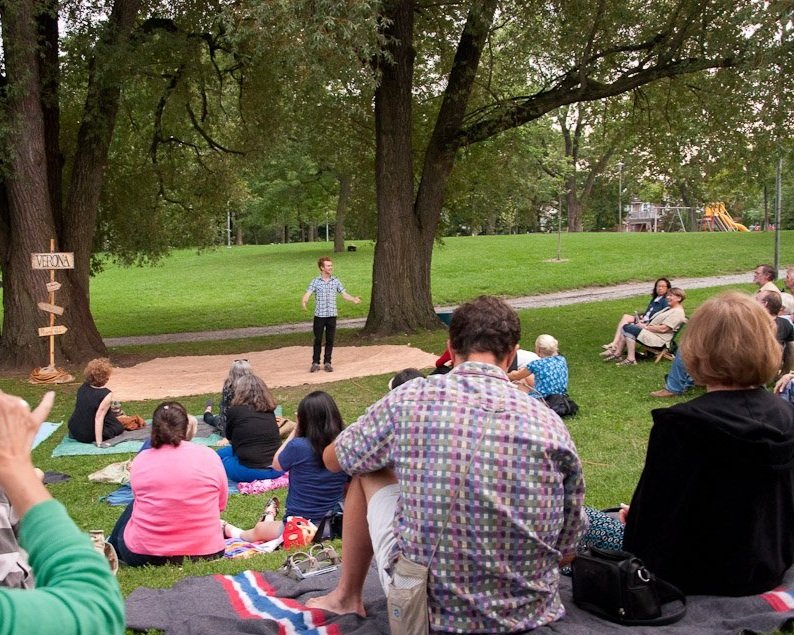
Kaitlyn Riordan, Brendan McMurty-Howlett, and AJ Richardson (left to right) in Withrow Park, Shakespeare in the Ruff’s home base, in 2012 (perhaps contemplating the nature of governance, who’s to say?) — photo by Daniel Daley
So, my friends, we’ve had a couple blog posts about boards and governance already, primarily highlighting the shortcomings and challenges of the legislated model (i.e. systemic patriarchy and white supremacy). You can do a quick little recap here and here. You can also basically ask anyone who has ever sat on a board or worked with a board and they’ll likely give you a litany of issues…as well as a handful of positives.
Despite the widely acknowledged flaws of the non-profit board governance system that a company becomes beholden to as soon as it incorporates, “to incorporate or not to incorporate” is a question Generator hears routinely.
This, of course, is never as simple a conversation as the independent companies asking hope it will be (although we did write an ArtistProducerResource.com page about it to cover the basics). There’s pressure on indie companies who are looking to grow to pursue incorporation, either for regular non-profit status, or the coveted, yet misunderstood “charitable status” (Cue the pots of gold dancing in artists’ eyes.)
We’ve been having this discussion on repeat for years, emphasizing the systemic white supremacy and patriarchy that plagues the non-profit board of directors model—but we haven’t really had a clear alternative to point to. So, we thought we’d try to do something about it. We teamed up with Shakespeare in the Ruff and the Toronto Dance Community Love-in, two companies we’ve worked with closely over the past few years through our Company Collaborator program, to propose a project exploring alternative governance models—and lo and behold, the funding came through!
But first, how did I get here?
I’ve been peripherally connected to Generator (and even the former version: STAF) for a number of years. I helped found Shakespeare in the Ruff and served as the Artistic Director for the first five years, before passing the torch to Kaitlyn Riordan and Eva Barrie, who have now completed their tenures as well. More recently, I joined Generator’s board, curious to experience the board structure from the other side. See, as a young artist producer launching Shakespeare in the Ruff, I myself was lured by the promise of incorporation and charitable status. Well, to be perfectly honest, we were forced to incorporate in order to obtain a permit to perform in a city park. But, it seemed like a reasonable step to take since we wanted to grow the company and increase our access to resources.
I flew headlong into incorporation, and the accompanying “corporate” requirements and mandated board of directors, without much thought to what it actually meant.
I soon found myself trying to quickly learn the language of a corporation: Robert’s Rules, by-laws, minute-taking and motions. I filled our board with non-artists, as per the advice of the day: lawyers, accountants, corporate marketing experts, and the like.
I soon found I was living a double life: an artist in the rehearsal hall, actively embracing uncertainty with a robust creative process and vocabulary to navigate it; and a corporate executive in the board meetings, faking my way through meetings, discussing corporate decision-making procedures —steering clear of uncertainty at all costs lest the board of non-artists get scared and panic in a way that might undermine the organization. I found I was frequently undermining my own expert knowledge of the arts industry to defer to a corporate lawyer who waved around their “fiduciary duty” like a beating-stick.
I couldn’t provide leadership within the vocabulary and processes of a corporation, and the corporate directors couldn’t provide leadership for an arts industry they knew nothing about.
At the lowest point, our board imploded over disagreements of corporate procedure, and the company very nearly folded. No joke: Shakespeare in the Ruff, now celebrating its tenth anniversary and welcoming a third generation of leadership, almost went belly-up in year three.
I don’t believe there was malicious intent from any party. We were all simply pushed into a system of operating that did not arise from the values or ways-of-knowing of the artistic company itself. None of us had clarity on the actual functions of governance, beyond fulfilling the legal structure insisted upon by the Incorporation Act.
There were also many great experiences with Ruff’s board, where I was genuinely supported by a community of artists and non-artists alike to achieve more than I ever could have on my own. These polar oppositional experiences piqued my curiosity, and ever since leaving Shakespeare in the Ruff, I have sought to learn more about the spirit of governance and the legal structures we have in place. (I even went and did a Master’s degree looking at some of this stuff, but that’s a different story.) When the opportunity arose to join this project (and help write the grant), I jumped at it.

Brendan with Wayne Burns (right) in a production photo from Romeo and Juliet in 2016 — photo by Cylla von Tiedemann
Brendan welcoming Ruff audiences before a performance of Two Gents in 2012
So what is the project?
From the outset, the core of this project has been the desire to tackle the seemingly overwhelming topic of ‘governance’ within the context of a community of artist producers thinking about similar questions, but each through the lens of slightly different operating structures.
The Toronto Dance Community Love-in is an incorporated non-profit, and has operated with a collective leadership model since their inception. Shakespeare in the Ruff is a theatre company that has been operating under a co-leadership model, but is now undergoing a leadership transition towards a collective model, as well as a moment of transition with their board. Ruff is an incorporated charity which means they’ve got an extra layer of regulations and reporting requirements on their “corporate” structure.
We wanted to achieve a few things through this project. First, we wanted to learn. What are the other possibilities for governance models and structures? What are the exact legal requirements, and are there any loopholes in fulfilling them? What does “governance” actually mean separate from the non-profit board-of-directors model? Second, we wanted an opportunity within each of our three organizations, to try things out, do things differently, and experiment with governance and organizational structures based on our learning. Third, we wanted to share our learnings with the broader community…hence this blog post. And there will be more blog posts coming.
Throughout the past six months, we’ve structured our project as a series of (mostly Zoom) learning sessions, inviting in various knowledgeable folks who each bring a different perspective to the concept of governance and non-profit structures. These have been incredibly enlightening and exhilarating sessions, filling my head and heart with so many ideas, and allowing for an intimate discussion about the issues. We’ve been meeting with folks such as Jane Marsland, Yvette Nolan, Zainab Amadahy, Elder Whabagoon, Cynthia Lickers-Sage, and others.
What has struck me so far in these sessions is that governance is no one thing for any one person. It is about a practice of decision making that is undertaken in community. There is no magic wand, or perfect structure that will solve all the problems. Anything we create must be engaged with, nourished, and sustained by those impacted by and connected to the organization.
We’ve also had sessions where we’ve all shared our current thinking and questions, as well as how each of our uniquely structured organizations are wrestling with the shared issues. These sessions have been just as enlightening as those with invited guests, as I’ve been exposed to the innovative thinking and practical adjustments that my fellow participants have been doing within their own organizational contexts.
Over the next couple of months, we will be publishing a series of blog posts written by various people participating in this project. Some of them will be engaging with the learnings offered to us by our guest speakers. Some of them will be personal reflections on an evolving understanding of governance. We hope they will all be wildly entertaining. Or, at the very least, we hope to contribute to a growing community of folks in the arts (as well as other sectors) who are taking a good hard look at governance and the ways we make decisions together. We are all starting to recognize that in order to address systemic racism and patriarchy, we need to address our systems, and be bold in dreaming up something different.
These times of upheaval are an opportunity, if we can find the energy. As Yvette Nolan said to us, "I don't know how long this window is going to be open for." This is urgent work, and the more we share our growing knowledge on the subject of organizational transformation, the better our chance of enacting change that will reverberate through our sector…and honestly, hopefully the world too.
Governance Reimaginings asks how we can deconstruct inherited governance structures to create systems of accountability and community care that support, and are aligned with, the values of the organizations and individuals they serve. Structured as a knowledge exchange between Generator, Shakespeare in the Ruff, and the Toronto Dance Community Love-in, Governance Reimaginings took place between April-December 2021 and featured a series of instigations by invited guest speakers. We gratefully acknowledge the support of the Chalmers Family Fund, administered by the Ontario Arts Council, for this project.

Reflections on Peer Mentorship
Generator’s partnership with SummerWorks looks a little different each year, and this past summer it took the form of peer mentorship. Read reflections from SummerWorks Assistant Artistic Producers Fatima Adam and Haley Vincent and peer mentors Kitoko Mai and xLq (Maddie Bautista and Jordan Campbell) here.
Generator’s annual partnership with SummerWorks Performance Festival looks a little different each year—from the “Imagining the Future” Pecha Kucha in 2016, to “Creating Sign Language Magic” in 2019, and all of the conversations and collaborations in between. This past summer, our partnership took the form of peer mentorship: we had the absolute pleasure of connecting SummerWorks Assistant Artistic Producers Fatima Adam and Haley Vincent with peer mentors Kitoko Mai and xLq (Maddie Bautista and Jordan Campbell), all three of whom are alumni of Generator’s Artist Producer Training program.
We’re so grateful to these five wonderful individuals for experimenting with this format with us (and on Zoom, no less)! We’re delighted to share some of their learnings and reflections with you here.

xLq (Jordan Campbell + Maddie Bautista)
HALEY: What role has peer mentorship/mentorship played in building your career?
xLq: A sense
Of wonder
And belief
In ourselves
To validate
Our wildest
Fantasies.
A way forward in the darkest hours
A tiny crack of light to crawl into
Being held accountable by other artmakers
For the kind of art and the choices we made
Learning about the kind of artists we wanted to be
And who we didn’t want to be.
GENERATOR: What’s something from the mentorship sessions that resonated with you?
HALEY: There are so many wise words that have stuck with me from my time with Maddie and Jordan. An idea that really resonated, that they both embrace so well, was committing to fun. Even during the mundane or frustrating or difficult parts of creating and producing, making a conscious effort to have fun is a priority! There have been times when the stress or pressure has made me forget that making art and working with creatives is the best!
FATIMA: The most important piece of advice Kit gave to me is, make your voice heard even if you think no one is listening. So often we choose not to speak up because we think our words will be ignored but, if we say nothing, we are guaranteed to be ignored. Reaching out to people with inquiries, comments or even criticisms, is not something I did regularly before our mentorship. However, since speaking with Kit about this, I have contacted multiple organizations to ask questions, critique their productions/policies, or just let them know I enjoyed a show of theirs. Doing so has not only connected me with theatres and artists across Toronto, it has also started necessary dialogue about issues pertaining to our community.
xLq: How are you becoming the mentor you wish you had when you started out?
KIT: By showing up as my authentic self—meaning I brought my disabilities in the room with me and asked for accommodations—by being flexible and asking the mentee what they need and want, by being honest about how I have to navigate the industry with my identities, my low capacity, and the oppression clique (white supremacy, patriarchy, etc).
FATIMA: An aspect of this mentorship I deeply appreciated is the care and flexibility Kit and I provided to each other. It was lovely being part of an artistic collaboration where your personhood is placed before your workload because unfortunately, that’s not always a guarantee.
GENERATOR: What’s something about this mentorship relationship that really worked that you want to remember and repeat?
KIT: The fact that Fatima and I are only a few stages apart when it comes to our careers. I feel like the advice I offered was stuff that I learned recently, tried recently, and shared with her. It's advice that she can use immediately. It's not dated because it reflects the industry that we are both navigating right now. I think peer to peer mentorship is incredibly valuable.
HALEY: I really enjoyed getting to know Jordan and Maddie through having casual non-outcome-driven chats about life and art. These conversations led to learning and activities in a very organic way. Based on our talks, xLq led a few career planning exercises, that we all did together, that made me rethink how I approach my work!
xLq: An exercise
Or two
Couldn’t hurt
(no need to hit the gym)
We know more
Than we think
We can share
Ourselves
And be honest
(candour is key)
Making lists of 50 puts things into perspective
1, 2, 3, 4, 5, 6, 7, 8, 9, 10, 11, 12, 13, 14, 15, 16, 17, 18, 19, 20, 21, 22, 23, 24, 25, 26, 27, 28, 29, 30, 31, 32, 33, 34, 35, 36, 37, 38, 39, 40, 41, 42, 43, 44, 45, 46, 47, 48, 49, 50

Haley Vincent

Fatima Adam
KIT: I often felt like I was giving you information that I learned yesterday, was using today, that you might use tomorrow. What was it like for you to engage in mentorship with someone who is literally only a few steps ahead of you versus more established within the industry?
FATIMA: I found it incredibly helpful to engage in mentorship with Kit because the part of my journey I am currently in, is where Kit was not too long ago. The advice and suggestions they gave felt more applicable because they can speak directly to their experience being in my position and the circumstances they faced are similar, if not the exact same. Often when speaking to those who are further along than myself, so much time has passed since they were where I am that the environment, conditions and challenges that I am experiencing, either did not exist or were completely different for them. Therefore, the advice they’re able to give feels incomplete but, with Kit that’s not the case. We are experiencing the same or similar barriers, opportunities, joys, difficulties, etc. Being able to confide in, seek guidance from, and create community with someone who’s only a few steps ahead of myself, has been incredibly helpful both personally and professionally.
SUMMERWORKS: What are some ways that creative curiosity can be made more a part of our processes as producers?
KIT: If the pandemic has taught us anything, it's that we can be creative about finding ways to meet the needs of our communities as they change. We shouldn't need a pandemic to force us to find more ways to pay artists, develop more ways to share art or make art, or even curate communities within digital space. Challenges (especially those related to disability accommodation) should be embraced as they are opportunities to explore and be innovative. I think the Toronto and Hamilton theatre communities have been more creative (in terms of how we curate community, make and share art, find ways to pay artists) during this pandemic because everyone was affected. There wasn't a choice. When this is all over, I want that creativity to continue, I want challenges that stem from community needs to be embraced as exciting opportunities to grow and provide care. Theatre (performance as a whole) is an art form that is living and meant to grow (i mean like every performance builds on the last, can change, can develop in ways that more static forms of art don't. Yes this is debatable.) When we stop being curious, we stop growing.
HALEY: I want to investigate and dive deeper into projects that are aligned with the values I hold. Using producing as its own form of storytelling, a place to ruminate on important questions and a way of exploring human connection.
xLq: We must
let go
Of all we thought
We knew
A playful practise
Is a prerequisite
For this pathetic pathological party
Do you still remember how to play????????
It might take practise
Practise isn’t perfect
A process isn’t a production line
When do producers really get to play?

Kitoko Mai
1 month ago
We wrote a poem
(it was an application)
It felt true to us
It was still under 1000 words
FATIMA: If you could give one piece of advice to yourself from 3 years ago, what would it be?
KIT: Only one???? Okay. To Baby Kit: You are a bad bitch (even if you don't see it ) and everything that doesn't make sense about producing will make more sense after you try it, fail, learn, and then try again!
HALEY: To Haley from 3 years ago, although it may seem like nothing will ever work out, it sooo will! It'll work out exactly how it's supposed to. Your path won't look like everyone else's and that's okay.
Keep exploring what you love, caring about community and those around you, building your skills, and being you! Love, present Haley.
About the Artists
Fatima Adam (she/her)
is a Toronto based writer, performer, facilitator, and producer. Passionate about creative collaboration, she has worked with BlackCAP, The AMY Project, SummerWorks Performance Festival, and more. Currently, she is an Associate Producer with the Culchahworks Arts Collective. Fatima hopes to continue working within media production and the performing arts, bringing underrepresented talent to the forefront, and widening accessibility for artists in the GTA to pursue theatre.
Haley Vincent (she/her)
is an emerging artist originally hailing from Treaty 1 Territory, Winnipeg, Manitoba. She is a graduate of the University of Winnipeg, holding a BA Honours degree in Theatre and Film. Haley is a creator, performer, administrator and producer with a passion for multi-disciplinary performance, nuanced storytelling and community building. Her work has taken her across Turtle Island and to the UK. Haley is always searching for new creative outlets and opportunities for diverse and meaningful learning.
Kitoko Mai
is a disabled, non-binary, multidisciplinary performance, media, and community artist. Their artistic practice is best described as a chaotic collage. It is a collection of film & video art, photography, performance, collage, installation, sound, poetry and chaotic Alt Black femme weirdness. Kitoko is the recipient of the 2021 Promising Pen Prize from Cahoots Theatre and the 2020 Gilded hammers Emerging Artist Award. They are a member of the community arts collective, Care Collective, are currently taking part in a residency at Buddies in Bad Times Theatre, and completing a year-long script development program with Nightwood Theatre through their Write From the Hip program. You can also see their cheeky and informative YouTube series called “The BIPOC Survival Guide”, designed to support post-secondary students and produced by the CBC. Their work is rooted in social justice, anti-oppression, and the pursuit of messiness. Their personal philosophy is to produce work that aims to destabilize hierarchies of power, embraces fluidity of content, form, and process; as well as prioritizes accessibility.
Bio written by Kitoko and made infinitely better by Claire Calnan
xLq
is a POP ART performance duo comprised of Jordan Campbell and Maddie Bautista. Dedicated to radical performance forms, xLq combines ritual, fashion, dance, music, and queer pop aesthetics to create complicit audience experiences.
Their original performance creation 4inXchange received Nightswimming’s 5x25 Commission and won the NOW Magazine Audience Choice Award at the 2018 SummerWorks Festival, then proceeded to tour to the rEvolver Festival 2019 (Vancouver, BC), FEM FEST 2019 (Winnipeg, MB), the Grand Theatre (Fergus, ON), Registry Theatre (Kitchener, ON), and Waterford Old Town Hall (Waterford, ON).
They are currently in residence with Nightswimming Theatre, where they are developing All for One for All, which premiered at CAMINOS 2019, and was created while in residence with lemonTree creations.
Not-for-profit Law and Governance in the Creative Industries
We’re in a time of unprecedented momentum for reimagining systems of board governance in the performing arts sector. Generator teamed up with ALAS (Artists’ Legal Advice Services) on May 11, 2021, for a webinar and Q+A to help non-profit workers understand legal requirements, and explore what’s possible—watch it here.
We’re in a time of unprecedented momentum for reimagining systems of board governance in the performing arts sector.
Generator teamed up with ALAS (Artists’ Legal Advice Services) on May 11, 2021, for a webinar and Q+A to help non-profit workers understand legal requirements, and explore what’s possible.
The webinar begins with a presentation from Terrance Carter, Managing Partner of the law firm Carters, laying out the legal responsibilities of board members, and legal requirements for non-profit organizations and charities. The second presentation is from arts consultant Jane Marsland, exploring how small to mid-size non-profits can safely navigate legal structures, explaining paradigm changes in the sector towards new conceptual understandings of organizations, and offering ways to align governance with company values. Topics range from recruitment, to strategic board management, to successful planning.
Thanks to our wonderful panelists and moderator Cat Lovrics, as well as to the participants who joined us live for the webinar and contributed questions to our discussion.
Watch the Webinar
Watch a recording of the webinar on our YouTube channel here.
Part One: Understanding Legal Requirements
0:01-9:40 Introductions from Generator’s Lead Producer Kristina Lemieux and moderator Cat Lovrics
9:40-31:00 Presentation from Terry Carter about the legal landscape for charities & non-profits
31:00-40:00 Question and answer period with Terrance Carter
Part Two: Exploring What’s Possible
40:00-1:11:40 Presentation from Jane Marsland about emerging thinking in non-profit governance
Part Three: Discussion Period
1:11:40-1:30:50 Question and answer period with Jane Marsland and Terrance Carter
1:30:50-1:48:29 Extended question and answer period with Jane Marsland and Kristina Lemieux
Please note we did experience some technical difficulties, but they were resolved promptly. Captions are available in YouTube.
Resources
From the webinar
Slide deck from Terrance Carter (includes link to Legal Risk Management Checklist for Ontario-based Charities)
Slide deck from Jane Marsland (includes links to the reports 'Peering into the Future: Reimagining Governance in the Non-Profit Sector' and 'Framing Forward: Reimagining Governance'
Websites for further learning
CharityLaw.ca (affiliated with Terrance's firm Carters)
ALASontario.ca (Artists' Legal Advice Services - webinar presenter)
ArtistProducerResource.com (generated by Generator, this website has basic information about boards, as well as Incorporation and Non-profits)
As a general note, as you do your own searching for resources around boards, you may find the most success looking for resources created specifically for charities—generally these will still be applicable and helpful for non-profits (even if you are not in fact a registered charity).
About the Panelists
Terrance Carter
Terrance S. Carter, B.A., LL.B, TEP, Trademark Agent – Managing Partner of Carters, Mr. Carter practices in the area of charity and not-for-profit law, and is counsel to Fasken on charitable matters. Mr. Carter is a co-author of Corporate and Practice Manual for Charitable and Not-for-Profit Corporations (Thomson Reuters), a co-editor of Charities Legislation and Commentary (LexisNexis, 2020), and co-author of Branding and Copyright for Charities and Non-Profit Organizations (2019 LexisNexis). He is recognized as a leading expert by Lexpert, The Best Lawyers in Canada and Chambers and Partners. Mr. Carter is a member of CRA Advisory Committee on the Charitable Sector, and is a Past Chair of the Canadian Bar Association and Ontario Bar Association Charities and Not-for-Profit Law Sections.
Jane Marsland
Jane Marsland has been an articulate advocate for the arts for many years and has served on a wide range of boards, advisory groups and committees. Jane was co-founder and director of ARTS 4 CHANGE, a three-year program designed to create positive change for and by arts professionals in Toronto, as well as co-founder and Director of the Creative Trust: Working Capital for the Arts. Ms. Marsland has managed arts organizations since 1970 and was General Manager of the Danny Grossman Dance Company from 1982 to 1999.
Since 1999, Jane has been working as a free-lance arts consultant and has worked with more than 100 arts organizations. Recently, Jane worked with the Toronto Alliance for the Performing Arts and ARTS Action Research on a two-year community initiative, Theatres Leading Change Toronto involving 18 small and mid-sized theatre and dance organizations. Theatres Leading Change was designed to illuminate and better understand change: on an individual learning level; on a community co-learning level; and as a function of broad-based change that may hold within the possibility of paradigm change in the field.
She has been the recipient of two arts community awards: a “Harold” in 2001 and the Sandra Tulloch Award for Innovation in the Arts in 2002. In 1995, she received the first M. Joan Chalmers Award for Arts Administration for outstanding leadership in the arts. In 2011, she was the winner of the Toronto Arts Foundation’s Rita Davies and Margo Bindhardt Cultural Leadership Award. In 2012, Jane was awarded the first Metcalf Foundation Innovation Fellowship in the Arts to examine Shared Platforms and Charitable Venture Organizations and their applicability to the arts sector in Ontario. Jane was honoured as the recipient of the Silver Ticket at the Dora Mavor Moore Awards in 2017.
Cat Lovrics (Moderator)
Catherine (Cat) Lovrics is a Partner at Marks & Clerk Canada. Cat’s practice focuses on copyright law, as well as trademark, personality and publicity rights, as well as marketing and advertising, consumer protection and data and privacy laws. She specializes in emergent legal issues related to the Internet and digital media, in addition to traditional entertainment and media. Cat helps her clients protect, exploit and enforce their IP, and advises on clearance, rights acquisition and licensing. Her clients range from multinational and Canadian media companies to individual artists. Her experience spans a wide range of sectors, from creative industries to AI & emergent tech to consumables.

Artists’ Legal Advice Services (Co-Presenter)
ALAS’s mission is to empower Ontario’s creative community by providing access to summary legal advice, information and education. Learn more about their work here.
You read Kristina Lemieux’s bio here. We also recognize the contributions of Carol Hansell, who was unable to attend the live webinar but contributed important thinking to the development of the ideas presented here. You can read Carol’s bio here.
Find more posts related to boards on our Learnings + Explorations blog here.
Have a question or a reflection to share? Please email info@generatorto.com.
Learning Pathway: What to Pay People
People are always the most expensive budget line when you're producing—but how do you know what to pay them? This learning pathway tackles Paying People, just in time for the Toronto Arts Council and Ontario Arts Council August project deadlines.
One of the most common questions I get from producers is: how much do I pay people? While there are several unions and associations that cover the performing arts, it’s still not always a straightforward question to answer. If you’re working with an Equity (Canadian Actors’ Equity/CAEA) agreement, things are a little clearer—there are set policies and minimum rates you’re obligated to follow. Otherwise, it is up to you as a producer to set the fees and rates, as well as the working conditions of a project.
This ArtistProducerResource.com Learning Pathway helps you figure out what to pay people who are working on your project.
We’re publishing it in July, right before a round of project deadlines from the Toronto and Ontario Arts Councils (learn more on our Public Funding and Grant Writing pages). We hope it will be a handy resource at the start of any budgeting process!
Where to begin
I always start a budget with my expenses (what would I like the project to cost?) — people are almost always the most expensive item in a budget.
Next I determine if I can find the revenue to make the budget feasible.
Once I’ve found the balance between what I want to have happen, and the resources I have available to make it a reality, I have the first draft of my working budget.


Considering what to pay people
One of the things unions and associations do is set a minimum rate schedule. These rate schedules are often grouped together by labour type (actors, directors, and stage managers share an association; designers have a different association, and so do technicians). It is important to understand that these rate schedules are MINIMUMS—so you can think about them as the minimum wage. You can always pay people more.
Dollars are not the only way to compensate people working on your project, though generally that is the preferred method. Depending on what you’re doing, the stage your project is at, and what you’re hoping to achieve with this part of the process, you might consider other ways of compensating those you are working with. Perhaps you can only offer an honorarium, but you will provide lunch for everyone each day.
Some other tips
Rights and Royalties
If you’re working with an existing script you may need to add this to your budget—don’t forget to research that cost early on
If you’re building something new, consider budgeting for rights and royalties from the start of your new process, and making that part of the negotiations. Often (though not always), playwrights, designers, and co-collaborators will want to talk about rights and royalties before embarking on a new creation.
Unions and associations in other performing arts disciplines
These can be helpful for determining fees—CARFAC (representing visual artists) is one of the few associations that has rate schedules for offering workshops or talks, as well as for screening short films.


Further Learning
Sometimes the hardest person to pay is yourself! Use the Rags to Reasonable Salary Worksheet to calculate how much you should pay yourself on your next (or current) project.
Use the Freelance Rate Calculator to set your base hourly rate
This Client Email Helper template by Jessica Hische generates email responses to help you say “no” to free and low-budget work and to help ask for more favourable contract terms before the start of a project.
Check out ArtistProducerResource.com’s Expenses and Revenues infographic series below

Expenses Infographic: download the PDF by clicking the image above, or find it on the Expenses page on ArtistProducerResource.com.

Revenues Infographic: download the PDF by clicking the image above, or find it on the Revenues page on ArtistProducerResource.com.

About ArtistProducerResource.com
ArtistProducerResource.com is a free, searchable online encyclopedia of information, resources, tools, and templates for producing independent performance work in Canada, currently with a focus on Toronto. Launched in November 2017, it has since been visited by over 10,000 users, transforming the way artists producers access information and share knowledge across Canada. ArtistProduceResource.com is free to access and always will be. You can become a supporter by subscribing to our Patreon—we’ll send you a monthly newsletter with highlights, features, and all the newest content on the site. Got a suggestion for ArtistProducerResource.com? Send it to us here.
Learning Pathway: Accessibility as a Practice
This learning pathway invites you to use a values-based approach to the budgeting, planning, development, and execution of a production, where conscious decisions are being made, at all stages of the process, about who the play is for and how the needs of the audience and artists are being met.
Producing is a practice. By that I mean, it’s something you do over and over again. Each time you learn something, because each time is a little different. You carry your experiences with you to each new project, and maybe you begin to develop a philosophy and protocols for yourself. You may return to certain spaces to work with the same people. Together, you develop a shared language, a shorthand, a style of working, a culture. Sometimes, a culture of exclusion can develop.
We live in a capitalist, white supremacist, colonial society. These structures have made their way into the live performance sector, into our working relationships, into our bodies, and into our thoughts. Decisions that counter those structures must therefore be made consciously.
Decolonizing one’s producing practice is a life-long journey. I am no expert, and ArtistProducerResource.com does not have all the answers. My hope is that this is one place among many for new ideas, new questions, and new perspectives to spring from.
This learning pathway invites you to use a values-based approach to the budgeting, planning, development, and execution of a production, where conscious decisions are being made, at all stages of the process, about who the play is for and how the needs of the audience and artists are being met.

Photo by Keshia Palm
If this approach seems overwhelming, restrictive, or perhaps even impossible given the current state of the world, I encourage you to step back and examine why. What are the assumptions or habits of mind causing you to feel that way? To guide you through the process of unpacking all that, check out Inclusion on ArtistProducerResource.com.
I’d much rather work from a place of hope and curiosity than a place of frustration and restraint. I love this prompt from the digital workshop “Crip the Script” created by the amazing Ophira Calof (everyone, hire them!): Embrace your team's access needs as part of your collective, creative, DNA.
This framework changes the producer’s approach from “if only...” to “what if...?”.
Consider the Social Model of Disability – which we use to frame Accessibility on ArtistProducerResource.com. The Social Model of Disability removes the onus from the individual and places it back on a society that has, throughout history, demonstrated “disablism” as a method of discrimination against those with impairments. A social model perspective does not deny the reality of impairment nor its impact on the individual. However, it does challenge the physical, attitudinal, communication and social environment to accommodate impairment as an expected incident of human diversity.
COVID is such a great example of this. Suddenly, when everyone was forced to stay home, we as a society made major accommodations to react to this drastic shift to keep each other safe. This proves that it is possible to – and that we are capable of – significantly changing the way we do things at any and all times. You can do it, I can do it – we all can do it.
Some actionable tools for making workspaces safer for artists can be found on Artist Accessibility on ArtistProducerResource.com; ranging from budgeting considerations, to design choices, to discussing access needs.


While you can (and should) build your project to meet the exact needs of your audience and your artists, there are some blueprints that you can look to for inspiration and guidance.
Approach Accessible Performances like you would a dressmaker’s pattern – you can follow the rough shape, but need to take measurements and tailor it to fit you!
Now that you have your pretty dress (the performance) that fits amazing and looks fabulous, it must be seen, darling! Check out Marketing Strategy and review Artist Accessibility to make sure you are respecting your artists while reaching your audience. Like any good party invitation, make sure you include all the important information so that people are excited to come, and know exactly what they are getting into. Read over and answer the many questions on Audience Accessibility before you share anything – chances are, your audience will be asking those same questions.
Remember that for a lot of folks (including me), theatre has not always been a place where they have felt comfortable or particularly welcome.
For some folks, it may not be a welcome place still. If you are inviting folks who have historically not been welcomed into the space, you have to work extra hard to assure them that this production is for them.
Imagine you get invited to eat at a really fancy schmancy restaurant. This is what I might think: Oh my god a fancy restaurant. I never go to fancy restaurants. What do I wear? What’s on the menu? Can I eat it? Can I read it? How much does it cost? Will there be people like me there? I’ve never been to this fancy schmancy restaurant before! What time do I show up? Is there a lobby? Is there coat check? Do I need to bring anything? Where is it? How do I get there? How long will it take to get there? How long is this dinner going to be anyway? What are the washrooms like? Who else is going? Do I know anyone? Should I bring someone? Can I afford it? Can they afford it? Will it be fun??
To some folks, your performance is like a fancy schmancy restaurant. A million other questions will also come up, because everyone is different and needs different things to feel safe, comfortable, and wanted. It’s your job to tell them that you made the whole menu with them in mind.
And if you’re one of those folks who never went to the theatre, who never got invited to the fancy schmancy restaurant, who’s starting up their own little pop up – I see you! Someone out there is going to see what you’re selling, and it’s going to stir up memories and feelings deep inside them because you’ve got that soul food. Still, you have to do all of the above to get your soul food to the people who are going to eat it up.


Of course, there are a multitude of ways to get people excited about and invested in your production that reach beyond “the performance”. On ArtistProducerResource.com, we call this part Community Engagement. Community Engagement builds trust and relationships with people, so that you can go from being a fancy schmancy restaurant or a brand new pop up to someone’s favourite local spot. This takes time, energy, repetition. Dare I say – practice?
I’d like to leave you here with a few more paths to pursue in your journey:
Sins Invalid; the originators of the disability justice movement
Creative Users; whose newsletter frequently sparks joy and illuminates new opportunities for theatre/connection
Cultural Pluralism in the Arts Movement Ontario (CPAMO); offers numerous workshops and panels gathering movers and shakers from across the sector
Cripresentation; a podcast highlighting queer and trans disabled artists and their work, specifically centring Black, Indigenous and other people of colour
AccessDocsForArtists; a website all about creating access docs – a document that outlines your disability access needs, also known as an “access rider” – with resources to make your own!
Infographics & Templates

Infographic: How to Make Spoken Theatre Accessible for Deaf Audiences. View the PDF by clicking the image above, or find it on Accessible Performances on ArtistProducerResource.com.

Infographic: How to Make Spoken Theatre Accessible for Deaf Audiences. View the PDF by clicking the image above, or find it on Accessible Performances on ArtistProducerResource.com.
Template: Community Agreement. Download the PDF by clicking the image above, or find it on Inclusion on ArtistProducerResource.com. More templates: find the Theatre Venue Accessibility Audit Checklist on Audience Accessibility on ArtistProducerResource.com.
YouTube Playlists
About ArtistProducerResource.com
ArtistProducerResource.com is a free, searchable online encyclopedia of information, resources, tools, and templates for producing independent performance work in Canada, currently with a focus on Toronto. Launched in November 2017, it has since been visited by over 10,000 users, transforming the way artists producers access information and share knowledge across Canada. ArtistProduceResource.com is free to access and always will be. You can become a supporter by subscribing to our Patreon—we’ll send you a monthly newsletter with highlights, features, and all the newest content on the site. Got a suggestion for ArtistProducerResource.com? Send it to us here.


Learning Pathway: Digital Communications
Our third ArtistProducerResource.com Learning Pathway looks at social media, analytics, designing communications for accessibility, and newsletters.
Most of us engage with digital communications in our lives in some way—or in approximately one zillion ways, every day: we post on social media, open email newsletters, watch YouTube videos, and visit websites (like this one!). Maybe you’re someone who’s put a lot of thought into your personal *online presence*, maybe you run social media for three different theatre companies at any given time, or maybe the thought of a job description that includes “newsletter creation” makes you want to run for the hills. There are almost as many levels of digital communications literacy as there are humans logging onto the interwebs each day.
This Learning Pathway takes you through the best ArtistProducerResource.com has to offer when it comes to producing communications for a company or production—dig as deep as you like according to your skill level and interest. It was created by me, Annie Clarke, Generator’s Communications Producer, and it is the third in a series of ArtistProducerResource.com Learning Pathways that we launched in January (read Keshia Palm’s post on Personal Organization and Business Management here and Audrey Quinn’s post on Tax Season here).
This Learning Pathway looks at social media, analytics, designing communications for accessibility, and newsletters — all on ArtistProducerResource.com — with some YouTube videos and downloadable templates for you to make your own. The total read/watch time is approximately 2 hours.



Boundaries
The tools you use to do digital communications work for your job probably overlap with the platforms you use in your life—I can’t stress enough how important (and helpful!) it is to set boundaries around communications. The Information Management page on ArtistProducerResource.com opens with precisely this topic and offers tips to help you draw the lines you need to, from email labels to distinct browser profiles. Settings are your friend—get specific where you can. (For instance, you can choose to get phone notifications about direct messages on your personal Instagram without signing up to receive them for whatever business profile(s) you also manage.)
Social Media
Start with an easy breezy overview by watching the “Producing Social Media” YouTube video series Keshia and I made last year.
Watch time: 6 minutes
Once you’ve got those basics down, settle into the Social Media page on ArtistProducerResource.com for a deeper dive. It has helpful contextual information and a lot of details about Facebook, Twitter, Instagram, and YouTube.
I think the best communications results come from a combination of planning and responsiveness. To help with the planning part, my go-to tools include:
AirTable, a project management software for content planning (read about it on ArtistProducerResource.com’s Information Management page)
Hootsuite, for drafting and scheduling social media posts
Canva, an excellent and supremely user-friendly graphic design platform
LinkTree, for when you can’t pick just one link for your Instagram bio
The Social Media page has a run-down of those last three and many more!
Reading time: 34 minutes
Tracking Analytics
Stay with the Social Media page to learn about tracking your analytics. Running social media takes time and effort, and it’s useful to have a way to evaluate what’s working, and what’s not—especially when social media is part of your job description. Whether you do it once a week or once a month (I have a weekly recurring reminder to do this for Generator), make this tracking part of your workflow. You’ll find a downloadable Excel template on the Social Media page to help. And who knows, maybe one day you’ll write grew company’s Instagram following by 250% in three months on your resume and it will get you the communications job you always dreamed of! Only time (and good tracking) will tell.
Keshia covered the Websites page on ArtistProducerResource.com in her Learning Pathway on Personal Organization and Business Management. Head back to Websites to read up on analytics—they’re a great thing to track for your website alongside your social media insights. Google Analytics is a free and relatively easy tool to set up for any website: here’s a YouTube video to get you started.
Designing Communications for Accessibility
These posters created by Karwai Pun on the “dos and don’ts” of designing for accessibility are one of the most popular resources Generator has ever shared on social media—and I know this because of (say it with me!) tracking our analytics. Visit the Accessible Websites, Graphics, Videos and Documents page on ArtistProducerResource.com for more tips and resources to ensure your communications creations are accessible.

A couple things to highlight:
Capitalizing the first letter of every word in a hashtag ensures it can be read by screen readers—#TakeThisHashtagForExample
When you’re creating graphics and images, make sure to create Alt Text for them too! You can add Alt Text directly into posts on Twitter (before you post) and Instagram (after you post)
Colour contrast is an important part of accessibility in graphic design—the tools on the ArtistProducerResource.com page are good ones to bookmark (Coolors.co/generate is especially fun)
Reading time: 16 minutes
Newsletters
I love newsletters. I enjoy creating them as much as I enjoy reading them. And you know what else I love? Respecting people’s communication preferences! Ever heard of the acronym CASL? It’s pronounced ‘castle,’ and it’s short for Canadian Anti-Spam Legislation—we get it into that, and much more, on the Newsletters/eBlasts page on ArtistProducerResource.com.
If you’re looking for a platform recommendation: Team Mailchimp. (PSA: Being on Team Mailchimp also means being on Team Export Your Audience List Regularly to Back It Up.)
Reading time: 22 minutes
Further Learning
Accessibility Services Canada has a lot of great webinars (some of them free), including Web Accessibility for Content Managers and Accessible Graphic Design
CampTech has a number of workshops geared towards small storefront Ontario businesses, but their newsletter reaches far and wide, with great round-ups of trends in social media and digital marketing (Hootsuite’s newsletter will keep you on top of trends too)
BC Alliance for Arts and Culture’s Digital Ladders Project has helpful blog posts looking at case studies in digital tools and strategies across a number of arts organizations
About ArtistProducerResource.com
ArtistProducerResource.com is a free, searchable online encyclopedia of information, resources, tools, and templates for producing independent performance work in Canada, currently with a focus on Toronto. Launched in November 2017, it has since been visited by over 10,000 users, transforming the way artists producers access information and share knowledge across Canada. ArtistProduceResource.com is free to access and always will be. You can become a supporter by subscribing to our Patreon—we’ll send you a monthly newsletter with highlights, features, and all the newest content on the site. Got a suggestion for ArtistProducerResource.com? Send it to us here.

The HST Dilemma
You’re in one province, the person who hired you is in another. You’re Zooming sixty unknown faces, and you have no idea which province any of them lives in. How do you know which sales tax rate to charge in the working-from-home era?
A big question that arises for folks who collect GST/HST comes down to invoicing: when you do charge GST? Or is it supposed to be HST? Why do I have a customer asking me not to charge sales tax?
(Looking for a general discussion of GST and HST? Like…when and how you’re supposed to register to collect it? Check out the GST and HST page on ArtistProducerResource.com.)
Place of Supply
This can be a funny rule to wrap your head around—made even more complicated by the fact that we’re now all working in the digital world, with many clients and customers farther away from us than ever before (while we ourselves stay closer to home than ever before...three cheers for #PandemicLife).
CRA uses the term “place of supply” when determining which rate of sales tax to charge. This means that you charge the GST or HST rate based on the location where you are supplying your product or service. So you may be handcrafting that macramé in your basement suite in Toronto, or hosting that Zoom consultation from your home office in Vancouver, but what counts is where your product or service is being consumed.
An easier way to think of it is: where are you sending your invoice (i.e. what is the business address of the person who’s paying you)? If you’re invoicing a company located in Quebec, you charge the 5% GST in place in that province. Sending your product to a customer in New Brunswick? You charge them New Brunswick’s 15% harmonized sales tax. (See below for a table of which rates to charge in what province.) If you have an out-of-province client telling you not to include sales tax on your invoice, they’ve got that wrong: if you are registered to collect GST/HST, you need to do so, you just need to insure you’re charging the correct rate according to the province of supply. As detailed in the table below, the only instance in which you would not charge sales tax is if you’re invoicing internationally.


A helpful way to understand the “place of supply” rule is to think back to that fabled time when we could all gather together. (You know, back when we used to physically go places to experience a performance?) If an Alberta resident purchased a ticket to see a play at Tarragon Theatre, they’d pay 13% HST on that ticket because Tarragon is located in Ontario—not 5% because the person purchasing the ticket is visiting from Alberta.
The Complicating Factor
What makes things tricky in the online world is that now, thanks to *official pandemic sponsor* Zoom, we’re able to host events and invite people into our space—whether it’s for online classes, workshops, or performances—and those people could be consuming what we’re offering from pretty much any location. You’re unlikely to be gathering your meeting guests’ mailing addresses and sending them individual invoices, so in this kind of scenario, CRA states that you would charge the sales tax rate of where you are located. However, if you are hosting a one-on-one session with someone, like a vocal lesson, you would charge sales tax based on the location of that individual (e.g. if you’re based in Newfoundland and offering a vocal lesson to someone in Toronto over Zoom, you charge Ontario’s 13% HST).
The first question to ask yourself is whether you’re sending an invoice for your service or product—and if you are, easy, just follow the Place of Supply rules. For example, if a company in Manitoba is paying you to host a workshop for 50 people on Zoom who could be tuning in from wherever, you charge Manitoba’s 5% GST—you are getting paid by one person/company whose business address is in Manitoba (rather than getting paid individually by workshop registrants), and that trumps the fact that the Zoom participants are located from all over.
For more information and examples from the CRA, check out:
GST/HST Rates Across Canada
The rate for taxable supplies depends on the province or territory. As of February 10, 2021, the rates are:

Got Questions?
If you are a performing artist working in Canada and have further questions, please contact us by emailing info@generatorto.com and we will consult with you at our next Financial Joy Office Hours session. Please note that at this time we are not able to offer support to folks working outside the performing arts.


Learning Pathway: Tax Season
For our second ArtistProducerResource.com Learning Pathway, Financial Literacy Consultant Audrey Quinn offers a step-by-step approach to tackling the most wonderful time of the year…tax season.
For our second ArtistProducerResource.com Learning Pathway, we’re ringing in the most *wonderful* time of the year! The time of year when you’re looking through pockets, drawers, and in between couch cushions for receipts. When you’re trying to figure out what that deposit in your bank account back in June was from. When you’re wondering if that dinner you went to with that touring company last January is deductible. Yes: it’s tax time. Maybe you started 2020 with the best of intentions, swore you’d stay on top of your finances all year long, but then life happened (and a certain pandemic happened, too). So now you’re sitting in front of a pile of papers faced with what feels like one very complicated tax return.



One Step At A Time
Step 1
Don’t fret. It may seem overwhelming at first, but if you take a systematic approach and break tax prep into smaller steps, it will feel more manageable.
Step 2
Familiarize yourself with the Canadian tax system and your obligations as a tax payer by reviewing the Income Tax page on ArtistProducerResource.com.
Step 3
Identify all the income you earned during the tax year (in this case, January 1, 2020-December 31, 2020). This may mean gathering together invoices you sent out, service contracts you signed, and records of deposits. You will also have to report any income that was reported to CRA in the form of T4s, T4As, T3s or T5s. By February 28, you should be able to see all applicable forms issued to you via CRA MyAccount.
Step 4
Organize all expenses related to your self-employment by type of expense—think office supplies, union dues, agent fees, home office materials, business meals, etc.
Step 5
Don’t forget about tax deductions that are available to all Canadians, regardless of self-employment status. (These include Medical, Donations, RRSP Contributions, Ontario rent credits.)
Step 6
If you’re feeling confident, you can prepare your tax returns using any CRA-approved tax filing software, or you can book an appointment with a tax professional. Make sure you’re up front when booking a tax appointment that you are a self-employed artist and that the tax preparer is familiar with your line of work. Not all tax preparers are created equal and it’s up to you to advocate for your needs.
Step 7
If you’ve decided to have your taxes done by a tax professional, be sure to review Artbooks’ “Prepare to Meet your Tax Preparer” guide before your appointment to make sure you have everything you need to make that session run smoothly.


Things to Consider
Grant Income
One aspect of personal income tax that is unique to artists is the receipt of grants. Grants are a welcome source of revenue for artists but can create quite a tax headache. Our Guide to Government Grants and Their Tax Treatments will help you with preparing your taxes after receiving a grant.
Employment Status
Unsure whether you should be (or might want to be) considered an employee rather than a contractor, or vice versa? Visit Employee vs. Contractor on ArtistProducerResource.com to learn the differences between the two (there are pros, cons, and tax implications for each).
Planning Ahead
Once you’ve climbed the tax prep mountain and emerged on the other side, it might be a good time to double down on a commitment to get/stay on top of your finances going forward. This will help you feel less overwhelmed next tax season, and will help avoid any nasty surprises—tax bills can be scary if you’re not prepared for them.
We recommend you take a hard look at your finances and plan a budget for yourself by checking out the tools and templates for Personal Finances and Planning on ArtistProducerResource.com. You might also be inspired to revamp your invoice template (which can be found on the Income Tax page) to make next tax season that much more bearable.
Keep Learning
Congratulations on wading into the murky waters of taxes as an independent artist. Your financial learning may have taken the backseat to your artistic learning in years past, but there’s no time like the present—we’re glad to see you here now! And remember, you’re not alone, and there’s lots of help around. There are plenty of further learning and development opportunities to help you with budgeting and personal finance. Some of our favourites are: Rags to Reasonable, Ambitious Adulting, and The New School of Finance.
About ArtistProducerResource.com
ArtistProducerResource.com is a free, searchable online encyclopedia of information, resources, tools, and templates for producing independent performance work in Canada, currently with a focus on Toronto. Launched in November 2017, it has since been visited by over 10,000 users, transforming the way artists producers access information and share knowledge across Canada. ArtistProduceResource.com is free to access and always will be. You can become a supporter by subscribing to our Patreon—we’ll send you a monthly newsletter with highlights, features, and all the newest content on the site. Got a suggestion for ArtistProducerResource.com? Send it to us here.

Resource Round-up: Financial Literacy
A collection of our favourite financial resources. Explore categories for artists, producers and non-profit workers, and tax season.
We’ve pulled together the best of ArtistProducerResource.com, our blog, and our favourite external resources to help you navigate finances as an artist, producer, nonprofit worker, and/or human who wants to be ready for tax season for once.

These resources will also be available via Toronto Fringe’s Next Stage Community Booster Self-Care Hub (access is pay-what-you-can) from January 21-31, 2021.

Board Governance: What is it? What is possible?
Reflections on a discussion about what power boards have, what is possible when we look at alternative ways of operating, and what we mean we talk about accountability.
A conversation with Generator Generations
What power do boards have? Generator’s Lead Producer Kristina Lemieux used this prompt to launch a conversation around what we know (and what we think we know) about boards of directors, and what is possible when we look at alternative ways of operating.
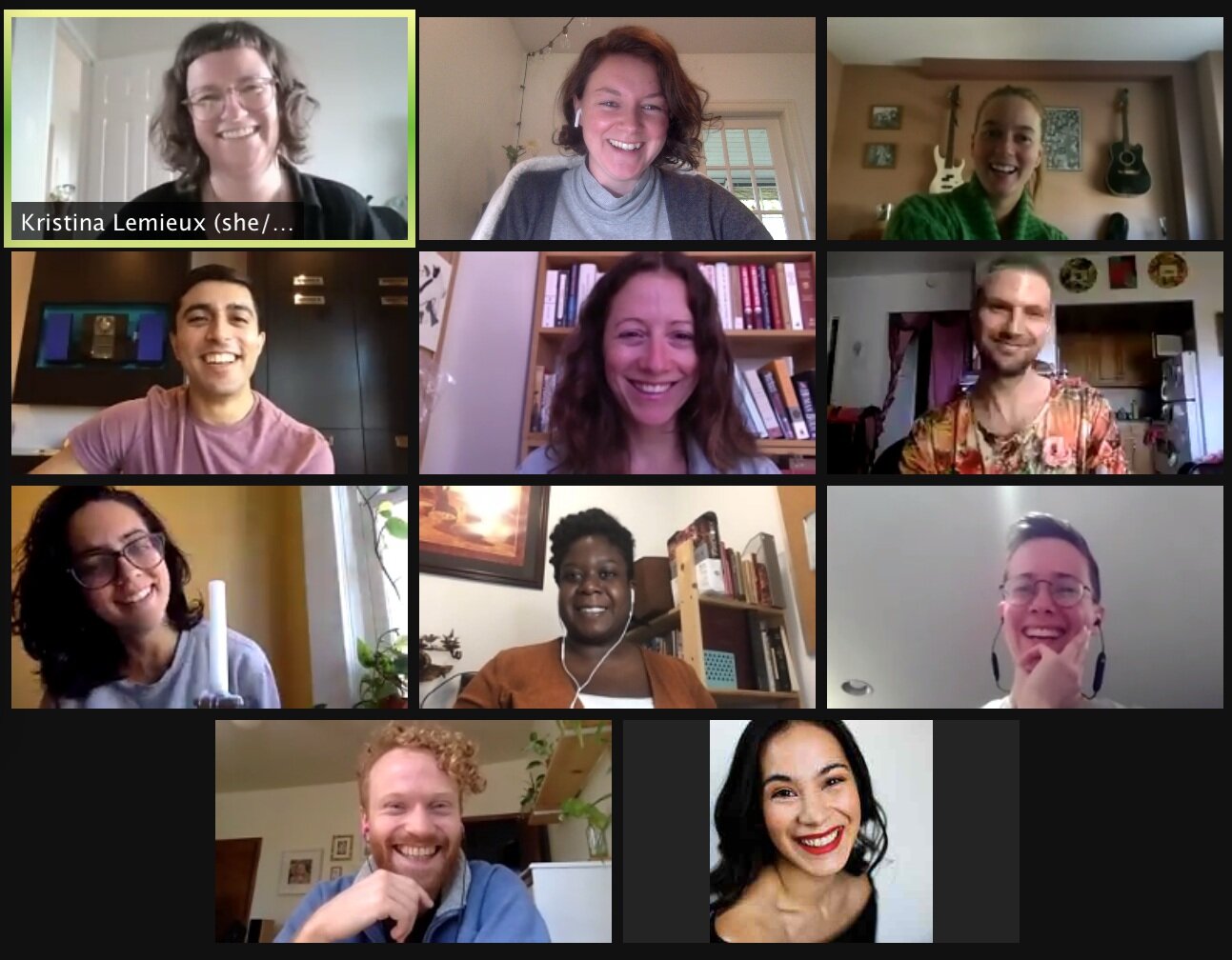
Present at the Zoom discussion this blog post was based on: seven community members (Eva Barrie, Robyn Breen, Jacqueline Costa, Rohan Dhupar, Brock Hessel, Brendan Howlett, and Kaitlyn Riordan) and Generator’s staff team (Annie Clarke, Sedina Fiati, Kristina Lemieux, and Keshia Palm).
Over the past few months we’ve been inviting our community of program alumni to ‘Food for Thought’ conversations, exploring topics related to transformation, opportunity, and growth—much like we’re doing right here on our Learnings + Explorations blog. One of the big topics we’ve been exploring is boards of directors (Kristina got us started on the blog in October with We’re going to talk about boards a lot—here are some introductory frameworks to get us started). This post is based on a discussion that took place over Zoom in October that we called ‘Board Governance: What is it? What is possible?’
Why boards?
Boards of directors of non-profit organizations in Canada have a fiduciary duty, tasking them with the responsibility to act in the best interests of the organization by overseeing the resources of the organization in line with its stated mandate. There may be additional external oversight if the organization has charitable status and/or is operating beyond the financial threshold at which public funding bodies require an annual external audit.
It’s important to note that many of the reasons why our boards are the way they are stem from the requirements of public funders.
The relevant acts for organizations incorporated in Ontario, BC, and at the federal level, all say that compensating board members is permitted for non-profits (this is not the case for registered charities); the funders, however, expressly forbid it. As a result, one of the givens we work with in the non-profit sector is that individual board members are volunteers—a fact that inevitably dictates the amount of work and engagement it is reasonable to expect from them.
Boards are often held up as forces for accountability. But what kind of accountability are we talking about exactly? Financial accountability is achieved by an audit—having boards as additional oversight is arguably redundant. Accountability to the funders is provided through reporting—if you’re awarded money for programming, you need to provide evidence of that programming being carried out. You probably do similar forms of reporting to donors, sponsors, even audience members. But what about the more nebulous form of accountability that many of us crave so deeply: accountability to community?
Towards community accountability
“The more involved artists are in an organization, the easier it is to support them,” says Sedina Fiati, Generator’s Training Consultant. She offers the example of the outbreak of Covid-19: institutions were too cut off from artists to understand how to best support them in a crisis. Artists are often intentionally held at arm’s length from an organization’s governance: an artist who sits on your board is an artist who’s no longer easy for you to hire for a project—that would constitute a legal conflict of interest. Sedina challenges this premise: if artists are both engaged by an organization and involved in the decision-making that goes into it, “why is that a bad thing?”
We want organizations in our community to be accountable to their mandate, to their values, and to their community—but we don’t feel like that’s happening. So if boards are failing to achieve that accountability, what happens if we take it out of their job description? Kristina asked the group:
“How do you want to create systems that hold organizations and leaders accountable?”
She asked folks to reflect both as leaders and as community members, and emphasized the importance of identifying the community they want to be held accountable by.
Brendan Howlett adds that an accountability structure would optimally include people who are inside the organization’s operations and those who are not. “So in the case of Generator, if you want to be accountable to the people who have gone through your programs [Generator Generations], you also need to ask: who are the people who are not participating in Generator Generations, and why?”
Dreaming of alternatives
Seeing an organization’s programming is not the same thing as seeing their mandate. Accountability to the community you’re working in would mean moving beyond quantitative measures—Did this program happen? How many programs did you run? How many people participated? What was your box office revenue?—to investigate the qualitative.
What would it be like to centre the people who are working on the projects, and their experiences with your organization?
“The people who are the most engaged are artists,” Sedina says, “partly out of love, partly out of desperation.” (And this can extend to all those who work on your projects—the production team may or may not identify as artists, but you better believe they’re just as engaged as those who do!)
So how do we make space for those voices to impact the way your organization works, and integrate feedback into production processes? Sedina suggests sending out a pre-rehearsal questionnaire so that you can begin a process with access needs in mind. Kaitlyn Riordan wonders about sending out a survey at different points throughout the process as a way of actively checking on how you’re doing on your values. Whether you’re managing a staff team, production team, creative team, or some combination, you can allocate time and money for feedback in your contracts, and identify what folks will be evaluating from the outset.
One of the models that was suggested to support community accountability was membership. If you have a membership, you can consult with them! Kristina references the long-standing model of the artist-run centre, which is prevalent among independent galleries in the visual arts sector. The first step? Defining who your membership is, or could be.
“Clear terms of engagement and incentive,” Brendan emphasizes, are key to any governance model. If you’re looking at taking accountability off the board’s plate, and/or redefining what accountability can mean for your organization, clarity and intentionality will serve you well. The questions we kept coming back to in this discussion were Who do you want to be accountable to? and How do you create systems that support community accountability? The ideas above are just a beginning!

One of the areas non-profits tend to lean on boards for? Fundraising! The Generator board put a ton of work into our summer fundraising party, Wrecked, in June 2019. Left to right: Sedina Fiati (staff), board members Elenna Mosoff, Claire Burns, and Quinn Harris, with Kristina Lemieux (staff) and Mikaela Demers (seated).
What do we want to keep?
In the current/dominant model, there are certainly ways in which the institution of the board of directors provides value to the organizations it serves, and to the individuals who serve as directors. Brendan talks about how rewarding he’s found some of his work with boards; he sees them as a potential avenue for meaningful involvement from non-artists. They can “help us make sure we’re not exclusively making art for other artists,” he says.
Kristina has found that boards can, at times, be a useful place for organizational leadership to go for emotional and professional support; for better or worse, they’re the closest thing the non-profit sector has to the clinical supervisor model (whereby social workers have access to someone with context for their profession, who can offer some support and function as a sounding board).
Boards may also operate as a place for leaders to consult as they make decisions. But the question then becomes who should leaders be consulting before making decisions? Is it the board? Their peers? The staff team? The broader community? All of the above?
Where do we go from here?
It feels as though there’s great interest in moving away from positioning boards as the arbiter of organizational accountability, towards a model that emphasizes accountability to community. In one sense, there’s already room to play around with different models—when you start to unpack it, the intrinsic power that boards have is actually pretty limited—but in another, there are very real obstacles that prevent us from subverting the systems and norms that are already in place. Funders are certainly the source of many of these norms, and it stands to reason that we would see a much greater diversity of governance (and accountability) models if certain requirements were changed. Advocating to policy-makers for the removal of the compensation prohibition for boards (and, while you’re at it, the requirement to have a board in the first place) is a great start. Other obstacles come from a place of scarcity, or at least perceived scarcity: limited time and resources to experiment and make change happen.
And yet, if nothing else, 2020 taught us that there’s room to dream bigger, to demand better, and to move with intention. Questions about governance and accountability aren’t so different from the bigger questions we’re asking each other right now: what does it mean to be in community? What is the role of an artist? And how can there be space for those who want different things, and for institutions that support different ways of working? No one on this Zoom call had all the answers—but if you do, we’d love to hear them: info@generatorto.com.
Further Reading
We will never stop recommending this fantastic piece by Yvette Nolan, published on MassCulture’s website in September 2020: ‘Governance structures by theatres, for theatres—what I wish existed.’
For a really comprehensive report on reimagining governance in the non-profit sector in Canada: ‘Peering into the Future’ by Lisa Lalande, published in August 2020.
If you’re looking for some basic context about how boards currently function in the sector, and what that means for artist producers and non-profit workers, visit the Board of Directors page on ArtistProducerResource.com.
Generator will be continuing to write about boards as part of this Learnings + Explorations blog throughout the year to come. If you have any questions or anything you’d like us to explore, please contact Kristina Lemieux, Lead Producer, at kristina@generatorto.com.

Learning Pathway: Personal Organization + Business Management
Announcing Learning Pathways: a new way to experience ArtistProducerResource.com! We’re starting with pages, templates, and further resources to support self-guided learning around Personal Organization and Business Management.
Announcing Learning Pathways
We’ve been thinking a lot about self-guided learning this year. So many projects, ways of working, and ways of interacting have been disrupted, and we’ve been reflecting about how all our programs can adapt to fit this moment—from Artist Producer Training to ArtistProducerResource.com. Maybe your learning is less centred around current producing projects right now, and more driven by specific topics you’re seeking to know more about. Maybe you’re at home, underemployed and overwhelmed, and wondering about skills you have in the arts that might be transferable to another field, or another role within the sector. We want to help you fill in those gaps, pursue lines of inquiry, and spark your curiosity!
This is the first of a series of self-guided Learning Pathways we’ve put together, just for you.
These pathways are comprised of ArtistProducerResource.com pages, YouTube videos, templates, infographics, and other fun things to deepen your knowledge and understanding of a particular theme.
Personal Organization + Business Management
We are kicking off 2021 with our first Learning Pathway: Personal Organization and Business Management, created by me, Keshia Palm—Online Content Producer for ArtistProducerResource.com.
This pathway takes you through Personal Finance and Planning, Information Management, Websites, and a Contracts Overview on ArtistProducerResource.com, with some YouTube videos and downloadable templates for you to make your own. The total read/watch time is approximately 2.5 hours.




I recommend starting with the Rags to Reasonable video series Finding Your Financial Footing in the Middle of the Pandemic from our Personal Finances playlist on YouTube. The video starts with a breathing exercise, and acknowledges that money/our relationship to money is emotional.
Next, head to the Personal Finance & Planning page on ArtistProducerResource.com. You’ll find info to help better understand and stabilize your monthly budget on a variable income. The page includes a downloadable Budget Planning template that you can start plugging into right away—a particularly good “January” activity.
Reading time: 20 min
It would make me very happy if 2021 was the year artist producers everywhere made themselves a perfect, personalized, invoice template.
Head to our Contracts Overview page to buff up your Contracts skills so that you are ready to negotiate the terms of your next project, and download our basic invoice template to transform into your own masterpiece.
Reading time: 17 min
I’ve included Websites, because creating a professional website is a great opportunity to think about your artistic practice, and how to express yourself and your brand to the world—another juicy project for these slow, dark winter months. (You can also check out the ArtistProducerResource page on Artist Statements for some inspiration and guidance on how to talk about your work.)
Reading time: 28 min
Information Management is one of my favourite pages on ArtistProducerResource.com. It covers so many different areas of information management; from setting communication boundaries at work to explaining Gmail labels.
My favourite information management tool is definitely labeling and archiving emails—there’s a great YouTube video from Google Workplace that walks you through how to set it up.
Reading time: 20 minutes
I highly recommend you set aside some time to actually apply some of the information management strategies right away—give yourself an afternoon to rename and file all the stuff in your Downloads folder, or label and archive your Inbox! Trust me, it’s worth it.
If you’re eager for some further learning, check out From Rags to Reasonable. They have a wealth of resources, workshops and services available to help you manage your money, including a whole DIY Tools page.
You could also play the Funding Your Dreams with Leah-Simone Bowen video by Nia Centre for the Arts in the background while you clean up your inbox or plug in your finances to the planning template for some inspiration and insight. It’s an hour and a half of good advice—great background noise for those zen cleaning moments.
About ArtistProducerResource.com
ArtistProducerResource.com is a free, searchable online encyclopedia of information, resources, tools, and templates for producing independent performance work in Canada, currently with a focus on Toronto. Launched in November 2017, it has since been visited by over 10,000 users, transforming the way artists producers access information and share knowledge across Canada. ArtistProduceResource.com is free to access and always will be. You can become a supporter by subscribing to our Patreon—we’ll send you a monthly newsletter with highlights, features, and all the newest content on the site. Got a suggestion for ArtistProducerResource.com? Send it to us here.

A Values-Based Approach to Hiring
Generator in conversation with Shakespeare in the Ruff and the Toronto Dance Community Love-In, two companies in residence with us who have both undergone hiring processes this fall.
Generator in conversation with Shakespeare in the Ruff + the Toronto Dance Community Love-In
“It’s a transitional year,” Eva Barrie says of Shakespeare in the Ruff, the company she leads with Kaitlyn Riordan—but she may as well be speaking for the entire arts sector. From small organizations to large institutions, and every CERB-supported artist in between, we are being asked to confront, create, and navigate massive change this year. Announcements of departures, job postings, and review processes signal major shifts happening at all levels of our sector—and they just keep coming.
This fall, the Toronto Dance Community Love-in and Shakespeare in the Ruff have both undergone hiring processes. The Love-in welcomed applications for a new ‘Lover’ to join their existing team of co-Artistic Directors; Ruff sought new artistic leadership to replace current co-Artistic Directors Eva Barrie and Kaitlyn Riordan. (Applications to both are now closed). The two companies are in long-term residence with Generator through our Company Collaborator program.
“I think these companies are at similar but different points in their development,” says Kristina Lemieux, Lead Producer at Generator.
“Because of their agility, Ruff and the Love-in can both teach larger institutions about a values-based approach to hiring.”
Their respective approaches offer insight for companies currently undergoing transition, as well as companies seeking to clarify values to support long-term transition processes and work culture.
Ruff and the Love-in also represent something more specific: the point in an organization’s life cycle in which processes become more formalized and ‘operationalized.’ Kristina offers the analogy of a tech start-up, where you receive outside investment for years before you become profitable; similarly, what we tend to see in the arts is people volunteering their time for years before they get paid commensurate to the hours they contribute. Both Ruff and the Love-in started to move towards more operational, less project-based funding a couple years ago; as a result, they’re now able to offer more stable income to leadership. At both companies, all leadership positions remain part-time, and the staff continue to be engaged as contractors, not as employees.
We brought them together over Zoom in October to discuss the ways they’re carrying out their hiring processes in this, 2020: the year that looks like no other.

Shakespeare in the Ruff's co-Artistic Directors Eva Barrie (left) and Kaitlyn Riordan in Withrow Park in 2018 (photo by Dahlia Katz).

The Love-in's (left to right) Robyn Breen, Shelby Wright, Ann Trépanier, and Oriana Pagnotta at a winter 2019 company retreat.
An atypical year
A typical year for The Toronto Dance Community Love-in would feature monthly in-person dance/movement workshops from October-June. There would be a two-week intensive period of workshops and performances in July, plus other discussions and productions from time to time. Ruff does one mainstage production of a Shakespeare adaptation—“we use the word adaptation very loosely,” Eva says— in Withrow Park each August. They also run a Young Ruffian education program for youth, and a Guerilla Ruffian mentorship program for Emerging Artists. Needless to say, programming at both organizations has shifted in the time of covid-19. Both companies have relied on a combination of shifting programming online and experimenting with carefully controlled, distanced in-person offerings in Toronto.
Why now?
Hiring processes take work—usually enormous amounts of time, energy, and care. “We have the resources to do that now,” says Shelby Wright, a Lover since 2018, “but in the past it wasn’t possible for us.” The Love-in has always had a collective leadership model, with the number of Lovers in co-leadership fluctuating between two and seven over the years. Historically, new people have joined organically, through some form of interaction with the organization. “We've been curious about what would happen if we put out a call for this role,” Shelby explains. “Who would apply and what could they bring to the team?”
“We firmly believe that the health of an organization depends on new perspectives and fresh ideas,” Eva says.
“Ruff, because of its size, is a great place to experiment. And it has a great community backing it, of audiences who are excited to see something different.” Earlier this year, Ruff hired Associate Artistic Director Desiree Leverenz after putting out an open call for submissions. Their current process will mark the first open call for artistic directorship in their history. Previous transitions have arisen from informal conversations and internal decision-making. Eva and Kaitlyn have been co-Artistic Directors since 2018, replacing the previous model of a single Artistic Director. With that transition in 2018, Eva explains, “what we wanted to put forth was an offer of how to work collaboratively, and within a flattened hierarchy.” For their call for applicants this fall, they were intentionally open to different forms of leadership models. “People assume there's a status quo that you have to maintain. And we're saying, you bring your own—you can change it!”
What’s changed?
At the Love-in, the approach to hiring for a new ‘Lover’ has been informed by some shifts in thinking that have emerged this year. They’re moving away from the language of “teaching” (workshops are now called Practice Labs), re-assessing engagements with artists to deepen them and make them less “transactional,” and changing how they find artists to engage with. “In the past, most or all of our engagement with artists was based on a list of artists that the Lovers would contribute to based on people that they knew about, or were referred to,” Shelby explains. “A big shift for the end of this season and into the next year is that we're meeting artists that perhaps we've never heard of, which is exciting. And specifically artists who are local—Toronto or GTA-based.”
Ruff had been working towards leadership transition for a while, and the past few months have pushed them to make the hiring process as thoughtful and considered as it can be. “We landed on this one,” Eva says “because we wanted to ensure the process connects to our values.”
The application process
Eva explains that a lot of her and Kaitlyn’s time went into contacting individuals who they saw as capable—even before the job posting went live.
“Some of the best leaders I’ve seen in the arts community didn’t know they were leaders.”
This process also included reaching out to other Artistic Directors and asking who they needed to know about. It also meant following up with folks who said they weren’t interested in applying, and investigating why that was. “We were heavily looking into how we could create an anti-oppressive, anti-racist job posting. So we're looking at how, specifically, what factors and what barriers stop people from applying.” One of the issues Eva identifies is one of transparency: people can be discouraged by simply not knowing what they’re getting into. With that in mind, Ruff prepared an Applicant Guide to accompany their job posting, the aim of which was transparency about things like salaries, workload, and what the application process would look like. They also identified their Hiring Committee (which does not include any staff), so folks would know who would be making the decisions. “We're very clear that our values are anti-racism. As a company that presents Shakespeare, I think it's very important to say: we do not worship Shakespeare; we use that text as a playground. We don't use it as a way to push forth colonial values.”
Perhaps the biggest takeaway for Ruff? “Build in time.” Allow people time to not only complete the application, but to consider applying in the first place—and then allow for enough training time once they’re hired. Another thing Eva found valuable was a Facebook Live Q&A event that she and Kaitlyn facilitated, helping them engage with potential applicants and see how they were reaching people halfway through the process.
Part of outreach for the Love-in has been not only reaching out to specific organizations to share the call with their communities, but also making a point of getting on the phone or on a video chat with those organizations. “Just so they know about the changes we’re going through,” explains Robyn Breen, a Lover since 2014. “Our organization has changed, and continues to change all the time.” They’re working hard to make sure applications aren’t just coming from people they already know. “The contemporary dance community is small,” Shelby says, “but we don’t want it to continue to be small.”
A priority for the Love-in has been taking a CV/resume out of the application process.
“We're less interested in what someone has done and more interested in what they want to do,” Robyn says.
“So much of our collective leadership is that we teach each other really valuable skills,” adds Camille Rojas, a Lover since 2020. “With other hiring practices, there’s maybe a checklist of this and that, but what we're really interested in is seeing how we can help nurture each other and our community in different, less institutionalized ways.”
Kristina points out that the way the Love-in has built their call “reflects the way in which the Lovers are constantly shifting and changing how they hold roles and responsibilities within the collective.” Shelby explains that’s an important facet of the Love-in being artist-run: “by collectively working, it means that if someone needs to step away, or take some time to pursue their own artistic project, there isn't a big gap that's left—we all carry the work together.”

The Love-In’s Ann, Oriana, and Shelby (left to right) working at the Generator office in 2019

Eva performing in Withrow Park in 2017 (photo by Dahlia Katz)
The interview process
Eva shares that her own experiences as an artist have helped emphasize the importance of respecting artists’ time. “Kaitlyn and I are both freelance artists, and we recognize that hustling for jobs is like 80% of your job—so people need to be compensated.” Ruff has been clear that anyone engaged in an interview process will be paid for their time. “This also allows people to prepare more for the interview, and to feel more valued when they come into the interview. We stole that from AMY Project I think!”
Shelby agrees—the aim is for the “interview process” to be a ten-minute phone call; if it goes beyond that, people will be paid. For both the applicants and the Lovers doing the interview, Shelby wants it “to feel like they’re participating in a Love-in event—joyful, loving, respectful.”
“We are constantly trying to push against hierarchical structures, which is why we've organized ourselves the way we do.”
Even though it will be still an interview, “we want to find a way for it to be a little bit horizontal,” Shelby says.
How they got here
There is an openness inherent to both Ruff and the Love-in’s calls for applicants—they know they’re going to be faced with radically different proposals, visions, and offers. But they’re not worried. “For me,” Eva says, “it's about clarity in values.” She is fully supportive of future leadership going in their own direction. “My only thing would be, we've worked very hard to ensure that this is a place where that does not perpetuate harmful stereotypes and practices of white-centered organizations. Ultimately, Ruff is a playground, and however people want to play with it, go for it. And those sorts of values, I hope, are ingrained in the company already.”
Reading through the applications that have come in, Shelby says, “it’s really nice to be able to either see Love-in values there, or not.” The company has gone through the process of identifying their values, even (and especially) as those values change. Ruff has done the same, and they’ve shared their ‘5 Key Values’ as part of their job posting.
“None of this work was born this year,” Kristina says. This kind of clarity in values comes from years of sustained effort by these leaders, and a commitment to running organizations that put values at the forefront.
Eva emphasizes that the work of building the culture of an organization has an important bearing on who gets hired, and how they navigate that role. “If you’re looking to hire from Black, Indigenous, or people of colour communities, the culture of the organization already needs to be moving in that direction. Otherwise, if it's a white centered space, it's likely it will stay a white-centered space—unless you actively, actively dismantle that. When we were talking about what’s stopping people applying to Ruff? The question became do they see themselves in classical work? Eva sees this deep groundwork and space-making as central to her and Kaitlyn’s jobs as Artistic Directors:
“We need to prepare people and set people up to come into these work cultures, and to thrive.”
Ruff and the Love-in are both examples of organizations that have transformed their values and work cultures over the past couple of years. They have managed to grow in scale and stabilize their funding while remaining agile; this has been accomplished by a commitment to self-examination, continued learning, and accountability. We believe their collective insights speak to the importance of companies putting time and care into identifying their values (especially when they are at inflection points in their growth), and infusing hiring practices with those same values and priorities. We hope their insights will inspire those in similar situations, and lay bare some of the work and thinking that goes into these processes.
Generator will be undergoing its own leadership transition over the next year (you can find the announcement about Lead Producer Kristina Lemieux’s coming departure in our 20/21 Season Update here). We’ll be documenting more about the thinking and processes that are going into it, right here on our Learning + Explorations blog. If you have any questions for us about anything discussed above, or any questions you’d like us to explore around leadership transition, send us an email at info@generatorto.com.
This blog post is based on an October 23, 2020 Zoom conversation between Generator, the Love-in, and Shakespeare in the Ruff. Present at that meeting—from Generator: Kristina Lemieux and Annie Clarke; from the Love-in: Camille Rojas, Robyn Breen and Shelby Wright; from Ruff: Eva Barrie.
About Shakespeare in the Ruff
Shakespeare In The Ruff is a Toronto-based theatre company dedicated to exploring the possibilities of outdoor, site-specific theatre, re-imagining classical works, and fostering the next generation of theatre artists. Ruff strives to create accessible work in Toronto's Withrow Park, and welcome those who may not have connected with classical works in the past. The company has multiple training programs for emerging artists, and prides itself on deep connections with the Riverdale community. Shakespeareintheruff.com
About The Toronto Dance Community Love-in
The Toronto Dance Community Love-In is a not-for-profit artist-run dance organization based in Tkaronto, with a mandate to uphold generosity, respect and LOVE. The organization is nomadic, hosting an array of programming including workshops, performances, facilitated talks, collective practices and a summer festival in various spaces across the city. By connecting, supporting and welcoming artists locally and abroad, the Love-In provides a responsive platform for sharing experimental approaches in dance education and creative practice. tolovein.com

We’re going to talk about boards a lot—here are some introductory frameworks to get us started
“I have lost my faith in this model, but what it really comes down to is: the nonprofit/charity model is inherently patriarchal and capitalist and therefore colonial and racist.”
Over the next couple months, Generator is going to unpack and share the thinking we’re doing and steps we’re taking in this time of immense transition and opportunity for our organization, and for the live performance sector as a whole. We’re chronicling this process in this blog, which we’re calling ‘Learnings + Explorations.’ Our goal with these sharings is to be as transparent as possible about our decision-making and path forward, as well as to offer opportunities for cross-institutional learning.

Kristina at the Generator office, back when we were humans who worked out of offices! #throwback
One of the areas we’ll be writing about is boards of directors. I’ve been the Lead Producer at Generator since 2017, and I have over two decades of experience with board governance. I have several topics planned around boards, and this initial blog post will serve as the primer for what comes next. If you want to know more about boards, I encourage you to check out the links at the end of this post and the Board of Directors page on ArtistProducerResource.com. If you have a specific question, please reach out (you can email me at kristina@generatorto.com) and I’ll make sure to incorporate it.
At any given time between the ages of 19-39 I sat on at least one board of directors, and often reported to 1-3. Currently, I sit on none and report to two boards directly, as well as others indirectly. A large portion of my professional career in my 30s was dedicated to being a consultant to leaders and boards around the transition from friends and family/cheerleader boards to policy/governance boards—i.e. the process of increasing the professionalism of the board and creating and maintaining clear guidelines between management/staff and the board. In all these cases the size of the non-profit (sometimes charitable) arts organizations were under $750K operating budgets.
Over time, I realized that no matter how much we planned, established policies and procedures, and went on retreats to help us learn and work the ways we wanted to, the fact remained: boards members are distracted kittens who are only paying attention 30% of the time, even when they are sitting in the same room as you— even less when they are not. I’m being a tad hyperbolic here, but in my 20 years’ experience working with boards, I have found that at best they support and don’t get in the way of leadership, and at worst you get what we are currently seeing all over Canada’s arts community—massive sector-wide failure to be leaders. I have lost my faith in this model, but what it really comes down to is:
The nonprofit/charity model is inherently patriarchal and capitalist and therefore colonial and racist.
![The first meeting of the Carnegie Foundation in 1911. I know - women! Not what you were expecting. But don’t get too excited, that’s his daughter and wife on the right. We call this a ‘Friends and Family’ board, folks! [Wikipedia Commons]](https://images.squarespace-cdn.com/content/v1/5565ecede4b0df78d78d2b36/1601931727139-2TEP62153IESWILYUXRS/Carnegie+Corporation+1911+board+meeting)
The first meeting of the Carnegie Foundation in 1911. I know - women! Not what you were expecting. But don’t get too excited, that’s his daughter and wife on the right. We call this a ‘Friends and Family’ board, folks! [Wikipedia Commons]
The charity model comes from the success of capitalism. Rich white guys, who were also super religious, began to feel bad about all the financial success they were having—plus, they had to pay taxes on all those profits. Their social and religious backgrounds were steeped in a sense of social responsibility, volunteerism, and altruism. So they created a system that allowed them to do all of: appeasing their rich-person guilt by helping those who can’t help themselves; looking and feeling good about their actions in support of the “social good”; and providing themselves tax breaks. But of course, the people who were actually interested in doing the work of helping those who can’t help themselves as their profession couldn’t possibly be trusted to manage these dudes’ money (oops, I mean the money they graciously parted with because of altruism/tax breaks), so naturally a system had to be set up to oversee the management of that money. This system was designed to ensure that those doing the overseeing would be acting out of the best interest of that money—oops I did it again, I mean the best interests of the people that money is intended to serve/improve the lives of. And, tada, we were gifted the non-profit, volunteer board structure.
The idea that we need the board to oversee fiduciary duties (especially for organizations with budgets under a million that are already being independently audited on an annual basis) seems ridiculous to me, but funders still love this model and see it as necessary—though that is changing...slowly. Very slowly.
I have taken some creative license here (no distracted kittens were harmed in the making), but if you want to learn more about where the charitable model has come from, have a look at these books and links:
If you want to be the first to hear about Generator’s latest blog posts, make sure to sign up for our newsletter and follow us on social media @generatorTO.

From CERB to CRB
The CERB program, which has allowed eligible Canadians to collect $500/month since March 15, ends September 27 and is transitioning into two programs.

[Last updated: October 16, 2020] We don’t need to tell you how long it’s been since the pandemic was declared - we all know that. We’re here to help clarify updates to the government benefit programs, which we’ve written about in previous blog posts (March 18, March 20, and July 8).
The CERB program, which has allowed eligible Canadians to collect $500/month since March 15, ends September 27 and is transitioning into two programs.
EI
The first of those programs is for Canadians who are eligible for EI (meaning: you worked at a job where taxes were deducted at source). Traditionally, EI benefits are based on how many hours you worked in the past year, how much you were paid and what the unemployment rate is in your region. CRA is making it easier for Canadians to qualify for the benefits and guarantee them a minimum benefit rate. The support comes in three ways:

This is what you’ll see if you head to Service Canada to apply for EI benefits.
One-time insurable hours credit. Canadians who lost their job will get a credit of 300 hours (or 480 hours if you had to leave your job to care for sick family members or were sick yourself).
A base unemployment rate of 13.1% across Canada. Traditionally, regional unemployment rates are used to calculate the number of qualifying hours and length of time you can access the benefits. By setting a base unemployment rate, that makes the number of qualifying hours 420 and a minimum entitlement of 26 weeks of benefits.
Minimum benefit rate. The government has guaranteed a minimum weekly rate of $500 regardless of how much you earned from your previous job.
For those that qualify for EI – you can apply for these benefits through Service Canada, as you would have under “normal” circumstances.
CRB
The next program is for freelance/gig/self-employed workers who wouldn’t qualify for EI (because you didn’t work at a job where taxes were deducted at source). This new program is called CRB (Canada Recovery Benefit).
The CRB goes into effect September 27 and will last for one whole year. It consists of weekly payments of $500 for a maximum of 26 weeks (read: even though it will run for the full year, the maximum you can receive the benefit is for 6 months total within that year).
It has the same qualification requirements as CERB. You must:
Be over 15 years old
Have lost your job (not quit)
Not be eligible for EI
Have stopped working due to COVID and be available and looking for work
Have had income of at least $5,000 in 2019
Have experienced at least 50% reduction in weekly income
Eligible Canadians will need to apply for the benefit for every two-week period.
There are four things to note with regards to this benefit:
If your net income (income less deductible expenses) is more than $38,000 at the end of the year, you will need to repay a portion of the CRB benefit. You would need to repay $0.50 for every dollar above $38,000. For example, if you collected CRB for 10 weeks for a total of $4,000, and your net income at the end of the year is $39,000, you would have to pay back $500 of the CRB. CRB (and CERB) payments are both taxable so they would be included in your annual net income.
How do you know if your weekly income has dropped by more than 50%? This is obviously confusing for self-employed people who don’t earn a regular weekly salary. But the government has offered some guidance to try and help: If you are applying for CRB in 2020, you will compare your income to your average weekly income in 2019. So, you take your total income from 2019 tax return (in majority of cases it will be box 15000 on page 3 of your tax return, or to be more specific the total of boxes 10100, 10400, 135000, 137000 and 139000 - see this PDF for reference), and divide it by 52. Then compare it to the weekly income in the current year’s eligibility period to see if the drop is more than 50%.
For example: Say your total income from 2019 was $52,000. Your average weekly income would be $520 and your bi-weekly average income would be $1,040 ($520x2). If you earned less than $520 TOTAL ($1,040 / 2) in the 2- week period you’re applying for, you would qualify.Scenario A: You get paid $500 for a writing job that takes you two days to work on and those are the only two days you worked in that 2-week period - you would qualify.
Scenario B: You get a consulting gig that pays you $1,000 for 10 days of work. If those 10 days are all within the two-week period you’re applying for, then your income for that period is too high and you don’t qualify for that period. But if those 10 days of work are spread out over a full month, and only two of the days you work on the writing gig are within this particular eligibility period, your income earned in that period is only $200 ($100/day x 2 days) and you would qualify. This goes back to what was discussed in a previous post about earned revenue and timing. It doesn’t matter which day you received the cash, the income CRA is referring to in this eligibility requirement is when you earned it (or when you did the actual work for it).
Taxes will be withheld from CRB payments. This means that for every two-week eligible period, you will receive $900 in your bank account. $100 will go towards your tax payment at the end of the year. Which is a good thing, because these payments are taxable at the end of the year anyway!
Application periods are retroactive. For CERB you applied for the two-week period in advance, but for CRB you are applying AFTER the two-week period. This means that the earliest you can apply for the first two-week period (Sept 27 – Oct 11) is October 12. For this first period, you must attest that you were looking and available for work and didn’t earn more than 50% of your 2019 average weekly income in either week from Sept 27 – Oct 4 or Oct 5 – 11.
Updated October 8: the CRA has added a CRB Q+A on their website—find it here.
Updated October 13: Derrick Chua created a wonderful document to help you navigate these calculations.
Be Prepared for 2020 Taxes
So, now is a great time to get a head start on your 2020 taxes! (Accountants everywhere cheer, you groan). We highly recommend that you begin gathering the invoices and income collected in 2020 and keep a tracking chart to see how much you have earned so far. At the end of the year you will have deductible expenses that will reduce that overall income, but if you know the income earned (aka – gross income) you will at least know the maximum amount of income you will report for 2020. If your gross income is over $50,000, you’ll probably end up with a net income (gross income after deductible business expenses) higher than $38,000 and will have to pay back the CRB.
Got Questions?
We understand that every individual situation is unique and this post can’t address the needs of everyone – if you are a performing artist working in Canada and have further questions, please contact us by emailing Lead Producer Kristina Lemieux (kristina@generatorto.com) and we will consult with you at our next Financial Joy Office Hours session. Please note that at this time we are not able to offer support to folks working outside the performing arts.