
Blog

Resource Round-up: Financial Literacy
A collection of our favourite financial resources. Explore categories for artists, producers and non-profit workers, and tax season.
We’ve pulled together the best of ArtistProducerResource.com, our blog, and our favourite external resources to help you navigate finances as an artist, producer, nonprofit worker, and/or human who wants to be ready for tax season for once.

These resources will also be available via Toronto Fringe’s Next Stage Community Booster Self-Care Hub (access is pay-what-you-can) from January 21-31, 2021.

#UrgentExchange Precarity and Mental Health + New Faces of Criticism
Our crowdsourced #UrgentExchange topic revolved around the precarity of our sector, and how most artists are left with negative impacts on their mental health.

With the new POSTSCRIPT patio Generator, Toronto Fringe and The TENT Program brought a new round of #UrgentExchange. The twitter crowdsourced topic was Precarity + Mental Health = :( and the topic Generator, Toronto Fringe and The TENT Program sourced was The New Faces of Criticism.
On July 10, 2018 we held our crowdsourced Precarity + Mental Health = :( #UrgentExchange. Representatives from Artist Health Alliance, Artist Health Centre, Dancer Transition Resource Centre, Workman Arts, and AFC met with artists to talk about to the precarity of our sector and how most artists are left with negative impact on their mental health. With a solid turn out of 30+ people on a Tuesday evening, we began brainstorming as if we were on the playground.
Afterwards we gathered in one large group and discussed what came up in the brainstorming session. We discussed how we can take better care of ourselves, such as making our rehearsal spaces safer and breaking down these impractical normalities we have in our sector such as being busy is good and to suffer is to make great art. Money, uncertainty, and success were the most common topics being discussed regarding the mental health of artists.
At the end, all representatives from the organizations present went over some of the resources they provide. All of those will be compiled at ArtistProducerResource.com next month.
On July 13, 2018 The New Faces of Criticism #UrgentExchange was held at POSTSCRIPT. This event was ASL interpreted. Generator’s Performance Criticism Training Program and U of T Criticism Course both coordinated and facilitated by Toronto Star’s Karen Fricker and Carly Maga, the city has been gaining some new emerging voices in the performance criticism scene.


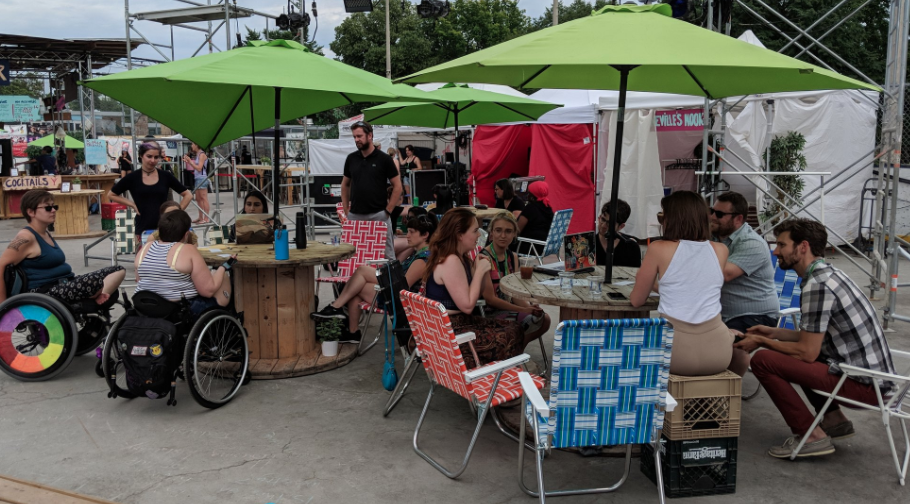
The #UrgentExchange began with break out groups where participants led by facilitators began brainstorming a future criticism. Karen Fricker led a breakout group discussing “Embedded Criticism” which is a “behind the scenes” way of approaching criticism that isn’t about analyzing/judging a piece of performance but more about following creative process. The notes from that discussion are here. Carly Maga facilitated a breakout group discussing the current landscape of performance criticism in Toronto, touching on some of its strengths and weakness, and what an ideal landscape would look like in the future. The notes from that discussion are here. Shay Erlich, who completed Generator’s Performance Criticism Training Program, facilitated the discussion of criticism is Disability Art. A fourth group which included graduates of our Performance Criticism Training Program, discussed the future of criticism.
At the end, the whole group came together to discuss what needs to change in the the criticism landscape right now to make a better future for artists and critics. A point that was touched on was doing research as a critic, to make sure facts and details are correct to accurately write with nuanced critique. Good questions came up such as:
Can we use theatre criticism to work against an existing system/use writing to challenge a system?
How should accessibility play into theatre criticism? How do we deconstruct "able body" as "neutral body?"
Are actors comfortable with a critic in rehearsal?
How can we move past land acknowledgements and integrate our lived colonial experience into theatre reviews, which are usually cis male dominant spaces?
Do you have to be a critic to have influence? Or can you build up your own following? How can we make criticism accessible?
How has the rise in online journalism affected arts coverage and criticism?


Both #UrgentExchanges at 2018 Toronto Fringe ran for 1 hour and 30 minutes, which was not enough time for either topics to be discussed but both events were a great jumping off educate ourselves and make change for the future.

#UrgentExchange The White Guy Shuffle: Changing Hiring Practices in Canadian Theatre
In 2016, over half a dozen Artistic Director jobs were up for grabs across Canada. While many were excited at the chance to finally diversify the leadership of some of our country's most recognizable institutions, all of the positions were filled by white men.
On January 15, 2017, Generator and the Toronto Fringe Festival hosted an #UrgentExchange on the topic of:
THE WHITE GUY SHUFFLE: Changing Hiring Practices in Canadian Theatre
What is an Urgent Exchange?
Urgent Exchange is an opportunity for the community to nominate topics that they think are both important and timely conversations that we need to be having as a collective. During the Next Stage Theatre Festival, we hosted two discussions: one topic is crowdsourced on Twitter with the active hashtag #UrgentExchange, and the other we pick based on conversations we keep hearing in our offices and among our peers. (More about #UrgentExchange).
Why did we pick this as an urgent topic needing a platform?
In 2016, over half a dozen Artistic Director jobs were up for grabs across Canada. While many were excited at the chance to finally diversify the leadership of some of our country's most recognizable institutions, all of the positions were filled by white men.* How can we influence boards and hiring committees to change homogenous hiring practices? We invited the community to examine the mechanics of how these decisions are made and strategize how the community can be of influence. (Links to background reading provided at the bottom of this post)
*Since the Urgent Exchange in January, more AD roles have been announced and happily we are seeing more diverse voices filling artistic leadership roles.

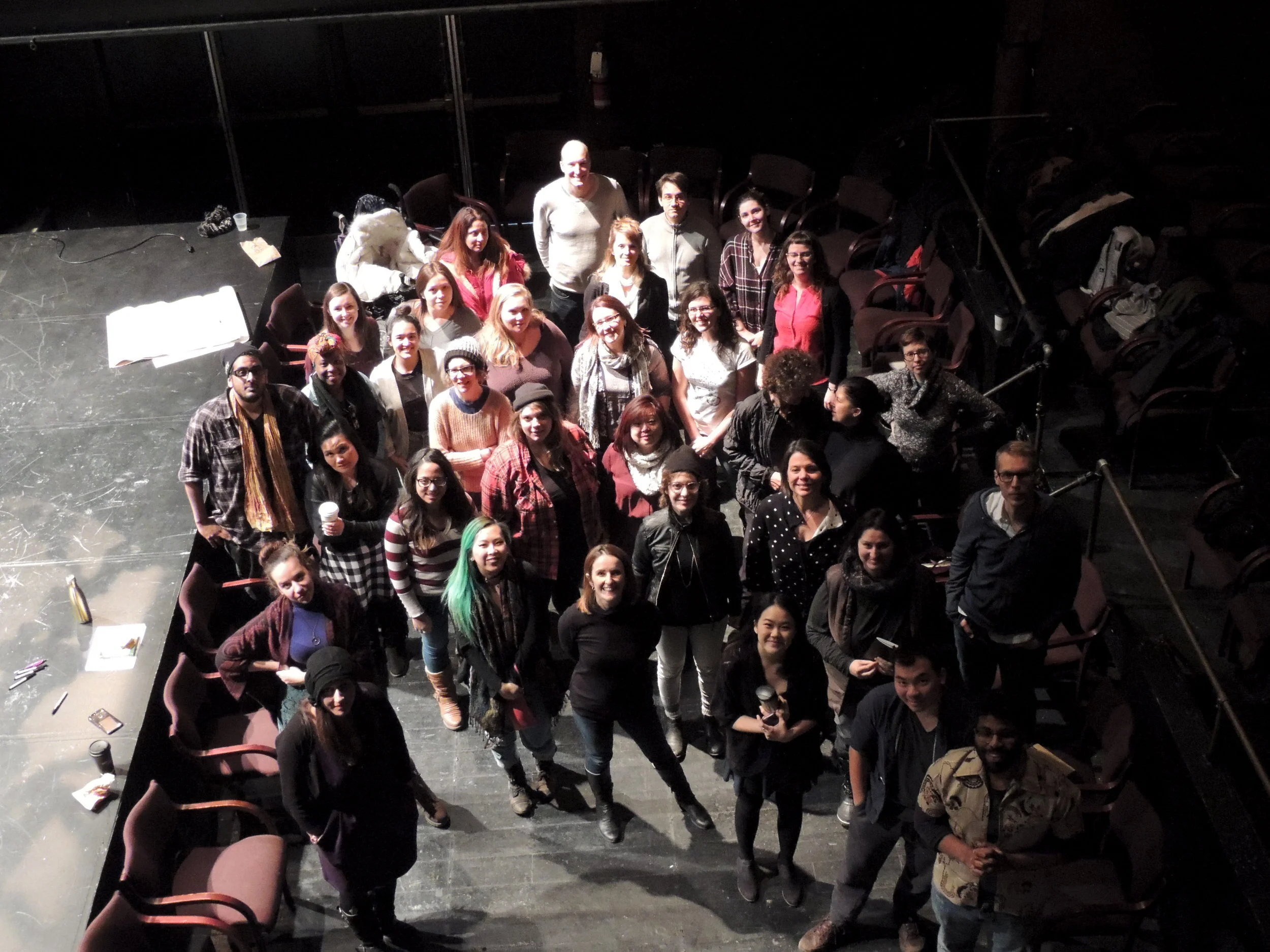
#UrgentExchange in action at Theatre Passe Muraille
Why isn’t this on Twitter?
Unlike previous #UrgentExchange dialogues that were live-streamed in their entirety and live-tweeted using the hashtag, this session was partially closed to protect participants who may have wanted to share personal or sensitive experiences during the group breakouts.
As this exchange brought the often closed-door activity of hiring practices to a public discussion, we felt it was important to ensure that some part of the experience is still open to people who weren’t able to be in the room. Therefore, we asked a few people for their thoughts:
ALISON WONG
“In the Canadian Theatre business, we seem to believe that a certain type of person is supposed to run things. There’s a pervasive ideology that rewards non-risk-takers and seekers of institutional status when it comes to Artistic Leadership in Canada. A mold that “successful” and “enduring” companies are supposed to fit into; a perfect formula of art-making and balanced business. Our boards are made up of the most amazing members of our community, but they are tasked with hiring in a field in which, often, they do not have professional experience. In a well-meaning desire to build the legacy of an organization, they can be led to disproportionately consider how well a candidate can model existing “best practices” (which by the way aren’t working for a lot of companies as it is, but that’s for another #urgentexchange), rather than investing in a candidate’s ability to innovate practices for their organization specifically, and their art, specifically.
A barrier that artists from equity seeking groups face is that they are not expected to fit into this certain type. There is not enough precedent for how the stories we want to tell, the perspectives we hold, marry into these assumed best practices. I like to imagine a future where equity seeking artists are mentored to lead by flexing their muscles in exploring and developing the ways they want to connect to community, to build resources, to give the work the support it requires; where governing bodies require existing leadership to create apprenticeships that reward creating new solutions for art-makers, rather than modelling old ones; where funding bodies measure sustainability by looking at an organization’s ability to adapt and change to its ever evolving community of artists and audience.”
Alison Wong is a director, performer, and producer. Her work in opera and theatre has taken her to the United States, Italy, the Netherlands, and India. Currently wrapping up her 5th season as Artistic Producer with b current, other Toronto-based companies she’s worked with includes MYOpera, Canadian Opera Company, Factory Theatre, and Small Wooden Shoe.
JIVESH PARASRAM
“Despite a majority representation of women in this conversation, it was demonstrated that white women were occupying the most discursive space. Perhaps proportionately enough due to who was there by demographics, but within that space, the same micro-aggressive tendencies (interruptions, authoritative reinterpretations, etc.) that have come to be reductively associated with “White Guys” were quite present as well.
The concept of whiteness was not addressed, nor was the colonial ideology at play in the structures of boards actively questioned. (But there was an implied invitation to do so when the concept of the board was introduced.)
Finally, the implication that the absence of White Male ADs in attendance was equivalent to a lack of representation of leadership felt a bit off. Disrespectful to two ADs who were in attendance, both of whom are female POC artists; and who lead operationally funded organizations, and who have also (as a bonus!) actively advanced inclusion throughout their careers.
For many people this was the first time engaging with this topic in such a public forum. And that this event gave an opportunity to do so is excellent.
Moving forward, I would just highlight that what can happen in spaces such as these – open democratic-ish spaces – and indeed did happen - was the replication of systems of oppression that can prevent the advancement of discourse.
Democracy is not equitable –and there is no universal experience. We just have to remind ourselves of that and ensure that we are always striving to actively listen more.”
Jivesh Parasram is a cultural worker of Indo-Caribbean descent. He is Artistic Producer at Pandemic Theatre, and the Associate Artistic Producer at Theatre Passe Muraille.
KATIE LEAMEN
“As an emerging artist myself, I had no idea what the board of directors did or the decisions they made until I started taking the meeting minutes at Generator’s board meetings. I have witnessed the important advocacy and education that comes from having multiple artists on our board to help encourage artistic risk-taking in board members more accustomed to making decisions based on safe, traditional business practices.
While there are many steps to be taken to encourage better inclusion in Canadian hiring practices for artistic leadership positions, I personally think that the first step - which is manageable without any increase in budget or resources - is to challenge every board of directors of arts organizations to recruit at least one (preferably more) artist to join their ranks. This will enable artists to advocate from the inside and empower them to make decisions that affect their peers, while giving wider perspective to board discussions, and support to the Executive Director or Artistic Director. Artists are trained to make strong choices, and we need to encourage them (and ourselves) to be in the positions to make them.”
Katie Leamen, Director of Coordination and Communications at Generator, and Artistic Producer of No Porpoise Productions. Also testing her hand at playwrighting with some success.
KRISTINA LEMIEUX
“Four thoughts:
1. I regularly wonder about what more I can be doing with my privileges while still fighting against the systematic barriers that hold me back, often at the expense of others held back by those barriers in different ways. I often feel unclear on what “battles” I can enter into and which ones I have the chance of “winning.”
2. The White Man Shuffle asked the question of what barriers hold you back from accessing leadership jobs in the arts. These institutions and structures are settler, Eurocentric structures designed to uphold capitalism and hierarchical means of organizing. These events are generally attended by those excluded from those structures, who are equity seeking, but generally with little power to enact the changes they want to see.
3. What if the folks who are identified as equity seeking or historically disenfranchised just don’t give a fuck about these organizations? I have zero interest in working for The Citadel, Touchstone Theatre, Western Stage or any of these other institutions that just reinforced white supremacy with these hires and these institutions, in theory, are designed to speak to me.
4. Seeing yet another white man hired in an artistic leadership job leaves me feeling harmed, with less hope and more tired. I want to work in spaces where leadership is about ideas and capacity to connect to people. Knowing how to fundraise, write grants, read financials statements or advocate for policy change are important skills, but they are not the skills I find inspiring. “
Kristina Lemieux, Executive Director of Generator, is a recent transplant to Toronto from Vancouver where she was a producer, facilitator and manager of live arts.
MAMITO KUKWIKILA
“My career in theatre is relatively new and young as I started out in film (and still continue to work in film) and I think one of the challenges or barriers that I felt when I first journeyed into theatre in Toronto was this sense of not belonging due to my sense of not "knowing". I did not think I had a leg to stand on with regards to having an opinion on a show or engaging in a piece of theatre as an actor as my "knowledge" on theatre was not up to a certain "standard". But who's standard, right? For someone like me - a woman, black, new to the country, new to the city, theatre in Toronto can be intimidating to navigate because what one sees is an ecology that is lead and driven by predominately white male voices making artistic choices for the majority and what that suggests to a someone like me is that my experiences and voices can only be filtered through a predominately white patriarchal framework. This, of course, is not unique to Toronto. Creating art is an amazing privilege but that privilege should not be reserved for the few. I would like us to move to a place in which there is room for arts organizations and theatre companies to take more risks in terms of artistic leadership and move away from what can sometimes feel like a top down model but towards a model that fosters mentorship and collaboration.”
Mamito Kukwikila is an actor, writer, producer and programming coordinator for b current Performing Arts Theatre Company. Mamito now resides in Toronto.
KAREN FRICKER (Toronto Star)
Karen attended both Urgent Exchange discussions this year and followed up on the topic in her article, "World Stage returns, female theatre heads retreat: A season of reflection and greatest hits for Harbourfront festival while Next Stage panel considers ‘white guy shuffle’. (Jan 25, 2017)
New:
"White Guy Shuffle" is becoming a national meme it seems as it is picked up in this article by Jessica Werb from The Georgia Strait on the West Coast. "Arts Club Theatre's search for new leadership prompts debate" (May 24, 2017)

Thank you to everyone who came out to listen and share their thoughts!
Background reading (links in the article title):
· White Fragility in the Hour of Chaos by Michael Wheeler (SpiderWebShow)
· Briefing Notes for Hiring Committees by Christine Quintana (SpiderWebShow)
· Basing pay on salary history is a harmful, borderline-unethical practice that we need to abolish by Vu Le (Nonprofit with Balls)
· Our hiring practices are inequitable and need to change by Vu Le (Nonprofit with Balls)
· Palm Springs film festival ex-interim director was offered half the salary of her male predecessor, lawsuit claims by Brett Kelman and Bruce Fessier (The Desert Sun)
· New Study Investigates Why Few Women Hold Leadership Positions in Theatres by Olivia Clement (Playbill)
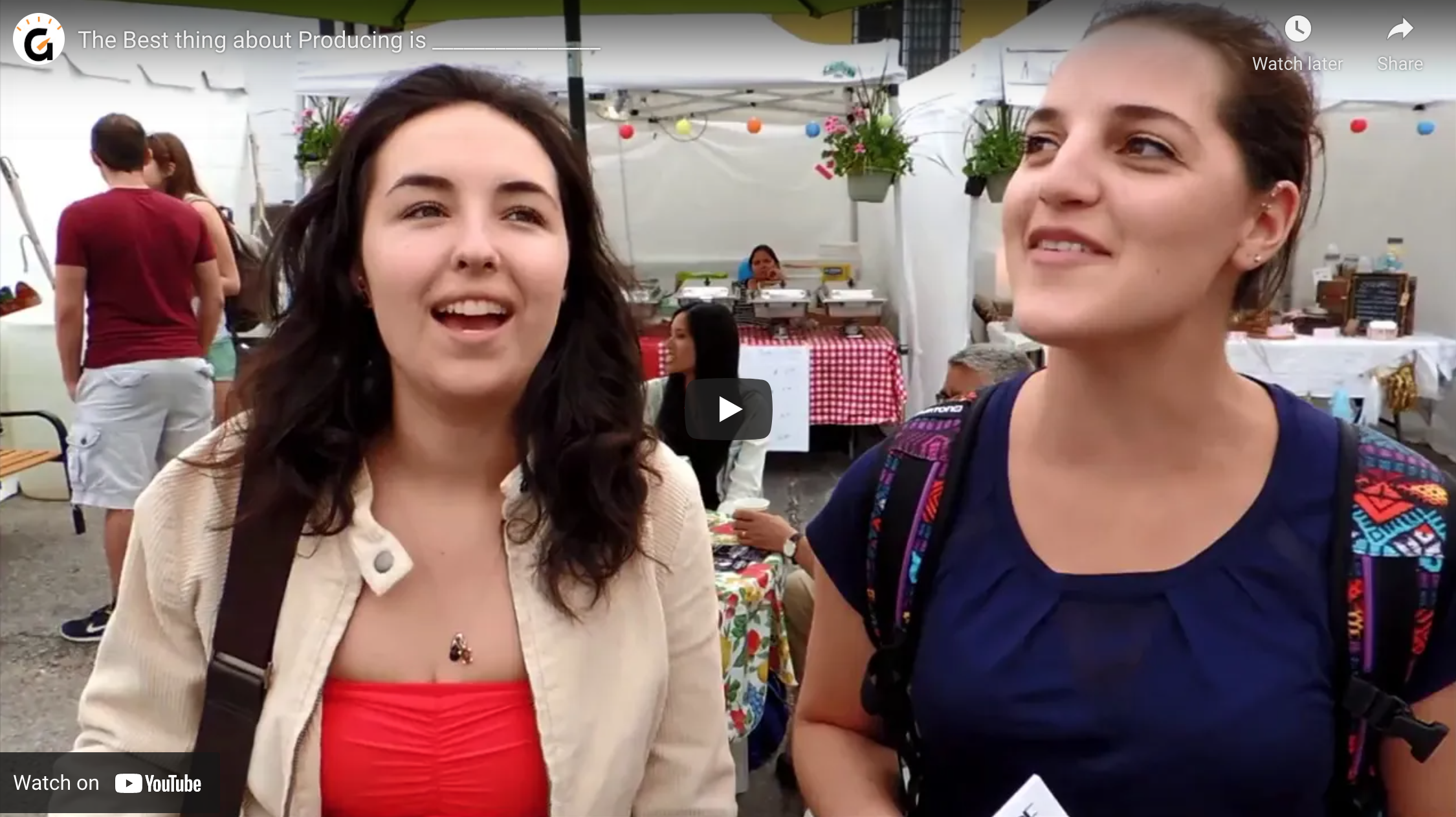
From the mouths of Fringe-ers: what's the best thing about producing?
We asked producers at the 2015 Toronto Fringe tent what they love about producing.